
Jul 1
Dehydration and Nutrition: Infection Risk in Aged Care
When we talk about infection prevention in aged care, the conversation usually turns to hand
hygiene, PPE, and environmental cleaning. These are non-negotiable. But there is another risk
factor that quietly underpins almost every outbreak of infection, and it is one we can address
every single day. Dehydration and poor nutrition are not just clinical complications, they are
infection risks. In residential aged care facilities (RACFs), they are far more common than most
teams realise.
Understanding the relationship between what residents eat and drink and how well their bodies fight infection is one of the most practical steps an aged care team can take to reduce the infection burden and to meet the expectations of the Strengthened Aged Care Quality Standards.
Understanding the relationship between what residents eat and drink and how well their bodies fight infection is one of the most practical steps an aged care team can take to reduce the infection burden and to meet the expectations of the Strengthened Aged Care Quality Standards.
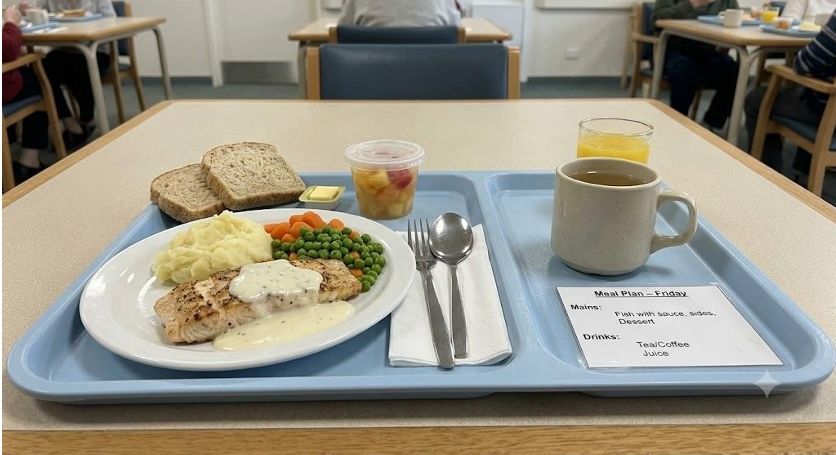
Why Are Aged Care Residents More Vulnerable to Dehydration and Malnutrition?
The physiology of ageing works against adequate hydration and nutrition. Thirst perception
declines with age, so residents may not feel thirsty even when they are significantly
dehydrated. Kidney function declines, making it harder to concentrate urine and conserve fluid.
Appetite decreases as metabolism slows and sensory experiences such as taste and smell
become less acute.
Add to this the complexity of aged care: polypharmacy can suppress appetite or cause nausea; cognitive decline - including dementia - can impair the ability to recognise hunger or thirst; dysphagia can make eating and drinking uncomfortable or unsafe; and the demands of shift-based care can mean that meal and fluid monitoring falls through the cracks.
Malnutrition and dehydration are endemic in residential aged care. Australian studies consistently report malnutrition rates of 30–50% among RACF residents, with dehydration at similarly high levels. These are not outliers. They are the baseline.
Add to this the complexity of aged care: polypharmacy can suppress appetite or cause nausea; cognitive decline - including dementia - can impair the ability to recognise hunger or thirst; dysphagia can make eating and drinking uncomfortable or unsafe; and the demands of shift-based care can mean that meal and fluid monitoring falls through the cracks.
Malnutrition and dehydration are endemic in residential aged care. Australian studies consistently report malnutrition rates of 30–50% among RACF residents, with dehydration at similarly high levels. These are not outliers. They are the baseline.
How Does Dehydration Increase the Risk of Infection in Aged Care?
Dehydration does not just affect how a resident feels; it directly compromises the body's ability
to prevent and fight infection.
The most well-established link is with urinary tract infections (UTIs). When fluid intake is insufficient, urine becomes concentrated, and bacteria are not effectively flushed from the bladder. This creates ideal conditions for bacterial colonisation of the urinary tract. UTIs are the most reported infection in Australian RACFs, and dehydration is one of the most modifiable contributing factors.
Beyond UTIs, dehydration compromises mucosal defences throughout the body. The mouth, airways, and gastrointestinal tract rely on adequate moisture to maintain the mucous membranes that form a physical barrier against pathogens. A dry oral environment, for instance, can increase the bacterial load in the mouth, contributing to aspiration pneumonia, which remains a leading cause of infection-related hospitalisation and death among aged care residents.
Dehydration also compromises skin integrity. Dehydrated skin is more fragile, more prone to breakdown, and slower to heal, creating entry points for infection that would otherwise be absent.
The most well-established link is with urinary tract infections (UTIs). When fluid intake is insufficient, urine becomes concentrated, and bacteria are not effectively flushed from the bladder. This creates ideal conditions for bacterial colonisation of the urinary tract. UTIs are the most reported infection in Australian RACFs, and dehydration is one of the most modifiable contributing factors.
Beyond UTIs, dehydration compromises mucosal defences throughout the body. The mouth, airways, and gastrointestinal tract rely on adequate moisture to maintain the mucous membranes that form a physical barrier against pathogens. A dry oral environment, for instance, can increase the bacterial load in the mouth, contributing to aspiration pneumonia, which remains a leading cause of infection-related hospitalisation and death among aged care residents.
Dehydration also compromises skin integrity. Dehydrated skin is more fragile, more prone to breakdown, and slower to heal, creating entry points for infection that would otherwise be absent.
What Role Does Poor Nutrition Play in Infection Susceptibility?
Nutrition and immune function are inseparable. The immune system is metabolically
demanding - producing antibodies, mounting inflammatory responses and, repairing tissue all
require adequate protein, micronutrients, and energy.
When residents are malnourished, the immune response is dulled. White blood cell production declines, wound healing slows, and the gut microbiome - a critical component of immune defence - becomes disrupted. Vitamin and mineral deficiencies, particularly of vitamins A, C, D, and E, zinc, and selenium, further reduce the body's capacity to respond to pathogens.
The consequences are concrete: malnourished residents are more likely to develop infections, to experience complications when they do, and to have prolonged recovery times. For a resident already managing multiple chronic conditions, this can be the difference between a manageable illness and a life-threatening one.
There is also an important bidirectional relationship to keep in mind: infection worsens nutritional status. During acute infection, the body’s energy and protein demands rise sharply, precisely when residents are least likely to eat and drink well. If not actively interrupted, this cycle drives rapid functional decline.
When residents are malnourished, the immune response is dulled. White blood cell production declines, wound healing slows, and the gut microbiome - a critical component of immune defence - becomes disrupted. Vitamin and mineral deficiencies, particularly of vitamins A, C, D, and E, zinc, and selenium, further reduce the body's capacity to respond to pathogens.
The consequences are concrete: malnourished residents are more likely to develop infections, to experience complications when they do, and to have prolonged recovery times. For a resident already managing multiple chronic conditions, this can be the difference between a manageable illness and a life-threatening one.
There is also an important bidirectional relationship to keep in mind: infection worsens nutritional status. During acute infection, the body’s energy and protein demands rise sharply, precisely when residents are least likely to eat and drink well. If not actively interrupted, this cycle drives rapid functional decline.
Which Infections Are Most Linked to Dehydration and Poor Nutrition?
The infections most consistently associated with inadequate hydration and nutrition in aged
care are:
- Urinary tract infections are directly linked to low fluid intake, concentrated urine, and reduced bladder flushing
- Aspiration pneumonia - associated with dehydration-related oral dryness, dysphagia, and reduced immune function
- Skin and wound infections - driven by skin fragility from dehydration and impaired healing from malnutrition
- Gastrointestinal infections - linked to a compromised gut mucosal barrier and a disrupted microbiome
- Respiratory infections - exacerbated by dry mucous membranes and a weakened immune response
During winter or outbreak periods, these risks compound quickly. A resident who is already nutritionally depleted and mildly dehydrated enters an influenza or gastroenteritis outbreak significantly vulnerable and compromised.
What Can Aged Care Staff Do to Reduce Infection Risk Through Hydration and Nutrition?
This is where daily care practice becomes infection prevention practice. The two are not
separate.
Structured fluid rounds - offered regularly, not just at mealtimes - are among the most effective interventions to improve hydration. Residents who are cognitively impaired or have reduced thirst perception need staff to offer them fluids consistently. Offering preferred drinks, varying temperature and flavour, and using appropriate cups or thickened fluids for residents with dysphagia all support better intake.
Nutrition screening and monitoring are equally important. Weighing residents regularly, documenting dietary intake, and escalating concerns to a dietitian early - rather than waiting until significant weight loss has occurred - make a real difference to outcomes.
Documentation matters here, too. Fluid balance charts, food intake records, and weight monitoring data are not merely administrative tasks. They serve as an early warning system for deterioration in a resident's health. Under Standard 5 of the Strengthened Aged Care Quality Standards (effective 1 November 2025), facilities must demonstrate that clinical care - including nutrition and hydration - is person-centred, evidence-based, and continuously monitored.
Mealtime assistance training for care staff, referral pathways for speech pathologists and dietitians, and facility-wide policies to support adequate nutritional intake are all part of a comprehensive infection prevention approach.
Structured fluid rounds - offered regularly, not just at mealtimes - are among the most effective interventions to improve hydration. Residents who are cognitively impaired or have reduced thirst perception need staff to offer them fluids consistently. Offering preferred drinks, varying temperature and flavour, and using appropriate cups or thickened fluids for residents with dysphagia all support better intake.
Nutrition screening and monitoring are equally important. Weighing residents regularly, documenting dietary intake, and escalating concerns to a dietitian early - rather than waiting until significant weight loss has occurred - make a real difference to outcomes.
Documentation matters here, too. Fluid balance charts, food intake records, and weight monitoring data are not merely administrative tasks. They serve as an early warning system for deterioration in a resident's health. Under Standard 5 of the Strengthened Aged Care Quality Standards (effective 1 November 2025), facilities must demonstrate that clinical care - including nutrition and hydration - is person-centred, evidence-based, and continuously monitored.
Mealtime assistance training for care staff, referral pathways for speech pathologists and dietitians, and facility-wide policies to support adequate nutritional intake are all part of a comprehensive infection prevention approach.
How Do the Strengthened Aged Care Quality Standards Address Nutrition and Hydration?
The Strengthened Aged Care Quality Standards, effective from 1 November 2025, make
explicit what has long been understood in clinical practice: nutrition and hydration are
fundamental to residents' safety and wellbeing.
Standard 5 (Clinical Care) requires facilities to identify and respond to clinical deterioration, including nutritional and hydration needs, in a timely and person-centred manner. This includes systems for screening for malnutrition, monitoring fluid intake, and involving allied health professionals in care planning.
Standard 1 (The Person) reinforces that residents have a right to food and drink that meets their individual needs, preferences, and cultural backgrounds; not just minimum nutritional thresholds. Meeting the standard means going beyond adequacy to genuine responsiveness.
For IPC Leads and facility managers, this presents an opportunity to align infection prevention strategy with everyday care practices. When teams view hydration rounds and nutritional monitoring as infection-prevention activities rather than simple comfort measures, these tasks take on greater clinical importance.
Standard 5 (Clinical Care) requires facilities to identify and respond to clinical deterioration, including nutritional and hydration needs, in a timely and person-centred manner. This includes systems for screening for malnutrition, monitoring fluid intake, and involving allied health professionals in care planning.
Standard 1 (The Person) reinforces that residents have a right to food and drink that meets their individual needs, preferences, and cultural backgrounds; not just minimum nutritional thresholds. Meeting the standard means going beyond adequacy to genuine responsiveness.
For IPC Leads and facility managers, this presents an opportunity to align infection prevention strategy with everyday care practices. When teams view hydration rounds and nutritional monitoring as infection-prevention activities rather than simple comfort measures, these tasks take on greater clinical importance.

Take-Home Message
Dehydration and malnutrition are not inevitable in aged care. They are modifiable risks, and
when we address them effectively, we reduce infection rates, reduce hospitalisations, and
improve residents' quality of life.
Infection prevention does not begin and end at the alcohol rub dispenser. It starts with the glass of water you offer a resident at morning tea and the extra ten minutes spent encouraging a reluctant eater at lunch. Those moments are clinical. They matter.
Infection prevention does not begin and end at the alcohol rub dispenser. It starts with the glass of water you offer a resident at morning tea and the extra ten minutes spent encouraging a reluctant eater at lunch. Those moments are clinical. They matter.
IPS - Infection Prevention Services. Lead your staff and residents to a healthier future.
If your team needs support to build a culture of infection prevention that links clinical care to
IPC practice, IPS can help. Speak with us about our infection prevention training and support
services for aged care - tailored to your facility, team, and residents at:
support@infectioncontrol.care
Find us on LinkedIn and Facebook. Ask a question, like and share.
You can ask a quick question with EVE on our website.
You can ask a quick question with EVE on our website.
Lyndon Forrest
Managing Director | CEO
Lyndon is the Managing Director of Infection Prevention Services (IPS), bringing over 30 years' experience supporting aged care providers across Australia and New Zealand.
With a background spanning outbreak response, compliance, and infection risk management — alongside hands-on experience leading teams, managing multi-site operations, and navigating business turnaround — he understands both the clinical and organisational pressures aged care providers face. Lyndon holds a Master of Commerce (Industrial Relations), and applies that foundation to the people, process, and growth challenges that come with running a complex healthcare services business.
He is passionate about building the systems and capability that make infection prevention sustainable — not just compliant — and about helping organisations grow their confidence alongside their practice.
Lyndon's focus is straightforward: strengthen operations, develop the right people, and drive proactive infection prevention strategies that protect residents, staff, and communities for the long term.
Lyndon is the Managing Director of Infection Prevention Services (IPS), bringing over 30 years' experience supporting aged care providers across Australia and New Zealand.
With a background spanning outbreak response, compliance, and infection risk management — alongside hands-on experience leading teams, managing multi-site operations, and navigating business turnaround — he understands both the clinical and organisational pressures aged care providers face. Lyndon holds a Master of Commerce (Industrial Relations), and applies that foundation to the people, process, and growth challenges that come with running a complex healthcare services business.
He is passionate about building the systems and capability that make infection prevention sustainable — not just compliant — and about helping organisations grow their confidence alongside their practice.
Lyndon's focus is straightforward: strengthen operations, develop the right people, and drive proactive infection prevention strategies that protect residents, staff, and communities for the long term.
Erica Callaghan
Marketing Manager
Erica Callaghan is a dedicated professional with a rich background in agriculture and nutrient management. Growing up on her family's farm in Mid Canterbury, she developed a deep passion for farming. She currently resides on her partner's arable property in South Canterbury.
In 2017, Erica joined the Farm Sustainability team, focusing on nutrient management and environmental stewardship. In February 2024, she became the Manager of Marketing and Sales at Bug Control New Zealand - Infection Prevention Services, where her passion now includes improving infection prevention outcomes.
Outside of work, Erica loves cooking and traveling, often combining her culinary interests with her explorations in Italy and Vietnam. She enjoys entertaining family and friends and remains actively involved in farm activities, especially during harvest season.
Erica Callaghan is a dedicated professional with a rich background in agriculture and nutrient management. Growing up on her family's farm in Mid Canterbury, she developed a deep passion for farming. She currently resides on her partner's arable property in South Canterbury.
In 2017, Erica joined the Farm Sustainability team, focusing on nutrient management and environmental stewardship. In February 2024, she became the Manager of Marketing and Sales at Bug Control New Zealand - Infection Prevention Services, where her passion now includes improving infection prevention outcomes.
Outside of work, Erica loves cooking and traveling, often combining her culinary interests with her explorations in Italy and Vietnam. She enjoys entertaining family and friends and remains actively involved in farm activities, especially during harvest season.
Toni Sherriff
Clinical Nurse Specialist
Toni is a Registered Nurse with extensive experience in Infection Prevention and Control. Her career began as a kitchen hand and caregiver in Aged Care facilities, followed by earning a Bachelor of Nursing.
Toni has significant experience, having worked in Brisbane’s Infectious Diseases ward before returning home to New Zealand, where she continued her career as a Clinical Nurse Specialist in Infection Prevention and Control within Te Whatu Ora (Health NZ).
Toni brings her expertise and dedication to our team, which is instrumental in providing top-tier infection prevention solutions to our clients.
Toni is a Registered Nurse with extensive experience in Infection Prevention and Control. Her career began as a kitchen hand and caregiver in Aged Care facilities, followed by earning a Bachelor of Nursing.
Toni has significant experience, having worked in Brisbane’s Infectious Diseases ward before returning home to New Zealand, where she continued her career as a Clinical Nurse Specialist in Infection Prevention and Control within Te Whatu Ora (Health NZ).
Toni brings her expertise and dedication to our team, which is instrumental in providing top-tier infection prevention solutions to our clients.
Julie Hadfield
Accounts & Payroll
Julie is experienced in Accounts & Payroll Administration & after a long career in both the Financial & Local Government Sectors, is now working with our team. Julie brings her strong time management & organisational skills to our team, which is important to keep the company running in the background to enable the rest of our team to provide top notch service to all of our clients.
Julie is experienced in Accounts & Payroll Administration & after a long career in both the Financial & Local Government Sectors, is now working with our team. Julie brings her strong time management & organisational skills to our team, which is important to keep the company running in the background to enable the rest of our team to provide top notch service to all of our clients.
Andrea Murray
Content Editor
I attended Otago University in NZ and graduated as a Dental Surgeon. After 40 years in the profession, I retired in 2022. Infection prevention knowledge was part of everyday practice, dealing with sterilisation, hand hygiene, and cleaning.
Before retiring, I began doing some editing and proofreading for Bug Control as I am interested in the subject and in the English language. During the COVID-19 lockdown, I attended the ACIPC course "Introduction to Infection Prevention and Control", which increased my interest in the subject. I now work part-time as the Content Editor for the company.
I attended Otago University in NZ and graduated as a Dental Surgeon. After 40 years in the profession, I retired in 2022. Infection prevention knowledge was part of everyday practice, dealing with sterilisation, hand hygiene, and cleaning.
Before retiring, I began doing some editing and proofreading for Bug Control as I am interested in the subject and in the English language. During the COVID-19 lockdown, I attended the ACIPC course "Introduction to Infection Prevention and Control", which increased my interest in the subject. I now work part-time as the Content Editor for the company.
Personally, I lived in the UK for 10 years. My two children were born in Scotland, and now both are living in Europe, one in Amsterdam, Netherlands, and the other in Edinburgh, Scotland. I live close to Fairlie on the South Island of NZ, a beautiful part of the country, and I love being out of the city.
Princess
Customer Support
Princess began her career as a dedicated Customer Service Representative, honing her communication and problem-solving skills. She later transitioned into a Literary Specialist role, where she developed a keen eye for detail. Her journey then led her to a Sales Specialist position, where she excelled in client relations.
Now, as a Customer Support professional in Infection Prevention Services. Princess focuses on ensuring customer satisfaction, building loyalty, and enhancing the overall customer journey.
Princess began her career as a dedicated Customer Service Representative, honing her communication and problem-solving skills. She later transitioned into a Literary Specialist role, where she developed a keen eye for detail. Her journey then led her to a Sales Specialist position, where she excelled in client relations.
Now, as a Customer Support professional in Infection Prevention Services. Princess focuses on ensuring customer satisfaction, building loyalty, and enhancing the overall customer journey.
Dianne Newey
Senior Infection Prevention and Control Consultant
Dianne is a Senior Clinical Consultant at Infection Prevention Services (IPS), bringing over 35 years of nursing experience and a depth of clinical knowledge that most people would need two careers to accumulate.
Having served as Clinical Director at Royal Ryde Rehabilitation Hospital alongside a career spanning the full breadth of clinical practice, Dianne has seen it all — and more importantly, knows exactly what to do about it. She is the person in the room that everyone quietly hopes will speak first.
For more than seven years she has been a cornerstone of the IPS team, providing clinical advice, developing and reviewing policies and procedures, delivering monthly IPC webinars to IP Leads, and conducting environmental audits in aged care facilities across Australia and New Zealand. If infection prevention has a question, Dianne almost certainly has the answer — and she'll deliver it with a laugh that you'll hear from the other end of the corridor.
A true fountain of knowledge, wrapped in the kind of warmth and humour that only three decades of nursing can produce. Customers don't just trust Dianne — they look forward to hearing from her.
Dianne is a Senior Clinical Consultant at Infection Prevention Services (IPS), bringing over 35 years of nursing experience and a depth of clinical knowledge that most people would need two careers to accumulate.
Having served as Clinical Director at Royal Ryde Rehabilitation Hospital alongside a career spanning the full breadth of clinical practice, Dianne has seen it all — and more importantly, knows exactly what to do about it. She is the person in the room that everyone quietly hopes will speak first.
For more than seven years she has been a cornerstone of the IPS team, providing clinical advice, developing and reviewing policies and procedures, delivering monthly IPC webinars to IP Leads, and conducting environmental audits in aged care facilities across Australia and New Zealand. If infection prevention has a question, Dianne almost certainly has the answer — and she'll deliver it with a laugh that you'll hear from the other end of the corridor.
A true fountain of knowledge, wrapped in the kind of warmth and humour that only three decades of nursing can produce. Customers don't just trust Dianne — they look forward to hearing from her.
Caoimhe (Keva) Stewart
Clinical & Business Operations Manager
Caoimhe is the Clinical & Business Operations Manager at Infection Prevention Services (IPS), bringing a clinical background as a Registered Nurse across the UK and Australia — and an almost unsettling ability to make technology do exactly what she wants.
With experience in Occupational Health, Palliative Care, and Community Nursing, she understands the real challenges faced by healthcare teams. What she may lack in stature she more than makes up for in impact — Caoimhe is the kind of person who walks into a problem, sizes it up, and has three solutions before anyone else has finished reading the brief.
Customers love her. Not just because she delivers — though she always does — but because she genuinely cares about the outcome on the other side. She is passionate about creating seamless learning experiences and empowering organisations with the tools, knowledge, and support needed to strengthen infection prevention practices and improve care outcomes.
Small in size. Mighty in results. Completely irreplaceable.
Caoimhe is the Clinical & Business Operations Manager at Infection Prevention Services (IPS), bringing a clinical background as a Registered Nurse across the UK and Australia — and an almost unsettling ability to make technology do exactly what she wants.
With experience in Occupational Health, Palliative Care, and Community Nursing, she understands the real challenges faced by healthcare teams. What she may lack in stature she more than makes up for in impact — Caoimhe is the kind of person who walks into a problem, sizes it up, and has three solutions before anyone else has finished reading the brief.
Customers love her. Not just because she delivers — though she always does — but because she genuinely cares about the outcome on the other side. She is passionate about creating seamless learning experiences and empowering organisations with the tools, knowledge, and support needed to strengthen infection prevention practices and improve care outcomes.
Small in size. Mighty in results. Completely irreplaceable.
Bridgette Mackie
Clinical Nurse Educator
Bridgette is an experienced New Zealand Registered Nurse, qualified Healthcare Auditor, and Healthcare Educator with a strong background in clinical quality, competency assessment, and infection prevention. She has led large-scale OSCE and CAP training programmes for internationally qualified nurses, developed sector-specific educational resources, and coordinated HealthCERT audit preparation in the surgical sector.
Known for her engaging teaching style and genuine passion for supporting learners, Bridgette excels at making complex topics accessible and relevant. She blends operational leadership with a deep commitment to professional development and safe, effective practice.
Bridgette is an experienced New Zealand Registered Nurse, qualified Healthcare Auditor, and Healthcare Educator with a strong background in clinical quality, competency assessment, and infection prevention. She has led large-scale OSCE and CAP training programmes for internationally qualified nurses, developed sector-specific educational resources, and coordinated HealthCERT audit preparation in the surgical sector.
Known for her engaging teaching style and genuine passion for supporting learners, Bridgette excels at making complex topics accessible and relevant. She blends operational leadership with a deep commitment to professional development and safe, effective practice.