
Jun 3
Diphtheria Outbreak in Australia 2026
What Aged Care Teams Must Do Now: Recognising Symptoms, Protecting Vulnerable Residents, and Reviewing Vaccination in Your Facility
Australia is experiencing its worst diphtheria outbreak since 1991, with the country's first fatality in nearly a decade confirmed in 2026. This blog explains what aged care teams need to know: how diphtheria spreads, why older residents face the highest risk, what symptoms to watch for, and the immediate steps your facility should take to protect residents and staff.
A male patient died at Royal Darwin Hospital in April 2026, and autopsy results confirmed diphtheria as the cause. This is
the first fatality from the disease since 2018. With more than 245 cases recorded in Australia
this year alone, the country is in the grip of its worst diphtheria outbreak since national records
began in 1991. The Chief Medical Officer has declared it a Communicable Disease Incident of
National Significance.
For aged care teams, this is a disease that demands your attention; your residents are among those most vulnerable to its most severe complications.
For aged care teams, this is a disease that demands your attention; your residents are among those most vulnerable to its most severe complications.

What Is Diphtheria?
Diphtheria is a bacterial infection caused by Corynebacterium diphtheriae. Disease severity
depends on whether the strain carries the tox gene – toxigenic strains produce the diphtheria
toxin responsible for heart failure, paralysis, and death. Non-toxigenic strains can cause
infection but rarely produce life-threatening illness. The current strain circulating in Australia is
toxigenic. Diphtheria presents in two main forms:
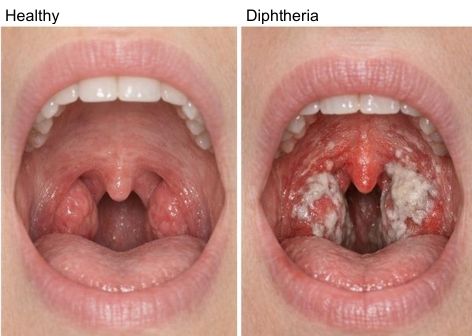
- Respiratory diphtheria - affects the throat and airways, producing a thick, greyish membrane causing a severe obstruction. This form is most likely to be life-threatening.
- Cutaneous diphtheria - affects the skin, producing slow-healing sores or ulcers. In the
current outbreak, this is the most common form. It still poses a risk, however,
particularly through wound infection transmission.
The bacterial toxin is the real danger. Once it enters the bloodstream, it can cause heart failure
and paralysis, even in those who appear to be recovering from the initial infection. Symptoms
typically appear two to five days after exposure and can escalate rapidly.
Diphtheria is transmitted by direct skin contact, the predominant route in the current Australian
outbreak, respiratory droplets, cross-infection between the two forms of diphtheria and fomites
(less common).
Why Older Residents Are at a Greater Risk
A resident who contracted diphtheria in their 70s or 80s is unlikely to experience the disease in
the same way as a younger, healthier adult. The following explains why aged care residents
are particularly vulnerable:
- Waning immunity. Even people who were fully vaccinated in childhood show declining antibody levels by middle age. By the time a person reaches their 60s or 70s, protective immunity may be negligible, particularly if they haven't had a booster for decades.
- Comorbidities. Heart disease, diabetes, respiratory conditions, and renal impairment all increase the risk of serious complications from the diphtheria toxin.
- Immunosuppression. Residents receiving corticosteroids, chemotherapy, or other immunosuppressive therapies have a reduced capacity to fight the infection.
- Delayed recognition. A sore throat and low-grade fever at the outset can look like any number of common conditions in an older person. The window for effective early treatment is narrow, and delays cost lives.
- Higher fatality risk. Older people of both genders face a disproportionately higher risk
of fatal complications from respiratory diphtheria. Pre-vaccine-era data showed that
roughly one in ten people with respiratory diphtheria died, and that risk was highest in
older (and younger) patients.
What to Watch For
Your team should be alert to the following symptoms, particularly if a resident has had recent
contact with someone from a higher-risk area or community:
Respiratory diphtheria:
Respiratory diphtheria:
- Sore throat with or without a visible grey or white pseudomembrane on the tonsils or pharynx
- Hoarseness or a barking cough
- Stridor (a high-pitched breathing sound) is a red flag for airway obstruction
- Low-grade fever
- Swollen neck ("bull neck" appearance from swollen lymph nodes)
- Nasal diphtheria, blood-stained or mucopurulent nasal discharge (rarer, more common
in young children)
Cutaneous diphtheria:
- Slow-healing skin ulcer-often with punched–out appearance with grey or dirty-yellow membrane base, typically on legs, arms, or feet.
- Ulcers may be surrounded by redness and crusting.
- Underlying skin conditions such as scabies, eczema, trauma is present- bacteria colonise on existing broken skin.
- Systemic toxin effects are rare but possible; be alert for cardiac or neurological
symptoms.
If you suspect a case, isolate the resident and contact your local Public Health Unitimmediately. Do not wait for laboratory confirmation before acting.
Treatment and Care
Diphtheria is a medical emergency. Treatment requires two components working together:
- Diphtheria antitoxin (DAT) neutralises circulating toxin and is the mainstay of treatment for respiratory diphtheria. It must be administered as early as possible, as it cannot reverse damage already caused by the toxin. In Australia, DAT is not on the Australian Register of Therapeutic Goods and must be accessed via the Special Access Scheme. For guidance, contact your local Public Health Unit.
- Antibiotics, typically erythromycin or penicillin, are used to eradicate the bacteria, halt
toxin production, and prevent transmission. Parenteral (intravenous) antibiotic therapy
is usually required initially.
Severe cases require hospitalisation, often in an intensive care setting. Your role as the facility
team is to ensure early recognition, rapid escalation, and support for the resident's family
through an extremely distressing situation.
Close contacts of a confirmed case, including unvaccinated or under-vaccinated team
members, may also require prophylactic antibiotics and review. Work with your Public Health
Unit to manage this.
The Vaccination Problem — And Why It Matters More Than Ever
Here's the uncomfortable truth: in the current outbreak, an estimated 90% of cases have
occurred in people who were previously vaccinated. This is evidence that immunity wanes and
boosters matter.
Growing numbers of Australians are choosing not to vaccinate or to keep up with adult boosters, influenced by misinformation that has accelerated since the COVID-19 pandemic. At the same time, COVID-era disruptions suppressed the low-level community exposure that naturally helped top up immunity in vaccinated adults. The result is a population with weaker than-usual herd immunity and a disease that exploits every gap available.
Growing numbers of Australians are choosing not to vaccinate or to keep up with adult boosters, influenced by misinformation that has accelerated since the COVID-19 pandemic. At the same time, COVID-era disruptions suppressed the low-level community exposure that naturally helped top up immunity in vaccinated adults. The result is a population with weaker than-usual herd immunity and a disease that exploits every gap available.
The Australian Immunisation Handbook recommends:
- A diphtheria-toxoid booster at age 50, and again at 65 if no booster has been given in the previous ten years
- A dTpa booster (diphtheria, tetanus, and whooping cough) for adults every ten years from their early 20s onwards
- Vaccination review for those working with or living in high-risk communities
For your team, this means two things:
- Encourage residents' families to check their vaccination status, as visitors can be a transmission risk.
- Review your own vaccination records. As a care worker or nurse, you are a potential
vector. Many adult boosters are available for free through the National Immunisation
Program; check your eligibility and keep your records up to date.
For residents who have never received a diphtheria booster in adulthood, discuss vaccination
with their General Practitioner. It's never too late to reduce risk.
What Your Facility Should Do Now
This outbreak is an opportunity to move from reactive to proactive. Don't wait for a case to
appear in your facility.
- Audit your Standard Precautions training: is your team confident in respiratory hygiene, droplet and contact precautions, and the appropriate use of Personal Protective Equipment (PPE)?
- Know your escalation pathway: does every team member know who to call if they suspect a notifiable disease? Diphtheria is a nationally notifiable condition in Australia.
- Brief your team: a short huddle on diphtheria recognition and response is worthwhile now, while it's in the news and people are receptive.
- Check your PPE stocks: isolating a suspected case will require surgical masks, gloves, and gowns at a minimum.
- Engage families: consider a brief message to families reminding them to stay home if
unwell and to check their vaccination status.
The Bottom Line
Diphtheria was supposed to be a disease of the past. The current outbreak, and the death it
has now claimed, is a reminder that vaccine-preventable diseases don't disappear on their
own. They disappear when communities stay vaccinated, vigilant, and proactive.
Your residents are counting on your team to recognise the signs, act quickly, and protect your
facility. That starts today.
Sources: Australian Centre for Disease Control (ACDC), 2026; Australian Immunisation Handbook (Department of
Health and Aged Care, 2026); National Centre for Immunisation Research and Surveillance (NCIRS), 2026; The
Conversation, May 2026; Healthdirect Australia, 20
For more blogs on the subjects you want to hear about, visit the HUB, IPS’s website
See us on Facebook and LinkedIn with regular, interesting posts.
A question? Either ask EVE or speak to one of our staff at support@infectioncontrol.care
See us on Facebook and LinkedIn with regular, interesting posts.
A question? Either ask EVE or speak to one of our staff at support@infectioncontrol.care

Lyndon Forrest
Managing Director | CEO
Lyndon is the Managing Director of Infection Prevention Services (IPS), bringing over 30 years' experience supporting aged care providers across Australia and New Zealand.
With a background spanning outbreak response, compliance, and infection risk management — alongside hands-on experience leading teams, managing multi-site operations, and navigating business turnaround — he understands both the clinical and organisational pressures aged care providers face. Lyndon holds a Master of Commerce (Industrial Relations), and applies that foundation to the people, process, and growth challenges that come with running a complex healthcare services business.
He is passionate about building the systems and capability that make infection prevention sustainable — not just compliant — and about helping organisations grow their confidence alongside their practice.
Lyndon's focus is straightforward: strengthen operations, develop the right people, and drive proactive infection prevention strategies that protect residents, staff, and communities for the long term.
Lyndon is the Managing Director of Infection Prevention Services (IPS), bringing over 30 years' experience supporting aged care providers across Australia and New Zealand.
With a background spanning outbreak response, compliance, and infection risk management — alongside hands-on experience leading teams, managing multi-site operations, and navigating business turnaround — he understands both the clinical and organisational pressures aged care providers face. Lyndon holds a Master of Commerce (Industrial Relations), and applies that foundation to the people, process, and growth challenges that come with running a complex healthcare services business.
He is passionate about building the systems and capability that make infection prevention sustainable — not just compliant — and about helping organisations grow their confidence alongside their practice.
Lyndon's focus is straightforward: strengthen operations, develop the right people, and drive proactive infection prevention strategies that protect residents, staff, and communities for the long term.
Erica Callaghan
Marketing Manager
Erica Callaghan is a dedicated professional with a rich background in agriculture and nutrient management. Growing up on her family's farm in Mid Canterbury, she developed a deep passion for farming. She currently resides on her partner's arable property in South Canterbury.
In 2017, Erica joined the Farm Sustainability team, focusing on nutrient management and environmental stewardship. In February 2024, she became the Manager of Marketing and Sales at Bug Control New Zealand - Infection Prevention Services, where her passion now includes improving infection prevention outcomes.
Outside of work, Erica loves cooking and traveling, often combining her culinary interests with her explorations in Italy and Vietnam. She enjoys entertaining family and friends and remains actively involved in farm activities, especially during harvest season.
Erica Callaghan is a dedicated professional with a rich background in agriculture and nutrient management. Growing up on her family's farm in Mid Canterbury, she developed a deep passion for farming. She currently resides on her partner's arable property in South Canterbury.
In 2017, Erica joined the Farm Sustainability team, focusing on nutrient management and environmental stewardship. In February 2024, she became the Manager of Marketing and Sales at Bug Control New Zealand - Infection Prevention Services, where her passion now includes improving infection prevention outcomes.
Outside of work, Erica loves cooking and traveling, often combining her culinary interests with her explorations in Italy and Vietnam. She enjoys entertaining family and friends and remains actively involved in farm activities, especially during harvest season.
Toni Sherriff
Clinical Nurse Specialist
Toni is a Registered Nurse with extensive experience in Infection Prevention and Control. Her career began as a kitchen hand and caregiver in Aged Care facilities, followed by earning a Bachelor of Nursing.
Toni has significant experience, having worked in Brisbane’s Infectious Diseases ward before returning home to New Zealand, where she continued her career as a Clinical Nurse Specialist in Infection Prevention and Control within Te Whatu Ora (Health NZ).
Toni brings her expertise and dedication to our team, which is instrumental in providing top-tier infection prevention solutions to our clients.
Toni is a Registered Nurse with extensive experience in Infection Prevention and Control. Her career began as a kitchen hand and caregiver in Aged Care facilities, followed by earning a Bachelor of Nursing.
Toni has significant experience, having worked in Brisbane’s Infectious Diseases ward before returning home to New Zealand, where she continued her career as a Clinical Nurse Specialist in Infection Prevention and Control within Te Whatu Ora (Health NZ).
Toni brings her expertise and dedication to our team, which is instrumental in providing top-tier infection prevention solutions to our clients.
Julie Hadfield
Accounts & Payroll
Julie is experienced in Accounts & Payroll Administration & after a long career in both the Financial & Local Government Sectors, is now working with our team. Julie brings her strong time management & organisational skills to our team, which is important to keep the company running in the background to enable the rest of our team to provide top notch service to all of our clients.
Julie is experienced in Accounts & Payroll Administration & after a long career in both the Financial & Local Government Sectors, is now working with our team. Julie brings her strong time management & organisational skills to our team, which is important to keep the company running in the background to enable the rest of our team to provide top notch service to all of our clients.
Andrea Murray
Content Editor
I attended Otago University in NZ and graduated as a Dental Surgeon. After 40 years in the profession, I retired in 2022. Infection prevention knowledge was part of everyday practice, dealing with sterilisation, hand hygiene, and cleaning.
Before retiring, I began doing some editing and proofreading for Bug Control as I am interested in the subject and in the English language. During the COVID-19 lockdown, I attended the ACIPC course "Introduction to Infection Prevention and Control", which increased my interest in the subject. I now work part-time as the Content Editor for the company.
I attended Otago University in NZ and graduated as a Dental Surgeon. After 40 years in the profession, I retired in 2022. Infection prevention knowledge was part of everyday practice, dealing with sterilisation, hand hygiene, and cleaning.
Before retiring, I began doing some editing and proofreading for Bug Control as I am interested in the subject and in the English language. During the COVID-19 lockdown, I attended the ACIPC course "Introduction to Infection Prevention and Control", which increased my interest in the subject. I now work part-time as the Content Editor for the company.
Personally, I lived in the UK for 10 years. My two children were born in Scotland, and now both are living in Europe, one in Amsterdam, Netherlands, and the other in Edinburgh, Scotland. I live close to Fairlie on the South Island of NZ, a beautiful part of the country, and I love being out of the city.
Princess
Customer Support
Princess began her career as a dedicated Customer Service Representative, honing her communication and problem-solving skills. She later transitioned into a Literary Specialist role, where she developed a keen eye for detail. Her journey then led her to a Sales Specialist position, where she excelled in client relations.
Now, as a Customer Support professional in Infection Prevention Services. Princess focuses on ensuring customer satisfaction, building loyalty, and enhancing the overall customer journey.
Princess began her career as a dedicated Customer Service Representative, honing her communication and problem-solving skills. She later transitioned into a Literary Specialist role, where she developed a keen eye for detail. Her journey then led her to a Sales Specialist position, where she excelled in client relations.
Now, as a Customer Support professional in Infection Prevention Services. Princess focuses on ensuring customer satisfaction, building loyalty, and enhancing the overall customer journey.
Dianne Newey
Senior Infection Prevention and Control Consultant
Dianne is a Senior Clinical Consultant at Infection Prevention Services (IPS), bringing over 35 years of nursing experience and a depth of clinical knowledge that most people would need two careers to accumulate.
Having served as Clinical Director at Royal Ryde Rehabilitation Hospital alongside a career spanning the full breadth of clinical practice, Dianne has seen it all — and more importantly, knows exactly what to do about it. She is the person in the room that everyone quietly hopes will speak first.
For more than seven years she has been a cornerstone of the IPS team, providing clinical advice, developing and reviewing policies and procedures, delivering monthly IPC webinars to IP Leads, and conducting environmental audits in aged care facilities across Australia and New Zealand. If infection prevention has a question, Dianne almost certainly has the answer — and she'll deliver it with a laugh that you'll hear from the other end of the corridor.
A true fountain of knowledge, wrapped in the kind of warmth and humour that only three decades of nursing can produce. Customers don't just trust Dianne — they look forward to hearing from her.
Dianne is a Senior Clinical Consultant at Infection Prevention Services (IPS), bringing over 35 years of nursing experience and a depth of clinical knowledge that most people would need two careers to accumulate.
Having served as Clinical Director at Royal Ryde Rehabilitation Hospital alongside a career spanning the full breadth of clinical practice, Dianne has seen it all — and more importantly, knows exactly what to do about it. She is the person in the room that everyone quietly hopes will speak first.
For more than seven years she has been a cornerstone of the IPS team, providing clinical advice, developing and reviewing policies and procedures, delivering monthly IPC webinars to IP Leads, and conducting environmental audits in aged care facilities across Australia and New Zealand. If infection prevention has a question, Dianne almost certainly has the answer — and she'll deliver it with a laugh that you'll hear from the other end of the corridor.
A true fountain of knowledge, wrapped in the kind of warmth and humour that only three decades of nursing can produce. Customers don't just trust Dianne — they look forward to hearing from her.
Caoimhe (Keva) Stewart
Clinical & Business Operations Manager
Caoimhe is the Clinical & Business Operations Manager at Infection Prevention Services (IPS), bringing a clinical background as a Registered Nurse across the UK and Australia — and an almost unsettling ability to make technology do exactly what she wants.
With experience in Occupational Health, Palliative Care, and Community Nursing, she understands the real challenges faced by healthcare teams. What she may lack in stature she more than makes up for in impact — Caoimhe is the kind of person who walks into a problem, sizes it up, and has three solutions before anyone else has finished reading the brief.
Customers love her. Not just because she delivers — though she always does — but because she genuinely cares about the outcome on the other side. She is passionate about creating seamless learning experiences and empowering organisations with the tools, knowledge, and support needed to strengthen infection prevention practices and improve care outcomes.
Small in size. Mighty in results. Completely irreplaceable.
Caoimhe is the Clinical & Business Operations Manager at Infection Prevention Services (IPS), bringing a clinical background as a Registered Nurse across the UK and Australia — and an almost unsettling ability to make technology do exactly what she wants.
With experience in Occupational Health, Palliative Care, and Community Nursing, she understands the real challenges faced by healthcare teams. What she may lack in stature she more than makes up for in impact — Caoimhe is the kind of person who walks into a problem, sizes it up, and has three solutions before anyone else has finished reading the brief.
Customers love her. Not just because she delivers — though she always does — but because she genuinely cares about the outcome on the other side. She is passionate about creating seamless learning experiences and empowering organisations with the tools, knowledge, and support needed to strengthen infection prevention practices and improve care outcomes.
Small in size. Mighty in results. Completely irreplaceable.
Bridgette Mackie
Clinical Nurse Educator
Bridgette is an experienced New Zealand Registered Nurse, qualified Healthcare Auditor, and Healthcare Educator with a strong background in clinical quality, competency assessment, and infection prevention. She has led large-scale OSCE and CAP training programmes for internationally qualified nurses, developed sector-specific educational resources, and coordinated HealthCERT audit preparation in the surgical sector.
Known for her engaging teaching style and genuine passion for supporting learners, Bridgette excels at making complex topics accessible and relevant. She blends operational leadership with a deep commitment to professional development and safe, effective practice.
Bridgette is an experienced New Zealand Registered Nurse, qualified Healthcare Auditor, and Healthcare Educator with a strong background in clinical quality, competency assessment, and infection prevention. She has led large-scale OSCE and CAP training programmes for internationally qualified nurses, developed sector-specific educational resources, and coordinated HealthCERT audit preparation in the surgical sector.
Known for her engaging teaching style and genuine passion for supporting learners, Bridgette excels at making complex topics accessible and relevant. She blends operational leadership with a deep commitment to professional development and safe, effective practice.