Feb 14
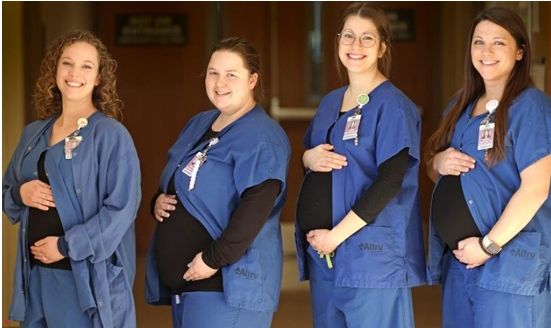
Pregnancy in Healthcare Workers in Aged Care
A Safety Guide for Healthcare Workers in Australia and New Zealand
Working in aged care is a physically and emotionally challenging profession. In Australia
and New Zealand, thousands of nurses, health care assistants (HCAs), and non-clinical
staff provide essential support to our aging population. However, when a healthcare
worker becomes pregnant, the workplace introduces a unique set of occupational
hazards.
From infectious diseases to hazardous medications and industrial chemicals, understanding these risks is vital for safeguarding both the mother and the developing foetus. This blog compiles the essential safety information every pregnant aged care worker needs to know.
From infectious diseases to hazardous medications and industrial chemicals, understanding these risks is vital for safeguarding both the mother and the developing foetus. This blog compiles the essential safety information every pregnant aged care worker needs to know.
Regulatory Legislation
Both Australia (under Safe Work Australia) and New Zealand (under WorkSafe and
Health NZ) have strong legislation safeguarding pregnant workers. Employers must
provide a safe working environment by law. If a "safe job" cannot be found, workers in
Australia may be eligible for "Paid No Safe Job Leave," while New Zealand workers can
access specific "Special Leave" and parental protections.
Infectious Diseases and Immune Status
Residents in aged care facilities often live closely together and, due to age, may have
weakened immune systems, making them more vulnerable to infections. For a pregnant
worker, the risk is doubled: the severity of illness for the mother and the potential for
transmission to the foetus.
- Cytomegalovirus (CMV): Possibly the most underrated risk. CMV can be found in bodily fluids such as urine and saliva. A primary infection during pregnancy can result in congenital CMV, which may cause hearing loss or developmental delays in the baby.
- Respiratory Viruses (Influenza, COVID-19, RSV): Pregnancy alters a woman’s lung capacity and immune response. These viruses increase the risk of maternal pneumonia and have been associated with higher rates of preterm birth.
- Varicella (Chickenpox) and Rubella: If a worker's serology indicates they are not immune, exposure to these can be disastrous, resulting in congenital rubella syndrome or severe maternal illness.
- Gastroenteritis (Norovirus): Although usually short-term, severe dehydration
from vomiting and diarrhoea can reduce placental blood flow and lead to
premature labour.
The Strategy: Ensure your vaccinations are up to date before becoming pregnant or early in pregnancy. If an outbreak occurs in your facility or wing, request an immediate transfer to an unaffected or "clean" area.
Hazardous Medications: The "Dust" Hazard
The way medications are handled in aged care - particularly crushing tablets for
residents with dysphagia - creates a significant inhalation risk. Even skin contact with
certain drug residues can be hazardous.
- Cytotoxic Drugs: These are not only for cancer. Medications like Methotrexate (Methoblastin) are commonly used for Rheumatoid Arthritis in aged care. They are powerful teratogens that can cause miscarriage or foetal malformations.
- Hormonal Agents: Drugs used for prostate enlargement, such as Finasteride (Proscar) or Dutasteride (Avodart/Duodart), can affect the development of a male foetus’s reproductive organs if the mother touches a broken tablet (subcutaneous absorption) or inhales the dust.
- Immunosuppressants: Drugs like Azathioprine (Imuran) or Leflunomide (Arava) are often used for chronic autoimmune conditions but pose significant risks during pregnancy.
- Topical agents: Creams like Efudix (Fluorouracil), used for skin cancers or sunspots, are cytotoxic and should never be applied by a pregnant worker without double-gloving.
The Strategy: Avoid the "Medication Round" if it involves crushing hazardous pills. Use a sealed-pouch system (such as a Silent Knight) if crushing is unavoidable and always wear a P2/N95 mask to prevent inhaling the dust from the crushed medication.
Chemical Exposure and Environment
Industrial cleaning is a regular part of aged care to uphold hygiene standards. However,
the chemicals involved can be harsh.
- Sterilants and High-Level Disinfectants: Chemicals containing glutaraldehyde or formaldehyde (used in some medical equipment cleaning) are toxic and should be completely avoided.
- Bleach and Ammonia: When used in small amounts in poorly ventilated residential en-suites, the vapours can cause respiratory distress and nausea, which may worsen morning sickness or cause fainting.
- Pesticides and Strippers: Be aware of facility maintenance schedules. Floor stripping agents and professional pest control chemicals can often contain organic solvents or neurotoxins, which should not be inhaled during pregnancy.
The Strategy: Always review the Safety Data Sheet (SDS) provided for any chemical used in the facility. Check for "Hazard Statement H360" (May damage fertility or the unborn child). If present, the task must be allocated to someone else.

Physical Demands and Ergonomics
Although not a biological "poison," physical strain is a significant risk factor during the
third trimester of pregnancy.
- Manual Handling: Hormonal changes (relaxin) soften ligaments, increasing the risk of injury to the lower back and pelvis.
- The "Boosting" Risk: Manually sliding a resident up in bed or performing solo transfers should be strictly avoided.
- Heat Stress: Pregnant women tend to have a higher baseline body temperature.
Working in heavy PPE in poorly ventilated areas can cause overheating and
dizziness.
Creating Your Pregnancy Action Plan
To manage these risks, a proactive approach is essential. Don't wait for a "near miss" to
raise concerns.
- Notification: Inform your manager early. Provide a medical certificate that lists specific restrictions (e.g., "no heavy lifting," "no exposure to cytotoxic medications").
- The Risk Audit: Arrange a meeting to review the residents on your floor. Identify who is on "Hazardous Meds" and who has active infections.
- PPE Upgrades: If you need to work in somewhat risky environments, make sure
you have access to high-quality PPE, including long-sleeved gowns and N95
masks, rather than just standard surgical masks.
- Task Adjustment: Negotiate a change in duties. You may be able to transition from high-intensity personal care to more administrative or lower-risk positions. Recommend that pregnant workers be excluded from terminal cleans, recurrent spill responses, and areas undergoing chemical treatments.
Key Points
- Infections of Concern – measles, rubella, chickenpox, shingles, emerging viruses
- Risk Assessment and modified duties
- Employer Obligations vs. Personal Responsibilities
- Supporting staff without stigma
- Ensure pregnancy is included in IPC risk assessments and workforce planning. Involve the IPC Lead in this assessment and risk review.
- Refer to local policy for specific IPC risk assessments and appropriate controls, e.g., PPE.
- Clarify that pregnancy is an important consideration in personal risk
assessments and outbreak management plans.

Conclusion
Pregnancy doesn't mean you can't work in aged care, but it does mean that the
"business as usual" approach needs to be adjusted. By recognising the specific risks -
from the CMV in a resident’s room to the Methotrexate on the med trolley - you can keep
your pregnancy safe.
In both Australia and New Zealand, the law supports you. Make use of your facility’s Safety Data Sheets, rely on your Health and Safety Representatives, and never hesitate to delegate a task that puts you or your baby at risk. Professionalism in healthcare involves recognising your limits and prioritising the health of the next generation.
In both Australia and New Zealand, the law supports you. Make use of your facility’s Safety Data Sheets, rely on your Health and Safety Representatives, and never hesitate to delegate a task that puts you or your baby at risk. Professionalism in healthcare involves recognising your limits and prioritising the health of the next generation.
For more information on this topic, and others, see the HUB or ask EVE, our multilingual
bot. Alternatively, our staff can help you: support@infectioncontrol.care
We are on LinkedIn and Facebook – like, share and follow.
Take advantage of our expertise in IPC. See the HUB for policies, resources and courses relating to this very important subject. Ask EVE for a quick answer to your question.
We are on LinkedIn and Facebook – like, share and follow.
Take advantage of our expertise in IPC. See the HUB for policies, resources and courses relating to this very important subject. Ask EVE for a quick answer to your question.
Lyndon Forrest
Managing Director | CEO
Lyndon is the Managing Director of Infection Prevention Services (IPS), bringing over 30 years' experience supporting aged care providers across Australia and New Zealand.
With a background spanning outbreak response, compliance, and infection risk management — alongside hands-on experience leading teams, managing multi-site operations, and navigating business turnaround — he understands both the clinical and organisational pressures aged care providers face. Lyndon holds a Master of Commerce (Industrial Relations), and applies that foundation to the people, process, and growth challenges that come with running a complex healthcare services business.
He is passionate about building the systems and capability that make infection prevention sustainable — not just compliant — and about helping organisations grow their confidence alongside their practice.
Lyndon's focus is straightforward: strengthen operations, develop the right people, and drive proactive infection prevention strategies that protect residents, staff, and communities for the long term.
Lyndon is the Managing Director of Infection Prevention Services (IPS), bringing over 30 years' experience supporting aged care providers across Australia and New Zealand.
With a background spanning outbreak response, compliance, and infection risk management — alongside hands-on experience leading teams, managing multi-site operations, and navigating business turnaround — he understands both the clinical and organisational pressures aged care providers face. Lyndon holds a Master of Commerce (Industrial Relations), and applies that foundation to the people, process, and growth challenges that come with running a complex healthcare services business.
He is passionate about building the systems and capability that make infection prevention sustainable — not just compliant — and about helping organisations grow their confidence alongside their practice.
Lyndon's focus is straightforward: strengthen operations, develop the right people, and drive proactive infection prevention strategies that protect residents, staff, and communities for the long term.
Erica Callaghan
Marketing Manager
Erica Callaghan is a dedicated professional with a rich background in agriculture and nutrient management. Growing up on her family's farm in Mid Canterbury, she developed a deep passion for farming. She currently resides on her partner's arable property in South Canterbury.
In 2017, Erica joined the Farm Sustainability team, focusing on nutrient management and environmental stewardship. In February 2024, she became the Manager of Marketing and Sales at Bug Control New Zealand - Infection Prevention Services, where her passion now includes improving infection prevention outcomes.
Outside of work, Erica loves cooking and traveling, often combining her culinary interests with her explorations in Italy and Vietnam. She enjoys entertaining family and friends and remains actively involved in farm activities, especially during harvest season.
Erica Callaghan is a dedicated professional with a rich background in agriculture and nutrient management. Growing up on her family's farm in Mid Canterbury, she developed a deep passion for farming. She currently resides on her partner's arable property in South Canterbury.
In 2017, Erica joined the Farm Sustainability team, focusing on nutrient management and environmental stewardship. In February 2024, she became the Manager of Marketing and Sales at Bug Control New Zealand - Infection Prevention Services, where her passion now includes improving infection prevention outcomes.
Outside of work, Erica loves cooking and traveling, often combining her culinary interests with her explorations in Italy and Vietnam. She enjoys entertaining family and friends and remains actively involved in farm activities, especially during harvest season.
Toni Sherriff
Clinical Nurse Specialist
Toni is a Registered Nurse with extensive experience in Infection Prevention and Control. Her career began as a kitchen hand and caregiver in Aged Care facilities, followed by earning a Bachelor of Nursing.
Toni has significant experience, having worked in Brisbane’s Infectious Diseases ward before returning home to New Zealand, where she continued her career as a Clinical Nurse Specialist in Infection Prevention and Control within Te Whatu Ora (Health NZ).
Toni brings her expertise and dedication to our team, which is instrumental in providing top-tier infection prevention solutions to our clients.
Toni is a Registered Nurse with extensive experience in Infection Prevention and Control. Her career began as a kitchen hand and caregiver in Aged Care facilities, followed by earning a Bachelor of Nursing.
Toni has significant experience, having worked in Brisbane’s Infectious Diseases ward before returning home to New Zealand, where she continued her career as a Clinical Nurse Specialist in Infection Prevention and Control within Te Whatu Ora (Health NZ).
Toni brings her expertise and dedication to our team, which is instrumental in providing top-tier infection prevention solutions to our clients.
Julie Hadfield
Accounts & Payroll
Julie is experienced in Accounts & Payroll Administration & after a long career in both the Financial & Local Government Sectors, is now working with our team. Julie brings her strong time management & organisational skills to our team, which is important to keep the company running in the background to enable the rest of our team to provide top notch service to all of our clients.
Julie is experienced in Accounts & Payroll Administration & after a long career in both the Financial & Local Government Sectors, is now working with our team. Julie brings her strong time management & organisational skills to our team, which is important to keep the company running in the background to enable the rest of our team to provide top notch service to all of our clients.
Andrea Murray
Content Editor
I attended Otago University in NZ and graduated as a Dental Surgeon. After 40 years in the profession, I retired in 2022. Infection prevention knowledge was part of everyday practice, dealing with sterilisation, hand hygiene, and cleaning.
Before retiring, I began doing some editing and proofreading for Bug Control as I am interested in the subject and in the English language. During the COVID-19 lockdown, I attended the ACIPC course "Introduction to Infection Prevention and Control", which increased my interest in the subject. I now work part-time as the Content Editor for the company.
I attended Otago University in NZ and graduated as a Dental Surgeon. After 40 years in the profession, I retired in 2022. Infection prevention knowledge was part of everyday practice, dealing with sterilisation, hand hygiene, and cleaning.
Before retiring, I began doing some editing and proofreading for Bug Control as I am interested in the subject and in the English language. During the COVID-19 lockdown, I attended the ACIPC course "Introduction to Infection Prevention and Control", which increased my interest in the subject. I now work part-time as the Content Editor for the company.
Personally, I lived in the UK for 10 years. My two children were born in Scotland, and now both are living in Europe, one in Amsterdam, Netherlands, and the other in Edinburgh, Scotland. I live close to Fairlie on the South Island of NZ, a beautiful part of the country, and I love being out of the city.
Princess
Customer Support
Princess began her career as a dedicated Customer Service Representative, honing her communication and problem-solving skills. She later transitioned into a Literary Specialist role, where she developed a keen eye for detail. Her journey then led her to a Sales Specialist position, where she excelled in client relations.
Now, as a Customer Support professional in Infection Prevention Services. Princess focuses on ensuring customer satisfaction, building loyalty, and enhancing the overall customer journey.
Princess began her career as a dedicated Customer Service Representative, honing her communication and problem-solving skills. She later transitioned into a Literary Specialist role, where she developed a keen eye for detail. Her journey then led her to a Sales Specialist position, where she excelled in client relations.
Now, as a Customer Support professional in Infection Prevention Services. Princess focuses on ensuring customer satisfaction, building loyalty, and enhancing the overall customer journey.
Dianne Newey
Senior Infection Prevention and Control Consultant
Dianne is a Senior Clinical Consultant at Infection Prevention Services (IPS), bringing over 35 years of nursing experience and a depth of clinical knowledge that most people would need two careers to accumulate.
Having served as Clinical Director at Royal Ryde Rehabilitation Hospital alongside a career spanning the full breadth of clinical practice, Dianne has seen it all — and more importantly, knows exactly what to do about it. She is the person in the room that everyone quietly hopes will speak first.
For more than seven years she has been a cornerstone of the IPS team, providing clinical advice, developing and reviewing policies and procedures, delivering monthly IPC webinars to IP Leads, and conducting environmental audits in aged care facilities across Australia and New Zealand. If infection prevention has a question, Dianne almost certainly has the answer — and she'll deliver it with a laugh that you'll hear from the other end of the corridor.
A true fountain of knowledge, wrapped in the kind of warmth and humour that only three decades of nursing can produce. Customers don't just trust Dianne — they look forward to hearing from her.
Dianne is a Senior Clinical Consultant at Infection Prevention Services (IPS), bringing over 35 years of nursing experience and a depth of clinical knowledge that most people would need two careers to accumulate.
Having served as Clinical Director at Royal Ryde Rehabilitation Hospital alongside a career spanning the full breadth of clinical practice, Dianne has seen it all — and more importantly, knows exactly what to do about it. She is the person in the room that everyone quietly hopes will speak first.
For more than seven years she has been a cornerstone of the IPS team, providing clinical advice, developing and reviewing policies and procedures, delivering monthly IPC webinars to IP Leads, and conducting environmental audits in aged care facilities across Australia and New Zealand. If infection prevention has a question, Dianne almost certainly has the answer — and she'll deliver it with a laugh that you'll hear from the other end of the corridor.
A true fountain of knowledge, wrapped in the kind of warmth and humour that only three decades of nursing can produce. Customers don't just trust Dianne — they look forward to hearing from her.
Caoimhe (Keva) Stewart
Clinical & Business Operations Manager
Caoimhe is the Clinical & Business Operations Manager at Infection Prevention Services (IPS), bringing a clinical background as a Registered Nurse across the UK and Australia — and an almost unsettling ability to make technology do exactly what she wants.
With experience in Occupational Health, Palliative Care, and Community Nursing, she understands the real challenges faced by healthcare teams. What she may lack in stature she more than makes up for in impact — Caoimhe is the kind of person who walks into a problem, sizes it up, and has three solutions before anyone else has finished reading the brief.
Customers love her. Not just because she delivers — though she always does — but because she genuinely cares about the outcome on the other side. She is passionate about creating seamless learning experiences and empowering organisations with the tools, knowledge, and support needed to strengthen infection prevention practices and improve care outcomes.
Small in size. Mighty in results. Completely irreplaceable.
Caoimhe is the Clinical & Business Operations Manager at Infection Prevention Services (IPS), bringing a clinical background as a Registered Nurse across the UK and Australia — and an almost unsettling ability to make technology do exactly what she wants.
With experience in Occupational Health, Palliative Care, and Community Nursing, she understands the real challenges faced by healthcare teams. What she may lack in stature she more than makes up for in impact — Caoimhe is the kind of person who walks into a problem, sizes it up, and has three solutions before anyone else has finished reading the brief.
Customers love her. Not just because she delivers — though she always does — but because she genuinely cares about the outcome on the other side. She is passionate about creating seamless learning experiences and empowering organisations with the tools, knowledge, and support needed to strengthen infection prevention practices and improve care outcomes.
Small in size. Mighty in results. Completely irreplaceable.
Bridgette Mackie
Clinical Nurse Educator
Bridgette is an experienced New Zealand Registered Nurse, qualified Healthcare Auditor, and Healthcare Educator with a strong background in clinical quality, competency assessment, and infection prevention. She has led large-scale OSCE and CAP training programmes for internationally qualified nurses, developed sector-specific educational resources, and coordinated HealthCERT audit preparation in the surgical sector.
Known for her engaging teaching style and genuine passion for supporting learners, Bridgette excels at making complex topics accessible and relevant. She blends operational leadership with a deep commitment to professional development and safe, effective practice.
Bridgette is an experienced New Zealand Registered Nurse, qualified Healthcare Auditor, and Healthcare Educator with a strong background in clinical quality, competency assessment, and infection prevention. She has led large-scale OSCE and CAP training programmes for internationally qualified nurses, developed sector-specific educational resources, and coordinated HealthCERT audit preparation in the surgical sector.
Known for her engaging teaching style and genuine passion for supporting learners, Bridgette excels at making complex topics accessible and relevant. She blends operational leadership with a deep commitment to professional development and safe, effective practice.