
Nov 25
Changes in the IPC Guide, 2026 Edition
What the second edition of the Aged Care Infection Prevention and Control Guide means for your precautions, PPE, cleaning, oral care, and IPC Lead in Australia and New Zealand
The Australian Commission on Safety and Quality in Health Care released the second edition of the Aged Care Infection Prevention and Control (IPC) Guide on 30 October 2026. This blog is for IPC Leads, nurses, care workers, and facility managers who need to know what has changed and which policies to update first. We cover the new IPC Lead chapter in the guide, changes to transmission-based precautions, personal protective equipment (PPE), cleaning, and oral care, as well as changes the Commission's summary doesn't list. We will conclude with a clear, prioritised policy review list for your facility.

What Is the Aged Care IPC Guide, and What Changed in October 2026?
The Aged Care IPC Guide was first published in 2024. It supplements the Australian Guidelines for the Prevention and Control of Infection in Healthcare and adapts them for residential and community aged care. The second edition, released on 30 October 2026, strengthens alignment with the Aged Care Quality Standards (effective 1 November 2025).
The Commission's summary outlines the headline changes:
The Commission also states that its recommendations on transmission-based precautions for specific infections have not changed. We compared the 2024 Guide (version 1.1, amended March 2025) with the 2026 edition line by line. The precautions tables, now Tables 17 to 19, differ in several places, and those differences will affect your policies.
The Commission's summary outlines the headline changes:
- A new chapter on implementing an IPC Lead role.
- New and updated guidance on PPE and respiratory disease precautions, including a table comparing face and eye protection.
- Updated dental and oral care, and revised nutrition and hydration content.
A revised cleaning schedule that separates equipment, personal items, environmental fixtures, and workplace items. - Supporting posters and training modules.
The Commission also states that its recommendations on transmission-based precautions for specific infections have not changed. We compared the 2024 Guide (version 1.1, amended March 2025) with the 2026 edition line by line. The precautions tables, now Tables 17 to 19, differ in several places, and those differences will affect your policies.
How Have Transmission-Based Precautions Changed?
These are the differences we identified between the two editions.
Two new definitions are behind the tables:
| Condition | 2024 Guide | 2026 Guide |
| COVID-19 | Contact and respiratory | Respiratory only |
| Respiratory illness, unknown cause | Contact and respiratory | Respiratory only |
| Gastroenteritis, cause unknown | Contact | Contact and respiratory |
| Rotavirus | Contact, for duration of illness | Contact and respiratory, until 48 hours after symptoms resolve; use soap and water |
| C. difficile | Duration of illness | Until 48 hours after symptoms resolve |
| Disseminated shingles | Duration of illness | Contact and respiratory precautions with PFR until lesions are dry and crusted over |
| Tuberculosis (TB) | Pulmonary | Pulmonary or laryngeal, contact and respiratory with PFR; standard precautions only for latent or extrapulmonary TB |
| Chickenpox | Contact and respiratory with particulate filter respirator (PFR) | Adds: single room and isolation where possible |
| RSV, rhinovirus | Avoid contact with other residents | Contact and respiratory (unchanged), Duration of illness; new: unwell workers should avoid contact with residents "including by not attending work". RSV: extend precautions for people with prolonged shedding. |
| Conjunctivitis | — | Contact, Duration of illness (unchanged); Notes it is highly contagious and can cause outbreak |
Two new definitions are behind the tables:
- "Duration of illness" now means precautions continue until the person has no symptoms. Workers remain off work for the exclusion period. If symptoms persist longer than expected, seek a medical opinion before stopping precautions.
- "Susceptible" now includes people who are pregnant, immunocompromised, taking immunosuppressants, unvaccinated, or with waning immunity. In 2024, the susceptible guidance covered workers only. For chickenpox and shingles, the Guide now also says susceptible residents must not have direct contact with the infected person.
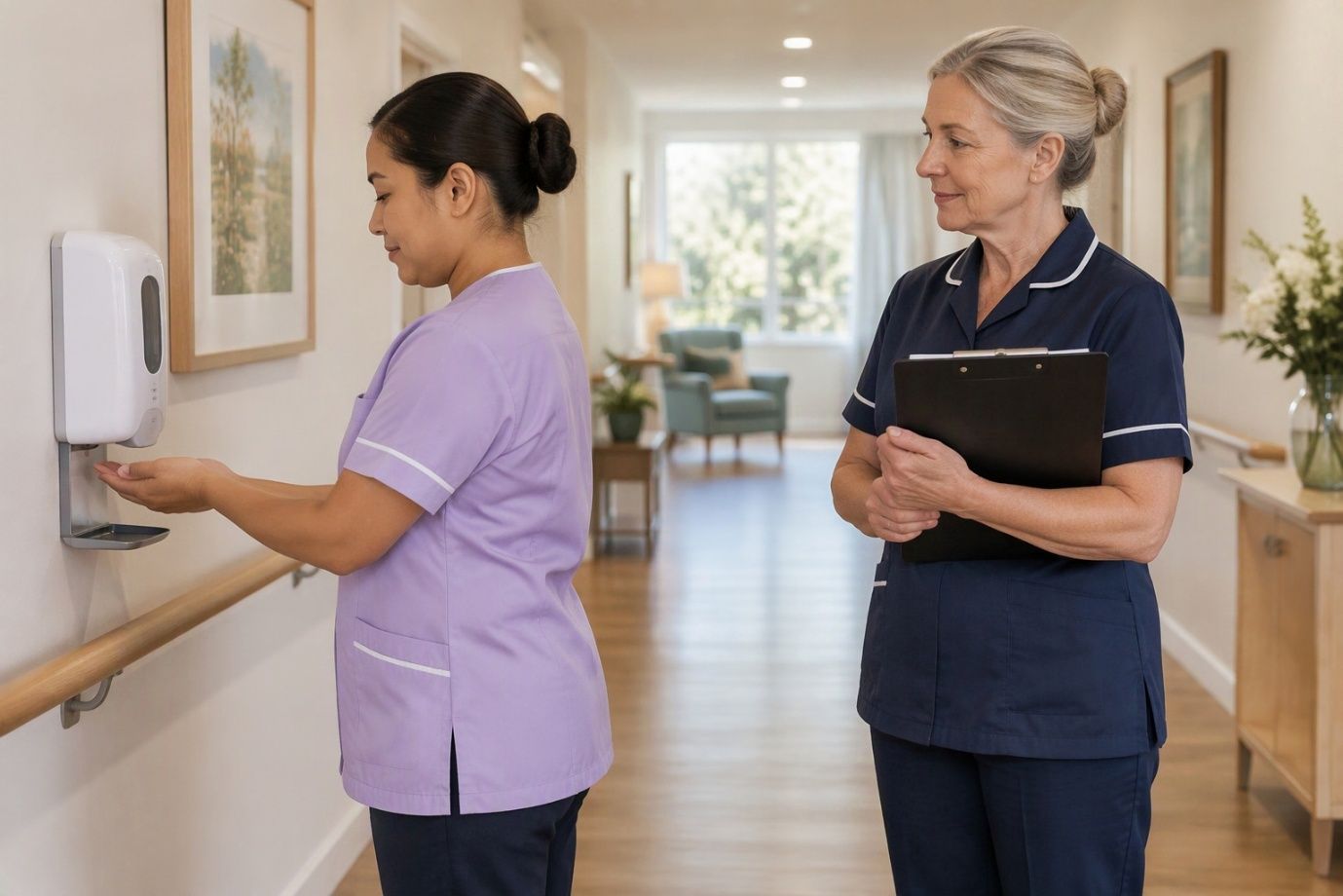
What this means on the floor:
Staff used to gowning up for COVID-19 may be surprised by the move to respiratory precautions only. Explain that the main route of spread is respiratory, so the change isn't perceived as reduced protection. Standard precautions still apply, including gloves and gowns whenever there's a risk of contact with body fluids.
The duration of precautions for influenza, measles, scabies, norovirus, and herpes simplex remain unchanged.
What Has Changed for PPE and Respirators?
- PFRs use is tighter. The Guide says a PFR and eye protection are always required for measles, chickenpox, disseminated shingles and tuberculosis. For any other respiratory infection, the IPC Lead (or person responsible for IPC) decides, based on a risk assessment, whether a PFR is needed in place of a surgical mask. A PFR is recommended for high-risk situations such as an aerosol-generating procedure (AGP) for someone with a suspected or confirmed respiratory infection. The AGP advice now reads "appropriate PPE including PFR, in consultation with the IPC lead"
- Combined contact and respiratory precautions now list a gown, surgical mask and eye protection. Gloves are worn when there is a risk of exposure to blood or body fluids.
- AGP guidance now reads "PPE, including PFR".
- Aprons and gowns must be "fluid-resistant" rather than "water-resistant". Check your next PPE order.
- New Table 10 compares the types and features of face and eye protection.
- Norovirus PPE: for a suspected case, use combined contact and respiratory precautions while a stool sample is collected and tested (gown, surgical mask and eye protection, with gloves when there is a risk of contact with blood or body fluids). The Guide says to base ongoing combined precautions on a risk assessment in outbreaks or for residents who are incontinent.
What Has Changed in Environmental Cleaning?
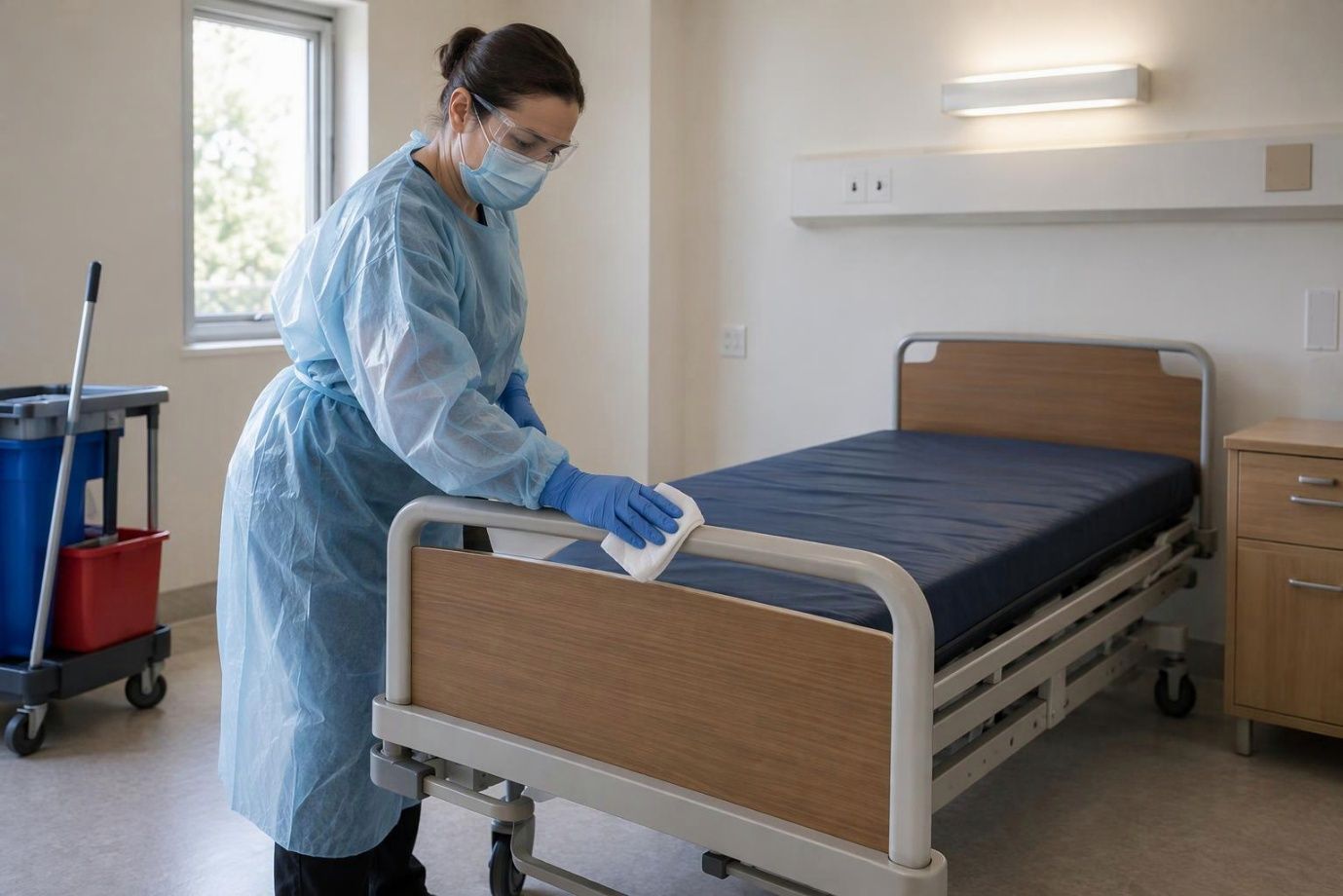
- "Terminal clean" has now been replaced with "high-level clean". It also applies when a resident's infection status changes, not only when they leave the room.
- The cleaning schedule is split into Tables 22a and 22b. Each frequency is now 'in addition to cleaning between residents'." → "In the equipment table, each frequency is now 'in addition to cleaning between use with different residents'
- Some high-risk frequencies have increased: computers and keyboards move from twice daily to after each use. Curtains stay weekly in the high-risk column, but are now also changed after transmission-based precautions end or infection risk changes.
- "TGA-listed" becomes "ARTG-listed". Where required, products and equipment must be on the Australian Register of Therapeutic Goods (ARTG).
- Cleaning audit results should now be reported to the executive team.
One item hasn't been updated: the Guide still cites AS/NZS 4146:2000 for laundry. AS 4146:2024 is the current standard, so use the 2024 version in your laundry procedures.
What Is New in Oral Care and Hydration?
The denture change is the one most likely to be wrong in practice right now.
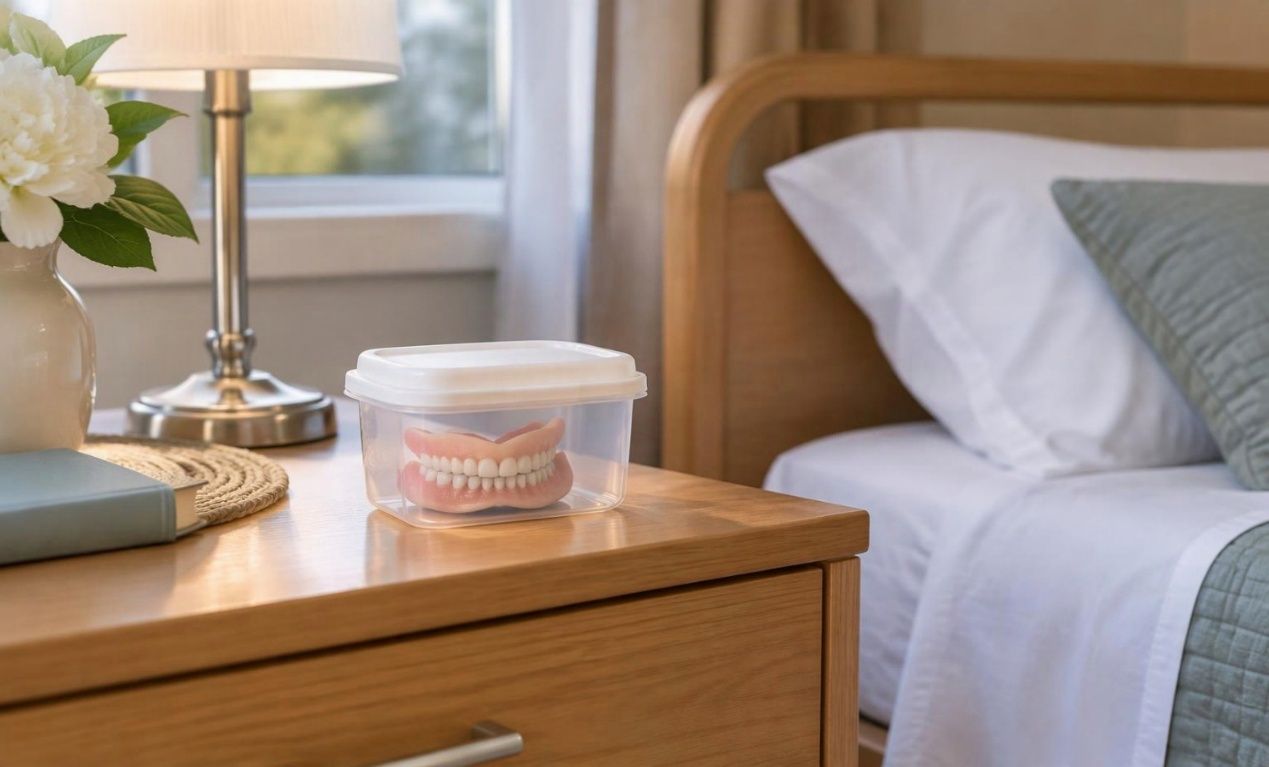
- Dentures: "soak in water or solution overnight" becomes "store clean and dry overnight". Soak only on a dentist's advice. This reverses the 2024 advice.
- After meals: remove dentures and rinse the resident's mouth.
- Non-healing ulcers: refer to "a dentist or healthcare professional" rather than to "medical review".
- When a resident declines oral care, a short-term alternative is to wipe fluoride toothpaste or chlorhexidine over the teeth and gums with a swab or a gloved finger. A new hydration section covers the causes of dehydration and practical strategies to prevent it.
What Does the New IPC Lead Chapter Require?
Chapter 3 is new.
The 2024 Guide required residential providers to have an on-site IPC Lead and said home and community providers did not need a dedicated one. The 2026 Guide sets out the role in detail. The IPC Lead must be a nurse who has completed, or is working towards, specialist IPC training (such as an AQF Level 8 course). A local presence in each facility or service is important. Home and community providers can use a team-based approach if they don't employ a nurse.
The chapter includes:
- a sample job description
- the four communication domains
- guidance on IPC champions
- reporting lines to the governing body
- Australian Immunisation Register access
- mandatory reporting: quality indicators, the quarterly financial report, the Serious Incident Response Scheme (SIRS), and notifiable diseases.
- The Department of Health, Disability and Ageing requires specialist IPC training at AQF Level 8, with interim training for IPC Leads who are still working towards it.
What Other Governance Changes Should Providers Know About?
- Aged Care Act 2024 obligations have been added. Providers in registration categories 4 to 6 must have an IPC system. Categories 5 and 6 must also support appropriate antimicrobial use.
- The Charter of Aged Care Rights has been replaced by the Statement of Rights.
- Department names have been updated. The Department of Health and Aged Care is now the Department of Health, Disability and Ageing, and many resources now sit within the Australian Centre for Disease Control.
- Risk management: administrative controls and PPE are now referred to as "individual-level controls", with an emphasis on layered protection.
- Immunisation: RSV vaccination is added to the resident immunisation schedule.
- Invasive devices: nurse practitioners are listed alongside GPs.
- Surveillance: monitoring data "should not be used to attribute fault". This supports a no-blame approach to infection monitoring.
Does the 2026 Guide Apply in New Zealand?
The Guide is an Australian document. New Zealand facilities work to the Ngā Paerewa Health and Disability Services Standard (NZS 8134:2021) and local Te Whatu Ora guidance. The clinical updates — denture storage, cleaning frequencies, and PPE selection — remain a useful benchmark when you next review your policies.
Which Policies Should You Review First?
☐ Transmission-based precautions — COVID-19, unknown gastroenteritis, rotavirus, and C. difficile durations, plus the new "susceptible" definition.
☐ PPE and PFR — the narrowed PFR guidance and fluid-resistant gowns.
☐ Environmental cleaning — "high-level clean", new triggers, and new frequencies.
☐ Oral care — dry denture storage.
☐ IPC Lead role — position description, reporting lines, and training.
Frequently Asked Questions
When was the second edition of the Aged Care IPC Guide released?
The Australian Commission on Safety and Quality in Health Care released it on 30 October 2026.
Do residents with COVID-19 still need contact precautions under the 2026 Guide?
The 2026 precautions table lists respiratory precautions only for COVID-19. Standard precautions still apply, so use gloves and gowns when there is a risk of contact with body fluids.
How should dentures be stored overnight in aged care?
The 2026 Guide recommends storing dentures clean and dry overnight. Soak them only on a dentist's advice.
What is a high-level clean?
It is the new term for a terminal clean. It applies when a resident leaves a room and when their infection status changes.
Who can be an IPC Lead under the 2026 Guide?
A nurse who has completed, or is completing, specialist IPC training (such as an AQF Level 8 course), with a local presence at the facility. Home and community providers may use a team-based approach.
Take-Home Message
The 2026 Guide is more than a tidy-up. Some changes are set out in the Commission's summary; others sit quietly in the tables. Start with dentures and COVID-19 precautions — they're the two changes staff will notice first. Brief your team on the reasons, not just the rules, and update your policies before your next assessment.
Read more of our blogs on the IPS website, the HUB.
For a regular snippet of news, we are on LinkedIn and Facebook. Like us and share the post with others
For a regular snippet of news, we are on LinkedIn and Facebook. Like us and share the post with others
For a quick question, ask EVE, our multilingual bot or to contact us, email support@infectioncontrol.care
Lyndon Forrest
Managing Director | CEO
Lyndon is the Managing Director of Infection Prevention Services (IPS), bringing over 30 years' experience supporting aged care providers across Australia and New Zealand.
With a background spanning outbreak response, compliance, and infection risk management — alongside hands-on experience leading teams, managing multi-site operations, and navigating business turnaround — he understands both the clinical and organisational pressures aged care providers face. Lyndon holds a Master of Commerce (Industrial Relations), and applies that foundation to the people, process, and growth challenges that come with running a complex healthcare services business.
He is passionate about building the systems and capability that make infection prevention sustainable — not just compliant — and about helping organisations grow their confidence alongside their practice.
Lyndon's focus is straightforward: strengthen operations, develop the right people, and drive proactive infection prevention strategies that protect residents, staff, and communities for the long term.
Erica Callaghan
Marketing Manager
Erica Callaghan is a dedicated professional with a rich background in agriculture and nutrient management. Growing up on her family's farm in Mid Canterbury, she developed a deep passion for farming. She currently resides on her partner's arable property in South Canterbury.
In 2017, Erica joined the Farm Sustainability team, focusing on nutrient management and environmental stewardship. In February 2024, she became the Manager of Marketing and Sales at Bug Control New Zealand - Infection Prevention Services, where her passion now includes improving infection prevention outcomes.
Outside of work, Erica loves cooking and traveling, often combining her culinary interests with her explorations in Italy and Vietnam. She enjoys entertaining family and friends and remains actively involved in farm activities, especially during harvest season.
Toni Sherriff
Clinical Nurse Specialist
Toni is a Registered Nurse with extensive experience in Infection Prevention and Control. Her career began as a kitchen hand and caregiver in Aged Care facilities, followed by earning a Bachelor of Nursing.
Toni has significant experience, having worked in Brisbane’s Infectious Diseases ward before returning home to New Zealand, where she continued her career as a Clinical Nurse Specialist in Infection Prevention and Control within Te Whatu Ora (Health NZ).
Toni brings her expertise and dedication to our team, which is instrumental in providing top-tier infection prevention solutions to our clients.
Julie Hadfield
Accounts & Payroll
Julie is experienced in Accounts & Payroll Administration & after a long career in both the Financial & Local Government Sectors, is now working with our team. Julie brings her strong time management & organisational skills to our team, which is important to keep the company running in the background to enable the rest of our team to provide top notch service to all of our clients.
Andrea Murray
Content Editor
I attended Otago University in NZ and graduated as a Dental Surgeon. After 40 years in the profession, I retired in 2022. Infection prevention knowledge was part of everyday practice, dealing with sterilisation, hand hygiene, and cleaning.
Before retiring, I began doing some editing and proofreading for Bug Control as I am interested in the subject and in the English language. During the COVID-19 lockdown, I attended the ACIPC course "Introduction to Infection Prevention and Control", which increased my interest in the subject. I now work part-time as the Content Editor for the company.
Personally, I lived in the UK for 10 years. My two children were born in Scotland, and now both are living in Europe, one in Amsterdam, Netherlands, and the other in Edinburgh, Scotland. I live close to Fairlie on the South Island of NZ, a beautiful part of the country, and I love being out of the city.
Princess
Customer Support
Princess began her career as a dedicated Customer Service Representative, honing her communication and problem-solving skills. She later transitioned into a Literary Specialist role, where she developed a keen eye for detail. Her journey then led her to a Sales Specialist position, where she excelled in client relations.
Now, as a Customer Support professional in Infection Prevention Services. Princess focuses on ensuring customer satisfaction, building loyalty, and enhancing the overall customer journey.
Dianne Newey
Senior Infection Prevention and Control Consultant
Dianne is a Senior Clinical Consultant at Infection Prevention Services (IPS), bringing over 35 years of nursing experience and a depth of clinical knowledge that most people would need two careers to accumulate.
Having served as Clinical Director at Royal Ryde Rehabilitation Hospital alongside a career spanning the full breadth of clinical practice, Dianne has seen it all — and more importantly, knows exactly what to do about it. She is the person in the room that everyone quietly hopes will speak first.
For more than seven years she has been a cornerstone of the IPS team, providing clinical advice, developing and reviewing policies and procedures, delivering monthly IPC webinars to IP Leads, and conducting environmental audits in aged care facilities across Australia and New Zealand. If infection prevention has a question, Dianne almost certainly has the answer — and she'll deliver it with a laugh that you'll hear from the other end of the corridor.
A true fountain of knowledge, wrapped in the kind of warmth and humour that only three decades of nursing can produce. Customers don't just trust Dianne — they look forward to hearing from her.
Caoimhe (Keva) Stewart
Clinical & Business Operations Manager
Caoimhe is the Clinical & Business Operations Manager at Infection Prevention Services (IPS), bringing a clinical background as a Registered Nurse across the UK and Australia — and an almost unsettling ability to make technology do exactly what she wants.
With experience in Occupational Health, Palliative Care, and Community Nursing, she understands the real challenges faced by healthcare teams. What she may lack in stature she more than makes up for in impact — Caoimhe is the kind of person who walks into a problem, sizes it up, and has three solutions before anyone else has finished reading the brief.
Customers love her. Not just because she delivers — though she always does — but because she genuinely cares about the outcome on the other side. She is passionate about creating seamless learning experiences and empowering organisations with the tools, knowledge, and support needed to strengthen infection prevention practices and improve care outcomes.
Small in size. Mighty in results. Completely irreplaceable.
Bridgette Mackie
Clinical Nurse Educator
Bridgette is an experienced New Zealand Registered Nurse, qualified Healthcare Auditor, and Healthcare Educator with a strong background in clinical quality, competency assessment, and infection prevention. She has led large-scale OSCE and CAP training programmes for internationally qualified nurses, developed sector-specific educational resources, and coordinated HealthCERT audit preparation in the surgical sector.
Known for her engaging teaching style and genuine passion for supporting learners, Bridgette excels at making complex topics accessible and relevant. She blends operational leadership with a deep commitment to professional development and safe, effective practice.