
Nov 13
Flu Season 2026 in Aged Care: What Happened and What to Expect in 2027
A review of influenza outbreaks, vaccination rates, and the subclade K strain in residential aged care across Australia and New Zealand
The 2026 flu season was late, prolonged, and uneven, and aged care felt it more than most. Infection Prevention Services (IPS) supports aged care facilities across Australia and New Zealand in preventing and managing infections, including during the very busy winter season. We can therefore pull together this review of influenza 2026 from an aged care perspective. Written for IPC Leads, nurses, care workers, and facility managers, it covers key statistics from both countries, the outbreaks that affected residential aged care, the role of the influenza A(H3N2) subclade K strain, what went well and what didn't, and what the 2027 flu season could bring. Use it to brief your team, review your outbreak plan, and start your 2027 vaccination planning early.

How Did the 2026 Flu Season Unfold in Australia and New Zealand?
As winter approached, the warning signs were clear. Australia had just emerged from the 2025 season, which recorded the most influenza-related deaths this century. A new influenza A(H3N2) strain, subclade K, had driven a severe Northern Hemisphere season. By April, aged care providers in Australia were being told to expect an early start to influenza in aged care.
What actually happened was the opposite. In both countries, the flu arrived late and stayed late.
In aged care, a late season is a long season. Many facilities were still managing outbreaks in October, well past the usual winter peak.
What actually happened was the opposite. In both countries, the flu arrived late and stayed late.
- In Victoria, influenza notifications rose by about 400% over seven weeks to mid-September, and the Chief Health Officer confirmed that the season had arrived later than in previous years.
- South Australia recorded its highest weekly flu numbers of the year at the end of September - 917 cases and 118 hospitalisations in a single week.
- In New Zealand, University of Canterbury modeller Professor Michael Plank noted that the flu had taken off unusually late. By mid-August, Auckland's severe acute respiratory infection (SARI) hospitalisation rate was the highest on record since 2012, with flu the main driver.
In aged care, a late season is a long season. Many facilities were still managing outbreaks in October, well past the usual winter peak.
What Do the 2026 Statistics Tell Us About Aged Care?
| Measure | Australia | New Zealand |
| Season timing | Late peak — August to October in several states | Late spike from August, with a long tail into October |
| Overall activity | 254,485 laboratory-confirmed notifications nationally to 9 November 2026— well below 2025 | Auckland SARI hospitalisations reached their highest level since 2012 in mid-August |
| Older people | In Queensland, people aged 65+ made up 20% of cases but 49% of flu hospital admissions | Around 500 people die from flu each year, with over-65s at higher risk of complications |
| Aged care outbreaks | Influenza A outbreaks in Tasmanian residential aged care homes increased through September and October | In the week ending 16 August, 21 of 31 respiratory outbreaks were in aged residential care (ARC), with flu confirmed in 8; by early September, 15 ARC facilities had active flu outbreaks |
| Vaccination | Whole-population coverage of 30.4% (September). Resident coverage varied widely, with some South Australian facilities below 10%. | 58% of the general population aged 65 and over by the week ending 9 August, against a 75% target, and 48% for Maori and Pacific peoples. Within aged residential care the pattern differed: resident coverage was reported at roughly 86% to 96%, while staff coverage was considerably lower. |
Surveillance figures are cumulative and are revised as reports come in. Each figure here carries the date it was current. For the latest national position, see the Australian Respiratory Surveillance Report and the Health New Zealand influenza surveillance pages. National aged care outbreak data for Australia are not reported centrally; the figures in this article draw on individual state health department updates. A national count may be available from the ACQSC if requested directly.
The human cost was real. In late August, two residents died during an influenza A outbreak at a 103-bed aged care facility in the North Island, with influenza A reported as the likely cause. The facility also had significant staff sickness.Aged Care Association chief executive Tracey Martin reported outbreaks of acute respiratory and influenza-like illness, particularly in parts of the South Island; however, she noted that feedback did not indicate the flu was any more severe across ARC overall than in a typical winter.
Were There Any Unexpected Strains in 2026?
The short answer is no — no new strain caught the sector off guard. The main player, the influenza A(H3N2) subclade K (nicknamed "super-K" in New Zealand), was well known before winter. It drove Australia's unusual summer surge in late 2025, prompting the Australian Health Protection Committee to warn aged care facilities during the holiday period. It arrived in New Zealand earlier in 2026, and experts believe it was likely behind the August spike.
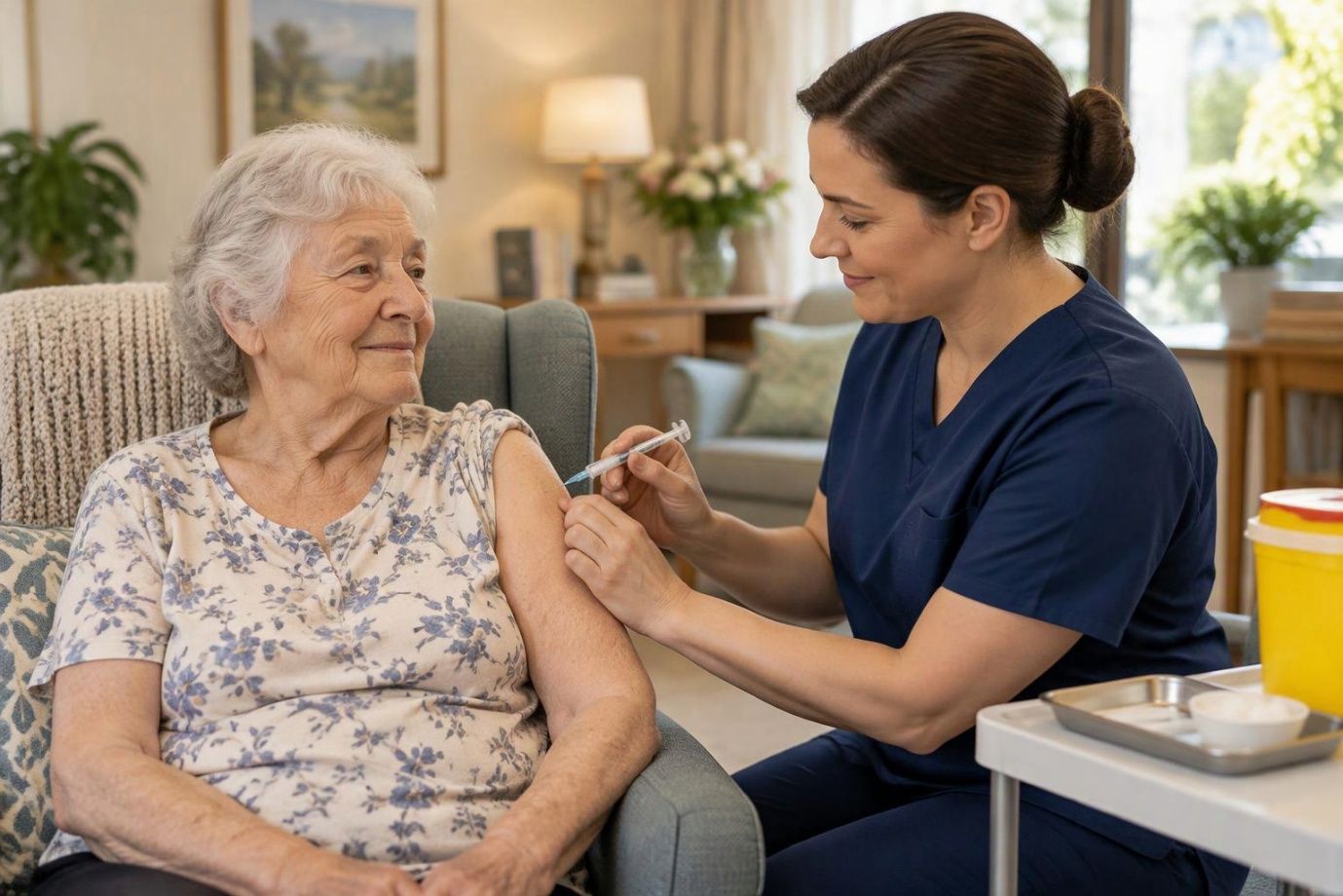
There was also good news. Oseltamivir remained effective against subclade K, and New Zealand's 2026 vaccine covered H3N2 variants, including subclade K, which was reported to match circulating strains well.
What was surprising was the mix late in the season. By October, influenza A(H1N1) had overtaken H3N2 as the most common subtype in Tasmania and Western Australia. New Zealand also saw influenza B and respiratory syncytial virus (RSV) circulating alongside influenza A. For aged care teams, this meant residents could face more than one virus - and more than one outbreak - in a single season.
What Went Well This Season?
- Australian case numbers were far lower than during the record 2025 season. Queensland's year-to-date notifications were 48% lower than the same period in 2025.
- Western Australia funded free flu and RSV vaccines for aged care residents in residential care ahead of winter.
- Co-administration gained traction in New Zealand, where 43.1% of people aged 65+ received their flu vaccine alongside another vaccine, such as COVID-19, shingles, or pertussis.
- Workplace programs proved their worth. In Victoria, public-sector residential aged care staff have maintained flu vaccination coverage above 97% since 2020 (except in 2021), thanks to free on-site vaccination and supportive policy
What Were the Biggest Challenges for Aged Care?
- Timing. A late peak meant vaccines given in April and May had to last into September and October, as protection wanes over the months after vaccination. Some free programs, such as Queensland's, ended on 30 September, even as case numbers were still rising.
- Low resident coverage in some homes. South Australia found coverage below 10% in some residential aged care facilities, and SA Health wrote to providers to remind them of their responsibility to offer recommended vaccines.
- Coverage gaps in New Zealand. Uptake among people aged 65+ fell well below the 75% target, with lower coverage among Māori and Pacific peoples.
- Staff vaccine fatigue and sickness. Tracey Martin said staff willingness to be vaccinated had declined since the COVID-19 period, and outbreaks had hit rosters with little spare capacity.
- Pressure on hospitals. New Zealand hospitals opened flu-only wards and cancelled elective surgery, and the Royal New Zealand College of General Practitioners asked practices to revert to COVID-era infection controls. When hospitals are full, more acute care stays within the facility.
What Could the 2027 Flu Season Look Like?
No one can reliably forecast how severe a flu season will be. As Professor Patrick Reading, Director of the WHO Collaborating Centre in Australia, has stressed, the dominant subtype and human behaviour make severity impossible to predict. What we can do is plan for the possibilities.
- The 2027 vaccine will be updated. The Australian Influenza Vaccine Committee has recommended new H3N2 and B/Victoria components for 2027, consistent with the World Health Organisation (WHO) southern hemisphere recommendation. The H1N1 component remains unchanged.
- H1N1 is worth watching. Its late-2026 rise in parts of Australia could carry over into the 2027 season.
- The "normal" season may no longer be normal. 2025 saw a summer surge, and 2026 peaked later. Planning only for a June to August peak may leave your facility exposed if these trends persist.

How Can Your Facility Prepare Now?
- Book your 2027 resident and staff vaccination clinics now to vaccinate as soon as stock arrives, usually in April.
- Offer catch-up vaccinations to new residents and staff all year round, not just in autumn.
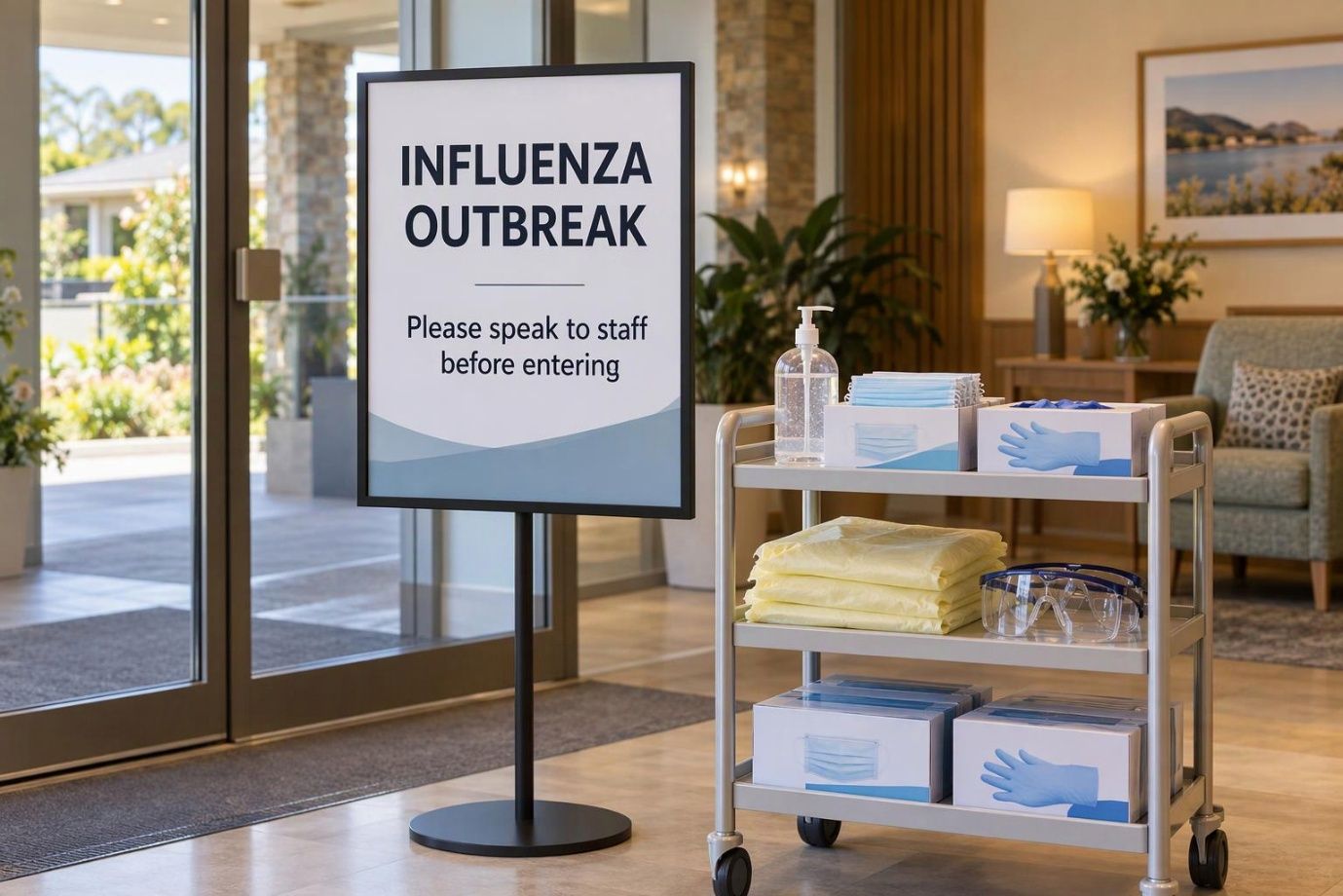
- Keep surveillance active and outbreak kits stocked through spring rather than standing down after August.
- Agree on an antiviral plan with your GPs so residents can start treatment early upon detection of flu.
- Review your outbreak plan against the Strengthened Aged Care Quality Standards (effective 1 November 2025), the CDNA national guideline for acute respiratory infection outbreaks in residential aged care homes in Australia, or the Ngā Paerewa Health and Disability Services Standard (NZS 8134:2021) in New Zealand.
- Check your facility's published resident vaccination rate (AU) or your records (NZ) and set a clear 2027 target.
How Can IPS Help You Get Ready for the 2027 Flu Season?
The 2026 season showed that flu does not always follow the calendar. Your vaccination plan, early detection, and outbreak response need to work in October as well as in July.
IPS supports aged care facilities across Australia and New Zealand with ready-to-use outbreak management tools, IPC Lead training, and monthly staff education via the HUB. TiNA helps you identify training gaps before winter, so your team knows exactly what to do when the first resident becomes unwell. Contact IPS today to start planning for the 2027 flu season — and lead your staff and residents toward a healthier future.
Frequently Asked Questions
Was the 2026 flu season worse than 2025 in Australia?
No. Total case numbers were lower than in the record 2025 season, but the season peaked late and aged care outbreaks persisted into spring.
Which strain drove the 2026 flu season?
Influenza A(H3N2) subclade K drove much of the activity, while influenza A(H1N1) became the most common subtype late in the season in parts of Australia. Influenza B and RSV also circulated in New Zealand.
When should aged care facilities vaccinate for the 2027 flu season?
Vaccinate residents and staff as soon as the 2027 vaccine becomes available, usually in April, and continue offering it to new residents and staff throughout the year.
Will the 2027 flu vaccine be different?
Yes. The 2027 vaccine includes updated H3N2 and B/Victoria components, while the H1N1 component remains the same as in 2026.
Read more of our blogs on the IPS website, the HUB.
For a regular snippet of news, we are on LinkedIn and Facebook. Like us and share the post with others
For a regular snippet of news, we are on LinkedIn and Facebook. Like us and share the post with others
For a quick question, ask EVE, our multilingual bot or to contact us, email support@infectioncontrol.care

Lyndon Forrest
Managing Director | CEO
Lyndon is the Managing Director of Infection Prevention Services (IPS), bringing over 30 years' experience supporting aged care providers across Australia and New Zealand.
With a background spanning outbreak response, compliance, and infection risk management — alongside hands-on experience leading teams, managing multi-site operations, and navigating business turnaround — he understands both the clinical and organisational pressures aged care providers face. Lyndon holds a Master of Commerce (Industrial Relations), and applies that foundation to the people, process, and growth challenges that come with running a complex healthcare services business.
He is passionate about building the systems and capability that make infection prevention sustainable — not just compliant — and about helping organisations grow their confidence alongside their practice.
Lyndon's focus is straightforward: strengthen operations, develop the right people, and drive proactive infection prevention strategies that protect residents, staff, and communities for the long term.
Erica Callaghan
Marketing Manager
Erica Callaghan is a dedicated professional with a rich background in agriculture and nutrient management. Growing up on her family's farm in Mid Canterbury, she developed a deep passion for farming. She currently resides on her partner's arable property in South Canterbury.
In 2017, Erica joined the Farm Sustainability team, focusing on nutrient management and environmental stewardship. In February 2024, she became the Manager of Marketing and Sales at Bug Control New Zealand - Infection Prevention Services, where her passion now includes improving infection prevention outcomes.
Outside of work, Erica loves cooking and traveling, often combining her culinary interests with her explorations in Italy and Vietnam. She enjoys entertaining family and friends and remains actively involved in farm activities, especially during harvest season.
Toni Sherriff
Clinical Nurse Specialist
Toni is a Registered Nurse with extensive experience in Infection Prevention and Control. Her career began as a kitchen hand and caregiver in Aged Care facilities, followed by earning a Bachelor of Nursing.
Toni has significant experience, having worked in Brisbane’s Infectious Diseases ward before returning home to New Zealand, where she continued her career as a Clinical Nurse Specialist in Infection Prevention and Control within Te Whatu Ora (Health NZ).
Toni brings her expertise and dedication to our team, which is instrumental in providing top-tier infection prevention solutions to our clients.
Julie Hadfield
Accounts & Payroll
Julie is experienced in Accounts & Payroll Administration & after a long career in both the Financial & Local Government Sectors, is now working with our team. Julie brings her strong time management & organisational skills to our team, which is important to keep the company running in the background to enable the rest of our team to provide top notch service to all of our clients.
Andrea Murray
Content Editor
I attended Otago University in NZ and graduated as a Dental Surgeon. After 40 years in the profession, I retired in 2022. Infection prevention knowledge was part of everyday practice, dealing with sterilisation, hand hygiene, and cleaning.
Before retiring, I began doing some editing and proofreading for Bug Control as I am interested in the subject and in the English language. During the COVID-19 lockdown, I attended the ACIPC course "Introduction to Infection Prevention and Control", which increased my interest in the subject. I now work part-time as the Content Editor for the company.
Personally, I lived in the UK for 10 years. My two children were born in Scotland, and now both are living in Europe, one in Amsterdam, Netherlands, and the other in Edinburgh, Scotland. I live close to Fairlie on the South Island of NZ, a beautiful part of the country, and I love being out of the city.
Princess
Customer Support
Princess began her career as a dedicated Customer Service Representative, honing her communication and problem-solving skills. She later transitioned into a Literary Specialist role, where she developed a keen eye for detail. Her journey then led her to a Sales Specialist position, where she excelled in client relations.
Now, as a Customer Support professional in Infection Prevention Services. Princess focuses on ensuring customer satisfaction, building loyalty, and enhancing the overall customer journey.
Dianne Newey
Senior Infection Prevention and Control Consultant
Dianne is a Senior Clinical Consultant at Infection Prevention Services (IPS), bringing over 35 years of nursing experience and a depth of clinical knowledge that most people would need two careers to accumulate.
Having served as Clinical Director at Royal Ryde Rehabilitation Hospital alongside a career spanning the full breadth of clinical practice, Dianne has seen it all — and more importantly, knows exactly what to do about it. She is the person in the room that everyone quietly hopes will speak first.
For more than seven years she has been a cornerstone of the IPS team, providing clinical advice, developing and reviewing policies and procedures, delivering monthly IPC webinars to IP Leads, and conducting environmental audits in aged care facilities across Australia and New Zealand. If infection prevention has a question, Dianne almost certainly has the answer — and she'll deliver it with a laugh that you'll hear from the other end of the corridor.
A true fountain of knowledge, wrapped in the kind of warmth and humour that only three decades of nursing can produce. Customers don't just trust Dianne — they look forward to hearing from her.
Caoimhe (Keva) Stewart
Clinical & Business Operations Manager
Caoimhe is the Clinical & Business Operations Manager at Infection Prevention Services (IPS), bringing a clinical background as a Registered Nurse across the UK and Australia — and an almost unsettling ability to make technology do exactly what she wants.
With experience in Occupational Health, Palliative Care, and Community Nursing, she understands the real challenges faced by healthcare teams. What she may lack in stature she more than makes up for in impact — Caoimhe is the kind of person who walks into a problem, sizes it up, and has three solutions before anyone else has finished reading the brief.
Customers love her. Not just because she delivers — though she always does — but because she genuinely cares about the outcome on the other side. She is passionate about creating seamless learning experiences and empowering organisations with the tools, knowledge, and support needed to strengthen infection prevention practices and improve care outcomes.
Small in size. Mighty in results. Completely irreplaceable.
Bridgette Mackie
Clinical Nurse Educator
Bridgette is an experienced New Zealand Registered Nurse, qualified Healthcare Auditor, and Healthcare Educator with a strong background in clinical quality, competency assessment, and infection prevention. She has led large-scale OSCE and CAP training programmes for internationally qualified nurses, developed sector-specific educational resources, and coordinated HealthCERT audit preparation in the surgical sector.
Known for her engaging teaching style and genuine passion for supporting learners, Bridgette excels at making complex topics accessible and relevant. She blends operational leadership with a deep commitment to professional development and safe, effective practice.