Sep 11
IPC Surveillance in Aged Care: What to Monitor, Measure and Report
A Practical Guide from Infection Prevention Services (IPS) for IPC Leads and Care Teams Across Australia and New Zealand
Infection prevention and control (IPC) surveillance is the ongoing process of reviewing and acting on infection data collected at your facility. It's one of the most useful tools your team has for keeping residents safe. This blog is for IPC Leads, nurses, care workers, and facility managers across Australia and New Zealand who want a clear, practical understanding of what to survey, how to do it well, and why it matters. You'll learn which infections and indicators to track, how surveillance aligns with the Strengthened Aged Care Quality Standards and NZS 8134:2021, and how to turn everyday data into decisions that protect residents and staff.
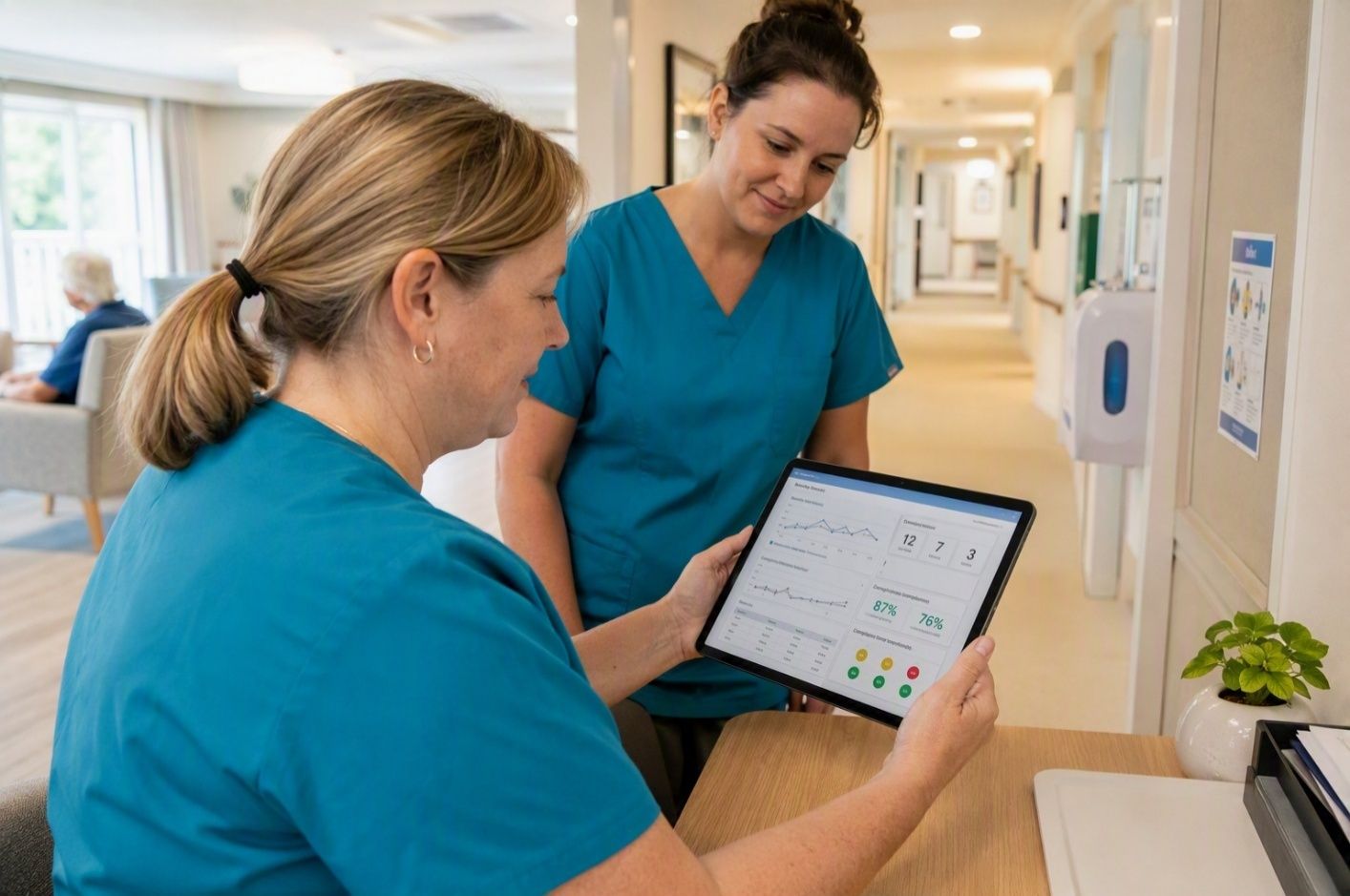
Infection Prevention Services (IPS) offers a practical Surveillance Tool for use within your facility, helping your team record infection events, monitor key indicators, and identify emerging trends. By consolidating surveillance data in one place, the tool supports timely action, clear reporting, and stronger infection prevention and control practices.
Surveillance means regularly monitoring what is happening in your facility so potential problems can be identified early and addressed before they become more serious. In aged care, where residents are more susceptible to infection and outbreaks can spread quickly in shared environments, strong surveillance helps protect resident and staff safety.
Infection prevention and control (IPC) surveillance is the ongoing process of reviewing and acting on infection data collected at your facility. It's one of the most useful tools your team has for keeping residents safe. This blog is for IPC Leads, nurses, care workers, and facility managers across Australia and New Zealand who want a clear, practical understanding of what to survey, how to do it well, and why it matters. You'll learn which infections and indicators to track, how surveillance aligns with the Strengthened Aged Care Quality Standards and NZS 8134:2021, and how to turn everyday data into decisions that protect residents and staff.
Infection Prevention Services (IPS) offers a practical Surveillance Tool for use within your facility, helping your team record infection events, monitor key indicators, and identify emerging trends. By consolidating surveillance data in one place, the tool supports timely action, clear reporting, and stronger infection prevention and control practices.
Surveillance means regularly monitoring what is happening in your facility so potential problems can be identified early and addressed before they become more serious. In aged care, where residents are more susceptible to infection and outbreaks can spread quickly in shared environments, strong surveillance helps protect resident and staff safety.
What Is IPC Surveillance and Why Does It Matter in Aged Care?
IPC surveillance is the systematic collection, analysis, and interpretation of infection-related data, followed by action based on the findings. It's not a one-off audit; it's a continuous cycle: collect, review, respond, and repeat.
Done well, surveillance helps your facility detect clusters of illness before they become outbreaks, identify patterns that reveal gaps in practice, benchmark your facility's results against available sector, jurisdictional, or national surveillance data where available, , and demonstrate compliance during accreditation. Without it, problems tend to surface only once they're serious: a cluster of urinary tract infections linked to catheter care, or a rise in respiratory illness that's already spread through a wing before anyone joins the dots.
Done well, surveillance helps your facility detect clusters of illness before they become outbreaks, identify patterns that reveal gaps in practice, benchmark your facility's results against available sector, jurisdictional, or national surveillance data where available, , and demonstrate compliance during accreditation. Without it, problems tend to surface only once they're serious: a cluster of urinary tract infections linked to catheter care, or a rise in respiratory illness that's already spread through a wing before anyone joins the dots.
What Should Aged Care Facilities Actually Survey?
The most useful surveillance programs cover a defined, manageable set of indicators rather than trying to track everything. In residential aged care, this typically includes:
Some facilities also track infection-related hospital transfers and infection-related deaths as additional indicators of resident outcomes.
Each of these tells a different part of the story. A single rise in one indicator might mean nothing; a pattern across two or three indicators is usually where the real signal lies.
- Healthcare-associated infections (HAIs) — monitor common infections, including urinary tract, respiratory, skin and wound infections, and gastroenteritis. Apply standardised case definitions rather than relying solely on clinical judgement.
- Multidrug-resistant organisms (MDROs) — record new cases of colonisation or infection caused by organisms such as MRSA (methicillin-resistant Staphylococcus aureus) and VRE (vancomycin-resistant Enterococcus). Early identification helps limit transmission among residents.
- Outbreaks — record clusters of illness that meet your facility’s outbreak threshold, including onset dates, symptoms, and affected areas. This information helps identify patterns and guide timely responses.
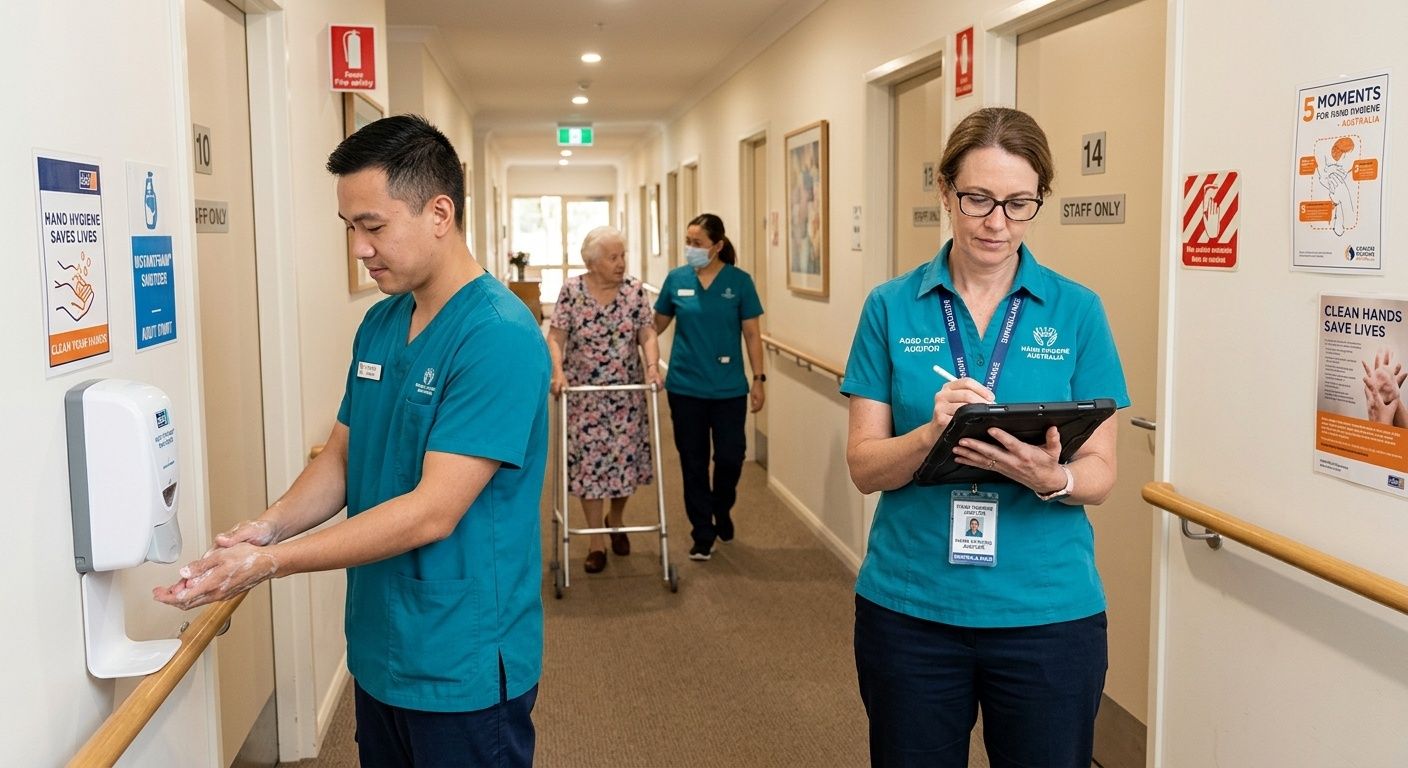
- Hand hygiene compliance — monitor audit results against the Five Moments for Hand Hygiene, with results grouped by ward or team. Use the findings to target training and improvement initiatives.
- Antimicrobial use — record the prescribed antimicrobial, the reason for treatment, and the treatment duration. This supports antimicrobial stewardship and helps identify possible overuse.
- Vaccination coverage — monitor uptake of influenza, COVID-19, and other relevant vaccines among residents and staff.
- Environmental cleaning and PPE compliance — use routine spot checks and audits to assess cleaning practices and ensure correct PPE use. Share the results with staff to strengthen everyday practice
Some facilities also track infection-related hospital transfers and infection-related deaths as additional indicators of resident outcomes.
Each of these tells a different part of the story. A single rise in one indicator might mean nothing; a pattern across two or three indicators is usually where the real signal lies.
How Do You Set Up an Effective Surveillance System?
Start with standardised definitions.
Standardised surveillance definitions, such as the revised McGeer criteria for long-term care, help ensure infections are identified and recorded consistently; this is what makes your data comparable month to month and with national benchmarks.
From there, build a simple rhythm:
Standardised surveillance definitions, such as the revised McGeer criteria for long-term care, help ensure infections are identified and recorded consistently; this is what makes your data comparable month to month and with national benchmarks.
From there, build a simple rhythm:
- Assign ownership: Your IPC Lead should coordinate data collection and reporting, but every staff member has a role in flagging symptoms early.
- Collect data consistently: A line listing - a simple table recording the resident’s name, symptom onset time, symptoms present, and the outcome - is often all that's needed at the facility level.
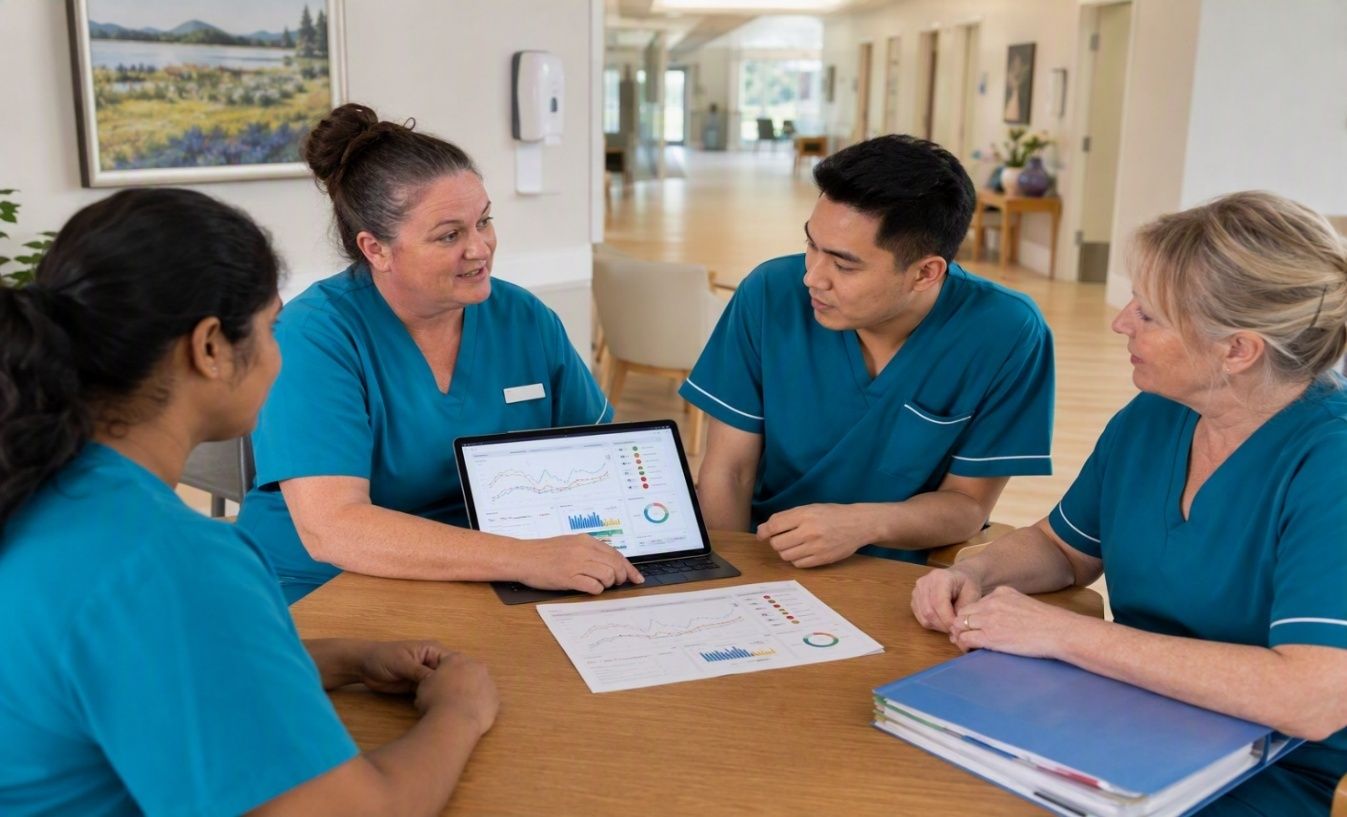
- Review monthly: Bring the data to your IPC or clinical governance committee, not just to the IPC Lead's inbox. Trends matter more than single data points.
- Report back to staff: Surveillance only changes practice if those providing day-to-day care know what the data shows and what's being asked of them as a result.
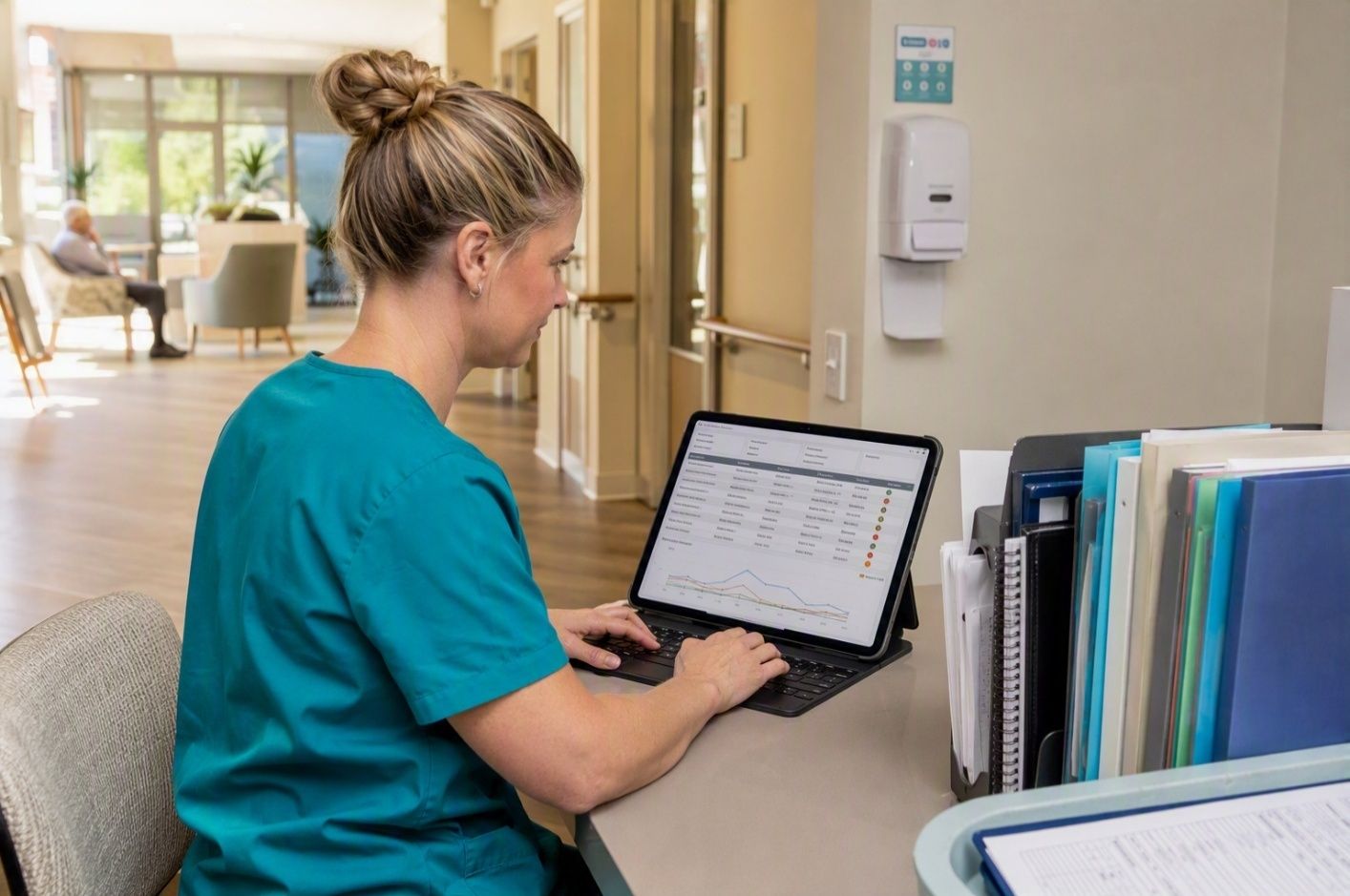
- Use a digital system where you can: Tools such as IPS's Surveillance Tool make it far easier to log data consistently, spot trends automatically, and generate the reports your committee and assessors need.
How Does Surveillance Data Support Accreditation and Compliance?
Under the Strengthened Aged Care Quality Standards (effective 1 November 2025), IPC surveillance evidence is central to demonstrating a safe, well-run facility. Assessors expect to see documented data, not merely a policy stating that surveillance occurs. In New Zealand, NZS 8134:2021 sets out similar expectations for infection prevention and control monitoring as part of certification against the Health and Disability Services Standards.
Strong surveillance records, including line listings, trend graphs, and committee minutes documenting how data was reviewed and acted on, form a ready-made evidence portfolio. Facilities that maintain this documentation routinely can approach assessments with far less last-minute preparation.
Strong surveillance records, including line listings, trend graphs, and committee minutes documenting how data was reviewed and acted on, form a ready-made evidence portfolio. Facilities that maintain this documentation routinely can approach assessments with far less last-minute preparation.
What Does Good Surveillance Look Like Day to Day?
Picture this: a care worker notices that three residents on the same wing have developed diarrhoea within 48 hours. Because your facility has a simple reporting pathway, the case is flagged to the IPC Lead the same day, rather than recorded separately in three progress notes. The IPC Lead reviews the line listing, recognises the pattern, and immediately triggers your outbreak management plan - isolating affected residents, reinforcing hand hygiene, and notifying the relevant public health unit as required.
That's surveillance working as intended: not a paperwork exercise but a genuine early-warning system built on data that everyone contributes to and benefits from.
That's surveillance working as intended: not a paperwork exercise but a genuine early-warning system built on data that everyone contributes to and benefits from.
Frequently Asked Questions
What is IPC surveillance in aged care?
It's the ongoing collection, review, and action on infection-related data, including HAIs, MDROs, hand hygiene, and vaccination coverage, to detect problems early and guide practice.
What should a residential aged care facility survey for?
Healthcare-associated infections, multidrug-resistant organisms, outbreaks, hand hygiene compliance, antimicrobial use, vaccination coverage, and environmental cleaning and PPE compliance.
How often should surveillance data be reviewed?
Monthly, at a minimum, through your IPC or clinical governance committee - with any suspected outbreak triggering an immediate review rather than waiting for the next scheduled meeting.
Take-Home Message
IPC surveillance isn't about generating reports for their own sake - it's about equipping your facility with the information it needs to act early, protect residents, and enter every accreditation conversation with confidence. Keep your indicator list focused, your definitions standardised, and your review cycle regular. Surveillance then becomes one of the most valuable habits your team builds.
Read more of our blogs on the IPS website, the HUB.
For a regular snippet of news, we are on LinkedIn and Facebook. Like us and share the post with others
For a regular snippet of news, we are on LinkedIn and Facebook. Like us and share the post with others
For a quick question, ask EVE, our multilingual bot or to contact us, email support@infectioncontrol.care
Lyndon Forrest
Managing Director | CEO
Lyndon is the Managing Director of Infection Prevention Services (IPS), bringing over 30 years' experience supporting aged care providers across Australia and New Zealand.
With a background spanning outbreak response, compliance, and infection risk management — alongside hands-on experience leading teams, managing multi-site operations, and navigating business turnaround — he understands both the clinical and organisational pressures aged care providers face. Lyndon holds a Master of Commerce (Industrial Relations), and applies that foundation to the people, process, and growth challenges that come with running a complex healthcare services business.
He is passionate about building the systems and capability that make infection prevention sustainable — not just compliant — and about helping organisations grow their confidence alongside their practice.
Lyndon's focus is straightforward: strengthen operations, develop the right people, and drive proactive infection prevention strategies that protect residents, staff, and communities for the long term.
Lyndon is the Managing Director of Infection Prevention Services (IPS), bringing over 30 years' experience supporting aged care providers across Australia and New Zealand.
With a background spanning outbreak response, compliance, and infection risk management — alongside hands-on experience leading teams, managing multi-site operations, and navigating business turnaround — he understands both the clinical and organisational pressures aged care providers face. Lyndon holds a Master of Commerce (Industrial Relations), and applies that foundation to the people, process, and growth challenges that come with running a complex healthcare services business.
He is passionate about building the systems and capability that make infection prevention sustainable — not just compliant — and about helping organisations grow their confidence alongside their practice.
Lyndon's focus is straightforward: strengthen operations, develop the right people, and drive proactive infection prevention strategies that protect residents, staff, and communities for the long term.
Erica Callaghan
Marketing Manager
Erica Callaghan is a dedicated professional with a rich background in agriculture and nutrient management. Growing up on her family's farm in Mid Canterbury, she developed a deep passion for farming. She currently resides on her partner's arable property in South Canterbury.
In 2017, Erica joined the Farm Sustainability team, focusing on nutrient management and environmental stewardship. In February 2024, she became the Manager of Marketing and Sales at Bug Control New Zealand - Infection Prevention Services, where her passion now includes improving infection prevention outcomes.
Outside of work, Erica loves cooking and traveling, often combining her culinary interests with her explorations in Italy and Vietnam. She enjoys entertaining family and friends and remains actively involved in farm activities, especially during harvest season.
Erica Callaghan is a dedicated professional with a rich background in agriculture and nutrient management. Growing up on her family's farm in Mid Canterbury, she developed a deep passion for farming. She currently resides on her partner's arable property in South Canterbury.
In 2017, Erica joined the Farm Sustainability team, focusing on nutrient management and environmental stewardship. In February 2024, she became the Manager of Marketing and Sales at Bug Control New Zealand - Infection Prevention Services, where her passion now includes improving infection prevention outcomes.
Outside of work, Erica loves cooking and traveling, often combining her culinary interests with her explorations in Italy and Vietnam. She enjoys entertaining family and friends and remains actively involved in farm activities, especially during harvest season.
Toni Sherriff
Clinical Nurse Specialist
Toni is a Registered Nurse with extensive experience in Infection Prevention and Control. Her career began as a kitchen hand and caregiver in Aged Care facilities, followed by earning a Bachelor of Nursing.
Toni has significant experience, having worked in Brisbane’s Infectious Diseases ward before returning home to New Zealand, where she continued her career as a Clinical Nurse Specialist in Infection Prevention and Control within Te Whatu Ora (Health NZ).
Toni brings her expertise and dedication to our team, which is instrumental in providing top-tier infection prevention solutions to our clients.
Toni is a Registered Nurse with extensive experience in Infection Prevention and Control. Her career began as a kitchen hand and caregiver in Aged Care facilities, followed by earning a Bachelor of Nursing.
Toni has significant experience, having worked in Brisbane’s Infectious Diseases ward before returning home to New Zealand, where she continued her career as a Clinical Nurse Specialist in Infection Prevention and Control within Te Whatu Ora (Health NZ).
Toni brings her expertise and dedication to our team, which is instrumental in providing top-tier infection prevention solutions to our clients.
Julie Hadfield
Accounts & Payroll
Julie is experienced in Accounts & Payroll Administration & after a long career in both the Financial & Local Government Sectors, is now working with our team. Julie brings her strong time management & organisational skills to our team, which is important to keep the company running in the background to enable the rest of our team to provide top notch service to all of our clients.
Julie is experienced in Accounts & Payroll Administration & after a long career in both the Financial & Local Government Sectors, is now working with our team. Julie brings her strong time management & organisational skills to our team, which is important to keep the company running in the background to enable the rest of our team to provide top notch service to all of our clients.
Andrea Murray
Content Editor
I attended Otago University in NZ and graduated as a Dental Surgeon. After 40 years in the profession, I retired in 2022. Infection prevention knowledge was part of everyday practice, dealing with sterilisation, hand hygiene, and cleaning.
Before retiring, I began doing some editing and proofreading for Bug Control as I am interested in the subject and in the English language. During the COVID-19 lockdown, I attended the ACIPC course "Introduction to Infection Prevention and Control", which increased my interest in the subject. I now work part-time as the Content Editor for the company.
I attended Otago University in NZ and graduated as a Dental Surgeon. After 40 years in the profession, I retired in 2022. Infection prevention knowledge was part of everyday practice, dealing with sterilisation, hand hygiene, and cleaning.
Before retiring, I began doing some editing and proofreading for Bug Control as I am interested in the subject and in the English language. During the COVID-19 lockdown, I attended the ACIPC course "Introduction to Infection Prevention and Control", which increased my interest in the subject. I now work part-time as the Content Editor for the company.
Personally, I lived in the UK for 10 years. My two children were born in Scotland, and now both are living in Europe, one in Amsterdam, Netherlands, and the other in Edinburgh, Scotland. I live close to Fairlie on the South Island of NZ, a beautiful part of the country, and I love being out of the city.
Princess
Customer Support
Princess began her career as a dedicated Customer Service Representative, honing her communication and problem-solving skills. She later transitioned into a Literary Specialist role, where she developed a keen eye for detail. Her journey then led her to a Sales Specialist position, where she excelled in client relations.
Now, as a Customer Support professional in Infection Prevention Services. Princess focuses on ensuring customer satisfaction, building loyalty, and enhancing the overall customer journey.
Princess began her career as a dedicated Customer Service Representative, honing her communication and problem-solving skills. She later transitioned into a Literary Specialist role, where she developed a keen eye for detail. Her journey then led her to a Sales Specialist position, where she excelled in client relations.
Now, as a Customer Support professional in Infection Prevention Services. Princess focuses on ensuring customer satisfaction, building loyalty, and enhancing the overall customer journey.
Dianne Newey
Senior Infection Prevention and Control Consultant
Dianne is a Senior Clinical Consultant at Infection Prevention Services (IPS), bringing over 35 years of nursing experience and a depth of clinical knowledge that most people would need two careers to accumulate.
Having served as Clinical Director at Royal Ryde Rehabilitation Hospital alongside a career spanning the full breadth of clinical practice, Dianne has seen it all — and more importantly, knows exactly what to do about it. She is the person in the room that everyone quietly hopes will speak first.
For more than seven years she has been a cornerstone of the IPS team, providing clinical advice, developing and reviewing policies and procedures, delivering monthly IPC webinars to IP Leads, and conducting environmental audits in aged care facilities across Australia and New Zealand. If infection prevention has a question, Dianne almost certainly has the answer — and she'll deliver it with a laugh that you'll hear from the other end of the corridor.
A true fountain of knowledge, wrapped in the kind of warmth and humour that only three decades of nursing can produce. Customers don't just trust Dianne — they look forward to hearing from her.
Dianne is a Senior Clinical Consultant at Infection Prevention Services (IPS), bringing over 35 years of nursing experience and a depth of clinical knowledge that most people would need two careers to accumulate.
Having served as Clinical Director at Royal Ryde Rehabilitation Hospital alongside a career spanning the full breadth of clinical practice, Dianne has seen it all — and more importantly, knows exactly what to do about it. She is the person in the room that everyone quietly hopes will speak first.
For more than seven years she has been a cornerstone of the IPS team, providing clinical advice, developing and reviewing policies and procedures, delivering monthly IPC webinars to IP Leads, and conducting environmental audits in aged care facilities across Australia and New Zealand. If infection prevention has a question, Dianne almost certainly has the answer — and she'll deliver it with a laugh that you'll hear from the other end of the corridor.
A true fountain of knowledge, wrapped in the kind of warmth and humour that only three decades of nursing can produce. Customers don't just trust Dianne — they look forward to hearing from her.
Caoimhe (Keva) Stewart
Clinical & Business Operations Manager
Caoimhe is the Clinical & Business Operations Manager at Infection Prevention Services (IPS), bringing a clinical background as a Registered Nurse across the UK and Australia — and an almost unsettling ability to make technology do exactly what she wants.
With experience in Occupational Health, Palliative Care, and Community Nursing, she understands the real challenges faced by healthcare teams. What she may lack in stature she more than makes up for in impact — Caoimhe is the kind of person who walks into a problem, sizes it up, and has three solutions before anyone else has finished reading the brief.
Customers love her. Not just because she delivers — though she always does — but because she genuinely cares about the outcome on the other side. She is passionate about creating seamless learning experiences and empowering organisations with the tools, knowledge, and support needed to strengthen infection prevention practices and improve care outcomes.
Small in size. Mighty in results. Completely irreplaceable.
Caoimhe is the Clinical & Business Operations Manager at Infection Prevention Services (IPS), bringing a clinical background as a Registered Nurse across the UK and Australia — and an almost unsettling ability to make technology do exactly what she wants.
With experience in Occupational Health, Palliative Care, and Community Nursing, she understands the real challenges faced by healthcare teams. What she may lack in stature she more than makes up for in impact — Caoimhe is the kind of person who walks into a problem, sizes it up, and has three solutions before anyone else has finished reading the brief.
Customers love her. Not just because she delivers — though she always does — but because she genuinely cares about the outcome on the other side. She is passionate about creating seamless learning experiences and empowering organisations with the tools, knowledge, and support needed to strengthen infection prevention practices and improve care outcomes.
Small in size. Mighty in results. Completely irreplaceable.
Bridgette Mackie
Clinical Nurse Educator
Bridgette is an experienced New Zealand Registered Nurse, qualified Healthcare Auditor, and Healthcare Educator with a strong background in clinical quality, competency assessment, and infection prevention. She has led large-scale OSCE and CAP training programmes for internationally qualified nurses, developed sector-specific educational resources, and coordinated HealthCERT audit preparation in the surgical sector.
Known for her engaging teaching style and genuine passion for supporting learners, Bridgette excels at making complex topics accessible and relevant. She blends operational leadership with a deep commitment to professional development and safe, effective practice.
Bridgette is an experienced New Zealand Registered Nurse, qualified Healthcare Auditor, and Healthcare Educator with a strong background in clinical quality, competency assessment, and infection prevention. She has led large-scale OSCE and CAP training programmes for internationally qualified nurses, developed sector-specific educational resources, and coordinated HealthCERT audit preparation in the surgical sector.
Known for her engaging teaching style and genuine passion for supporting learners, Bridgette excels at making complex topics accessible and relevant. She blends operational leadership with a deep commitment to professional development and safe, effective practice.