
Sep 22
Living with an MRO in Aged Care: Protecting Resident Rights, Dignity and Quality of Life
A practical guide for IPC Leads and Care teams across Australia and New Zealand
A multi-resistant organism (MRO) diagnosis can be frightening for a resident and their family, and infection prevention measures can easily overshadow a person's dignity and autonomy if not handled with care. This blog is for aged care IPC leads, nurses, care workers, and facility managers across Australia and New Zealand who want to balance safe, evidence-based MRO management with residents' rights under the Strengthened Aged Care Quality Standards and NZS 8134:2021. Learn more about MROs and why they don't have to mean isolation from daily life; how to communicate a diagnosis with dignity of risk and informed consent in mind; practical ways to reduce stigma for residents and families; and how Infection Prevention Services (IPS) resources help teams get this balance right. With the right approach, residents can continue living life on their terms while your facility stays audit-ready.
What Is an MRO/MDRO, and Why Does It Matter in Aged Care?
An MRO, or multidrug-resistant organism, is a bacterium that has developed resistance to one or more commonly used antibiotics. Common examples include MRSA (methicillin-resistant Staphylococcus aureus), VRE (vancomycin-resistant Enterococcus), and CPE (carbapenemase-producing Enterobacterales). Other examples of Multi-Drug Resistant Organism’s (MDRO) are, ESBL (Extended-spectrum beta-lactamase) producing bacteria and Candida auris, an emerging multidrug-resistant fungus.
It is important to distinguish colonisation from infection. Colonisation means the organism is present on the skin, in the nose or in the gut without causing illness. Most residents who carry an MDRO fall into this category and feel completely well. Infection means the organism is actively causing harm and requires treatment.
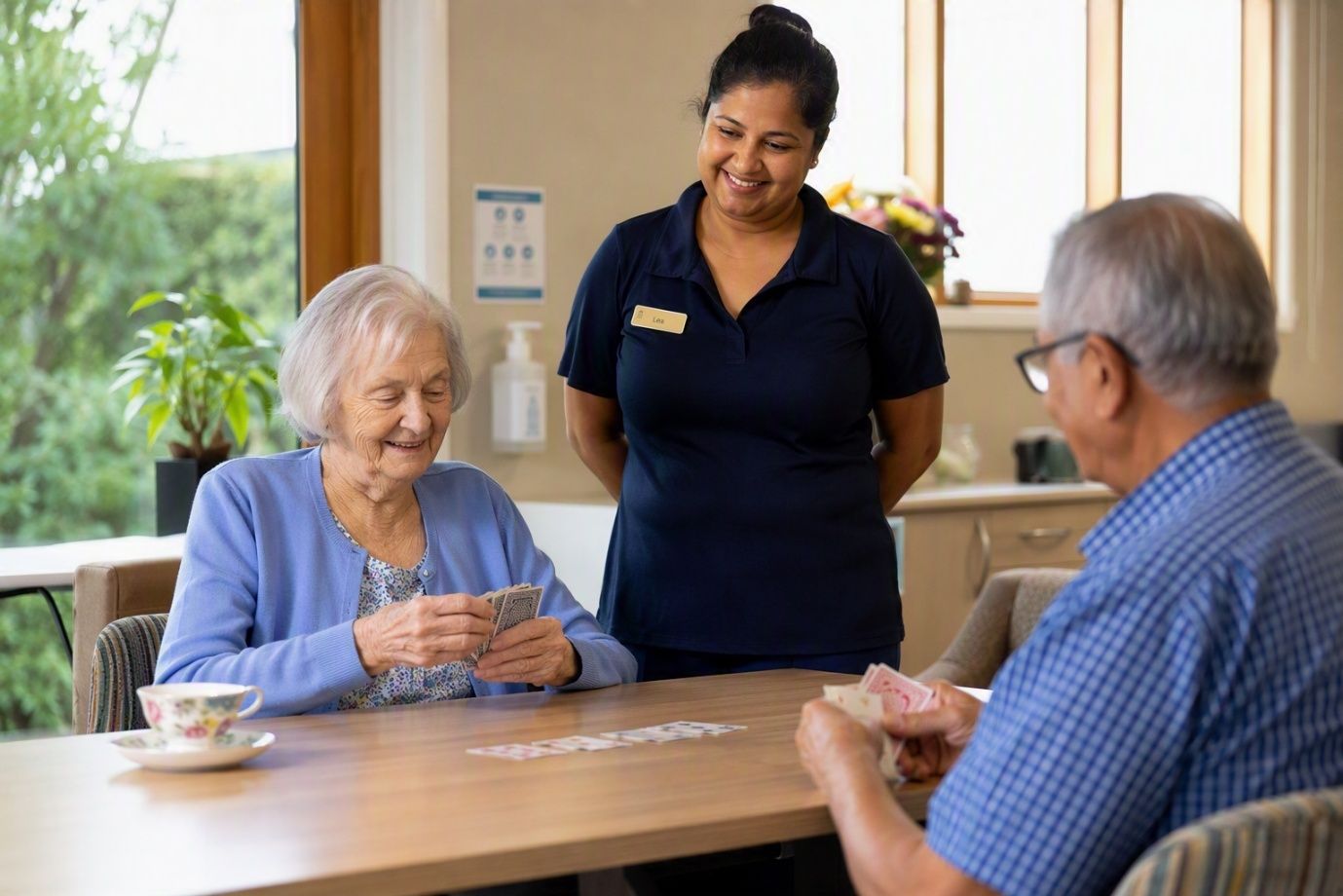
Aged care facilities see MDROs more often than the general community, partly due to shared living spaces, higher antibiotic use, and residents managing multiple health An aged care resident enjoying everyday activities despite an MRO diagnosis, reflecting dignity of risk.
conditions. None of this makes an MDRO diagnosis a crisis - it simply means care requires a thoughtful, individualised plan.
It is important to distinguish colonisation from infection. Colonisation means the organism is present on the skin, in the nose or in the gut without causing illness. Most residents who carry an MDRO fall into this category and feel completely well. Infection means the organism is actively causing harm and requires treatment.
Aged care facilities see MDROs more often than the general community, partly due to shared living spaces, higher antibiotic use, and residents managing multiple health An aged care resident enjoying everyday activities despite an MRO diagnosis, reflecting dignity of risk.
conditions. None of this makes an MDRO diagnosis a crisis - it simply means care requires a thoughtful, individualised plan.
What Rights Does a Resident Keep When Living with an MRO?
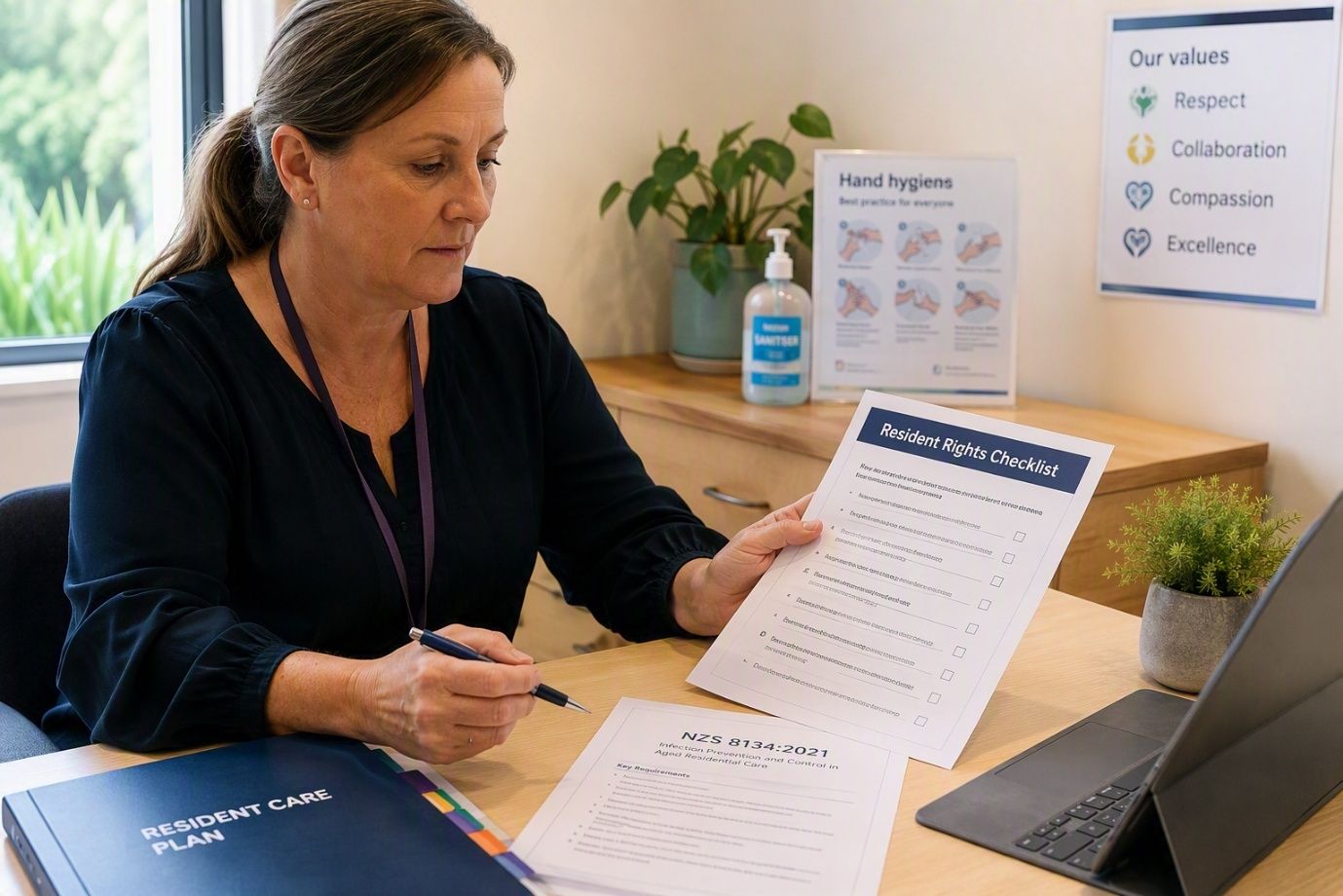
A resident who is either colonised or infected with an MRO retains the same rights as any other resident in the facility. Under the Strengthened Aged Care Quality Standards (Standard 1: The Person) in Australia and the rights principles set out in NZS 8134:2021 in New Zealand, every resident has the right to be informed about their care, to participate in decisions that affect them, and to have their privacy and dignity respected.
This is where the idea of "dignity of risk" matters. Infection prevention exists to keep residents and staff safe. However, staff should never make safety decisions for a resident without their family or representative (if relevant) being part of the conversation.
For example, after an informed discussion with their care team, a resident colonised with an MDRO might choose to continue attending group activities and shared meals, with sensible, appropriate precautions, rather than being automatically excluded. That choice belongs to the resident, not to the roster.
This is where the idea of "dignity of risk" matters. Infection prevention exists to keep residents and staff safe. However, staff should never make safety decisions for a resident without their family or representative (if relevant) being part of the conversation.
For example, after an informed discussion with their care team, a resident colonised with an MDRO might choose to continue attending group activities and shared meals, with sensible, appropriate precautions, rather than being automatically excluded. That choice belongs to the resident, not to the roster.
How Can Staff Talk About an MDRO Without Creating Stigma?
How staff talk about an MDRO shapes a resident's experience. A diagnosis explained calmly, privately, and in plain language feels very different from one delivered or overheard in a corridor or dining room.
A few practical habits go a long way:
A short internal checklist - what to say, what to avoid, and who genuinely needs to know - helps every shift handle this consistently.
A few practical habits go a long way:
- Have the conversation in a private setting with the resident (and family, with their consent) before informing the broader care team.
- Use plain terms: "a bacteria that's resistant to some antibiotics", rather than clinical shorthand that can sound alarming.
- Explain what changes in practice for the resident, and what does not.
- Avoid language that implies the resident is "dirty" or "dangerous" - colonisation is common and is not a reflection of hygiene or behaviour.
A short internal checklist - what to say, what to avoid, and who genuinely needs to know - helps every shift handle this consistently.
Does an MDRO Mean a Resident Has to Be Isolated?
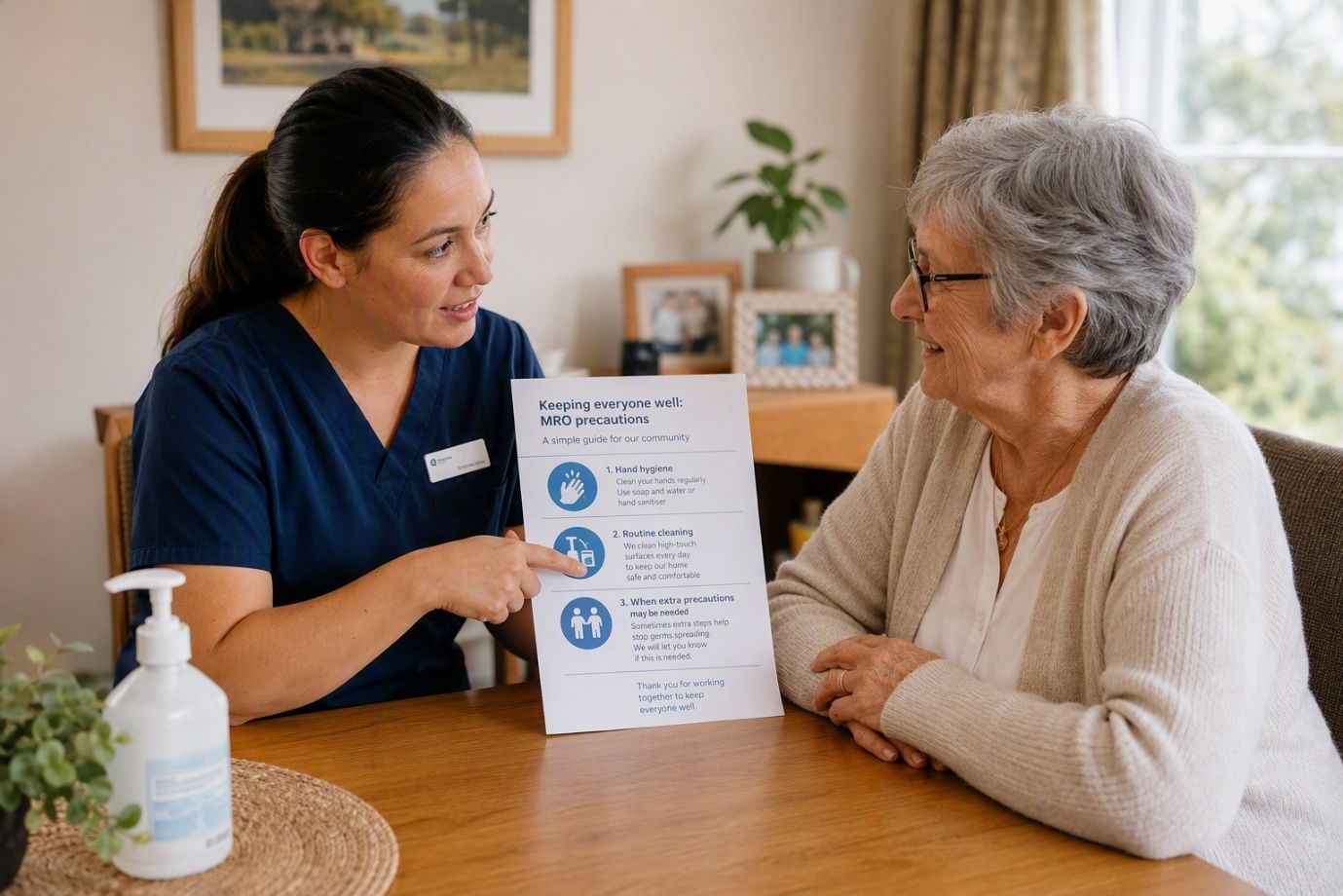
An MDRO diagnosis does not automatically require isolation. Standard precautions - hand hygiene, safe handling of body fluids, and routine cleaning - form the foundation of care for every resident and are usually sufficient to manage colonisation safely.
Transmission-based precautions, such as contact precautions or a single room, are reserved for specific situations: an active infection, a wound that cannot be contained, or a facility responding to an outbreak. Even then, the goal is a time-limited, clinically justified measure, not a default.
The safest approach is a regularly reviewed, individual risk-assessed care plan—not a blanket rule for every resident with an MDRO. Where it is safe to do so, residents should stay connected to the parts of daily life that matter to them, including shared meals, activities, outings, and time with family. Isolation beyond clinical need can cause harm, including loneliness and reduced independence.
Transmission-based precautions, such as contact precautions or a single room, are reserved for specific situations: an active infection, a wound that cannot be contained, or a facility responding to an outbreak. Even then, the goal is a time-limited, clinically justified measure, not a default.
The safest approach is a regularly reviewed, individual risk-assessed care plan—not a blanket rule for every resident with an MDRO. Where it is safe to do so, residents should stay connected to the parts of daily life that matter to them, including shared meals, activities, outings, and time with family. Isolation beyond clinical need can cause harm, including loneliness and reduced independence.
How Should Families and Visitors Be Supported?
Families often arrive at an MDRO conversation with more questions than facts, so clear, respectful communication matters as much to them as to the resident. Explain what the diagnosis means, what it does not mean, and what, if anything, changes regarding visiting or physical contact.
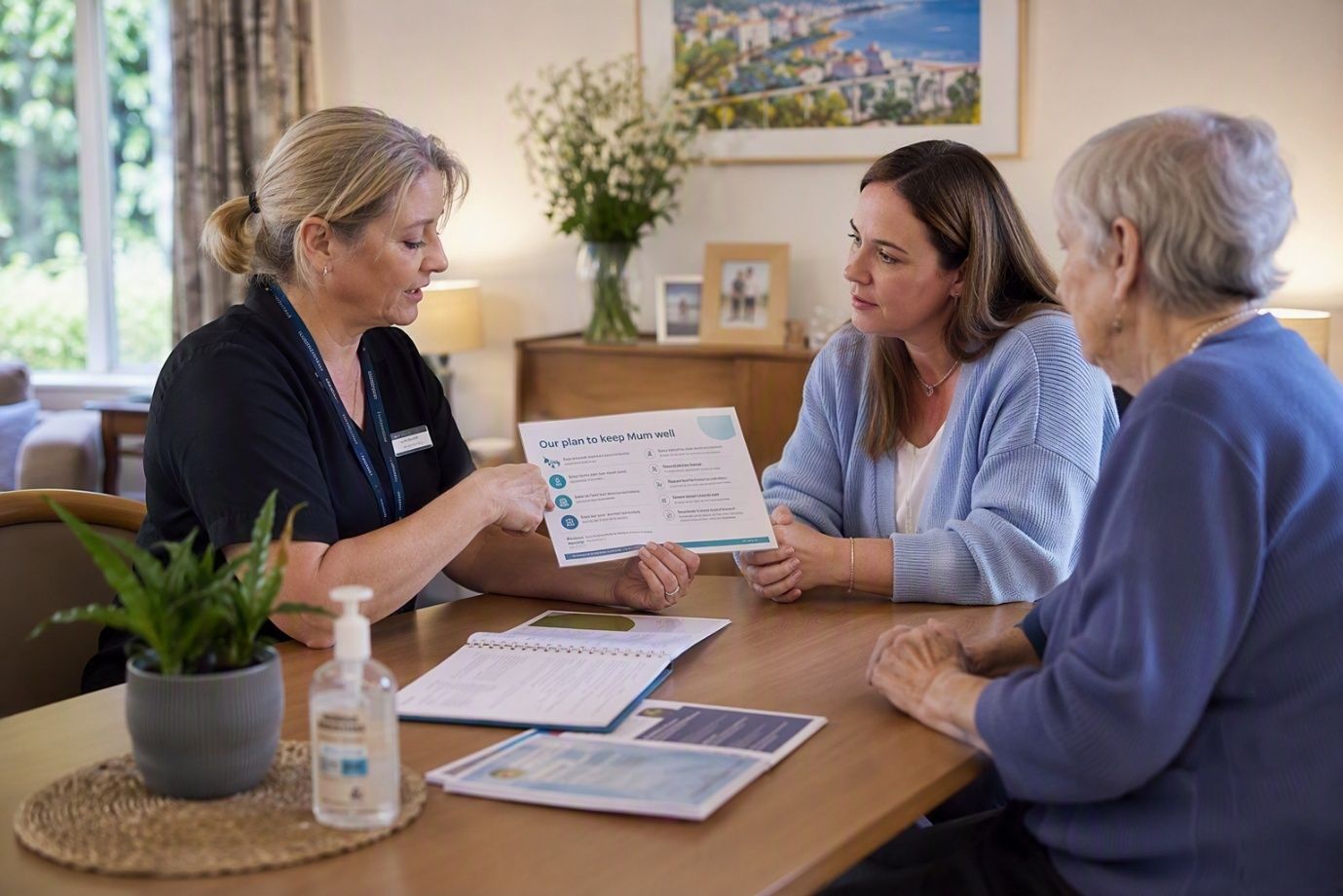
Gently correct myths, such as the idea that an MRO always means active illness or that a resident carrying one is “dangerous” to others.
Facilities using IPS's HUB and training resources have an advantage: consistent, up-to-date guidance ensures every staff member, across every shift, provides families with the same accurate answers rather than conflicting or outdated information.
Facilities using IPS's HUB and training resources have an advantage: consistent, up-to-date guidance ensures every staff member, across every shift, provides families with the same accurate answers rather than conflicting or outdated information.
What Does Good MDRO Practice Look Like Day to Day?
Effective day-to-day MDRO practice comes down to a handful of consistent habits:
The IPC Lead plays a central role in keeping this on track by regularly reviewing each resident's care plan, ensuring precautions still match current risk, and keeping the wider team's knowledge up to date. Done well, this is exactly the kind of evidence that supports audit readiness under the Quality Standards or NZS 8134:2021.
- Standard precautions and hand hygiene at every contact with every resident, regardless of MDRO status.
- Targeted PPE only where a risk assessment indicates it is needed, not as a default.
- Routine environmental cleaning, with extra attention to high-touch surfaces.
- Clear, accurate documentation of the resident's status and care plan.
The IPC Lead plays a central role in keeping this on track by regularly reviewing each resident's care plan, ensuring precautions still match current risk, and keeping the wider team's knowledge up to date. Done well, this is exactly the kind of evidence that supports audit readiness under the Quality Standards or NZS 8134:2021.
Frequently Asked Questions
What is an MDRO, and is it dangerous to other residents?
An MDRO is a bacterium that has developed resistance to certain antibiotics. Most residents carry one without becoming unwell, and the risk to others depends on the specific organism and the precautions in place.
Do residents with an MDRO need to be isolated in aged care?
Not usually. Most residents colonised with an MRO continue their normal activities under standard precautions, with isolation reserved for specific, risk-assessed situations.
What rights does a resident have if they are diagnosed with an MDRO?
The same rights as any other resident - to be informed, to participate in care decisions, and to have their privacy and dignity respected - under the Strengthened Aged Care Quality Standards (AU) and NZS 8134:2021 (NZ).
How can families support a loved one living with an MDRO?
By asking staff clear questions, following the facility's guidance, and treating the diagnosis as a manageable health condition rather than grounds for exclusion.
Take-Home Message
An MDRO diagnosis should change how a facility manages risk — never how it treats the person. Dignity and safe practice are not at odds when care is individualised, communicated clearly, and reviewed regularly. With clear conversations, risk-assessed precautions, and consistent training, your team can protect every resident's health without asking them to give up the life they have chosen. IPS's training and HUB resources help your team maintain this balance consistently, shift after shift.
Read more of our blogs on the IPS website, the HUB.
For a regular snippet of news, we are on LinkedIn and Facebook. Like us and share the post with others
For a regular snippet of news, we are on LinkedIn and Facebook. Like us and share the post with others
For a quick question, ask EVE, our multilingual bot or to contact us, email support@infectioncontrol.care
Lyndon Forrest
Managing Director | CEO
Lyndon is the Managing Director of Infection Prevention Services (IPS), bringing over 30 years' experience supporting aged care providers across Australia and New Zealand.
With a background spanning outbreak response, compliance, and infection risk management — alongside hands-on experience leading teams, managing multi-site operations, and navigating business turnaround — he understands both the clinical and organisational pressures aged care providers face. Lyndon holds a Master of Commerce (Industrial Relations), and applies that foundation to the people, process, and growth challenges that come with running a complex healthcare services business.
He is passionate about building the systems and capability that make infection prevention sustainable — not just compliant — and about helping organisations grow their confidence alongside their practice.
Lyndon's focus is straightforward: strengthen operations, develop the right people, and drive proactive infection prevention strategies that protect residents, staff, and communities for the long term.
Lyndon is the Managing Director of Infection Prevention Services (IPS), bringing over 30 years' experience supporting aged care providers across Australia and New Zealand.
With a background spanning outbreak response, compliance, and infection risk management — alongside hands-on experience leading teams, managing multi-site operations, and navigating business turnaround — he understands both the clinical and organisational pressures aged care providers face. Lyndon holds a Master of Commerce (Industrial Relations), and applies that foundation to the people, process, and growth challenges that come with running a complex healthcare services business.
He is passionate about building the systems and capability that make infection prevention sustainable — not just compliant — and about helping organisations grow their confidence alongside their practice.
Lyndon's focus is straightforward: strengthen operations, develop the right people, and drive proactive infection prevention strategies that protect residents, staff, and communities for the long term.
Erica Callaghan
Marketing Manager
Erica Callaghan is a dedicated professional with a rich background in agriculture and nutrient management. Growing up on her family's farm in Mid Canterbury, she developed a deep passion for farming. She currently resides on her partner's arable property in South Canterbury.
In 2017, Erica joined the Farm Sustainability team, focusing on nutrient management and environmental stewardship. In February 2024, she became the Manager of Marketing and Sales at Bug Control New Zealand - Infection Prevention Services, where her passion now includes improving infection prevention outcomes.
Outside of work, Erica loves cooking and traveling, often combining her culinary interests with her explorations in Italy and Vietnam. She enjoys entertaining family and friends and remains actively involved in farm activities, especially during harvest season.
Erica Callaghan is a dedicated professional with a rich background in agriculture and nutrient management. Growing up on her family's farm in Mid Canterbury, she developed a deep passion for farming. She currently resides on her partner's arable property in South Canterbury.
In 2017, Erica joined the Farm Sustainability team, focusing on nutrient management and environmental stewardship. In February 2024, she became the Manager of Marketing and Sales at Bug Control New Zealand - Infection Prevention Services, where her passion now includes improving infection prevention outcomes.
Outside of work, Erica loves cooking and traveling, often combining her culinary interests with her explorations in Italy and Vietnam. She enjoys entertaining family and friends and remains actively involved in farm activities, especially during harvest season.
Toni Sherriff
Clinical Nurse Specialist
Toni is a Registered Nurse with extensive experience in Infection Prevention and Control. Her career began as a kitchen hand and caregiver in Aged Care facilities, followed by earning a Bachelor of Nursing.
Toni has significant experience, having worked in Brisbane’s Infectious Diseases ward before returning home to New Zealand, where she continued her career as a Clinical Nurse Specialist in Infection Prevention and Control within Te Whatu Ora (Health NZ).
Toni brings her expertise and dedication to our team, which is instrumental in providing top-tier infection prevention solutions to our clients.
Toni is a Registered Nurse with extensive experience in Infection Prevention and Control. Her career began as a kitchen hand and caregiver in Aged Care facilities, followed by earning a Bachelor of Nursing.
Toni has significant experience, having worked in Brisbane’s Infectious Diseases ward before returning home to New Zealand, where she continued her career as a Clinical Nurse Specialist in Infection Prevention and Control within Te Whatu Ora (Health NZ).
Toni brings her expertise and dedication to our team, which is instrumental in providing top-tier infection prevention solutions to our clients.
Julie Hadfield
Accounts & Payroll
Julie is experienced in Accounts & Payroll Administration & after a long career in both the Financial & Local Government Sectors, is now working with our team. Julie brings her strong time management & organisational skills to our team, which is important to keep the company running in the background to enable the rest of our team to provide top notch service to all of our clients.
Julie is experienced in Accounts & Payroll Administration & after a long career in both the Financial & Local Government Sectors, is now working with our team. Julie brings her strong time management & organisational skills to our team, which is important to keep the company running in the background to enable the rest of our team to provide top notch service to all of our clients.
Andrea Murray
Content Editor
I attended Otago University in NZ and graduated as a Dental Surgeon. After 40 years in the profession, I retired in 2022. Infection prevention knowledge was part of everyday practice, dealing with sterilisation, hand hygiene, and cleaning.
Before retiring, I began doing some editing and proofreading for Bug Control as I am interested in the subject and in the English language. During the COVID-19 lockdown, I attended the ACIPC course "Introduction to Infection Prevention and Control", which increased my interest in the subject. I now work part-time as the Content Editor for the company.
I attended Otago University in NZ and graduated as a Dental Surgeon. After 40 years in the profession, I retired in 2022. Infection prevention knowledge was part of everyday practice, dealing with sterilisation, hand hygiene, and cleaning.
Before retiring, I began doing some editing and proofreading for Bug Control as I am interested in the subject and in the English language. During the COVID-19 lockdown, I attended the ACIPC course "Introduction to Infection Prevention and Control", which increased my interest in the subject. I now work part-time as the Content Editor for the company.
Personally, I lived in the UK for 10 years. My two children were born in Scotland, and now both are living in Europe, one in Amsterdam, Netherlands, and the other in Edinburgh, Scotland. I live close to Fairlie on the South Island of NZ, a beautiful part of the country, and I love being out of the city.
Princess
Customer Support
Princess began her career as a dedicated Customer Service Representative, honing her communication and problem-solving skills. She later transitioned into a Literary Specialist role, where she developed a keen eye for detail. Her journey then led her to a Sales Specialist position, where she excelled in client relations.
Now, as a Customer Support professional in Infection Prevention Services. Princess focuses on ensuring customer satisfaction, building loyalty, and enhancing the overall customer journey.
Princess began her career as a dedicated Customer Service Representative, honing her communication and problem-solving skills. She later transitioned into a Literary Specialist role, where she developed a keen eye for detail. Her journey then led her to a Sales Specialist position, where she excelled in client relations.
Now, as a Customer Support professional in Infection Prevention Services. Princess focuses on ensuring customer satisfaction, building loyalty, and enhancing the overall customer journey.
Dianne Newey
Senior Infection Prevention and Control Consultant
Dianne is a Senior Clinical Consultant at Infection Prevention Services (IPS), bringing over 35 years of nursing experience and a depth of clinical knowledge that most people would need two careers to accumulate.
Having served as Clinical Director at Royal Ryde Rehabilitation Hospital alongside a career spanning the full breadth of clinical practice, Dianne has seen it all — and more importantly, knows exactly what to do about it. She is the person in the room that everyone quietly hopes will speak first.
For more than seven years she has been a cornerstone of the IPS team, providing clinical advice, developing and reviewing policies and procedures, delivering monthly IPC webinars to IP Leads, and conducting environmental audits in aged care facilities across Australia and New Zealand. If infection prevention has a question, Dianne almost certainly has the answer — and she'll deliver it with a laugh that you'll hear from the other end of the corridor.
A true fountain of knowledge, wrapped in the kind of warmth and humour that only three decades of nursing can produce. Customers don't just trust Dianne — they look forward to hearing from her.
Dianne is a Senior Clinical Consultant at Infection Prevention Services (IPS), bringing over 35 years of nursing experience and a depth of clinical knowledge that most people would need two careers to accumulate.
Having served as Clinical Director at Royal Ryde Rehabilitation Hospital alongside a career spanning the full breadth of clinical practice, Dianne has seen it all — and more importantly, knows exactly what to do about it. She is the person in the room that everyone quietly hopes will speak first.
For more than seven years she has been a cornerstone of the IPS team, providing clinical advice, developing and reviewing policies and procedures, delivering monthly IPC webinars to IP Leads, and conducting environmental audits in aged care facilities across Australia and New Zealand. If infection prevention has a question, Dianne almost certainly has the answer — and she'll deliver it with a laugh that you'll hear from the other end of the corridor.
A true fountain of knowledge, wrapped in the kind of warmth and humour that only three decades of nursing can produce. Customers don't just trust Dianne — they look forward to hearing from her.
Caoimhe (Keva) Stewart
Clinical & Business Operations Manager
Caoimhe is the Clinical & Business Operations Manager at Infection Prevention Services (IPS), bringing a clinical background as a Registered Nurse across the UK and Australia — and an almost unsettling ability to make technology do exactly what she wants.
With experience in Occupational Health, Palliative Care, and Community Nursing, she understands the real challenges faced by healthcare teams. What she may lack in stature she more than makes up for in impact — Caoimhe is the kind of person who walks into a problem, sizes it up, and has three solutions before anyone else has finished reading the brief.
Customers love her. Not just because she delivers — though she always does — but because she genuinely cares about the outcome on the other side. She is passionate about creating seamless learning experiences and empowering organisations with the tools, knowledge, and support needed to strengthen infection prevention practices and improve care outcomes.
Small in size. Mighty in results. Completely irreplaceable.
Caoimhe is the Clinical & Business Operations Manager at Infection Prevention Services (IPS), bringing a clinical background as a Registered Nurse across the UK and Australia — and an almost unsettling ability to make technology do exactly what she wants.
With experience in Occupational Health, Palliative Care, and Community Nursing, she understands the real challenges faced by healthcare teams. What she may lack in stature she more than makes up for in impact — Caoimhe is the kind of person who walks into a problem, sizes it up, and has three solutions before anyone else has finished reading the brief.
Customers love her. Not just because she delivers — though she always does — but because she genuinely cares about the outcome on the other side. She is passionate about creating seamless learning experiences and empowering organisations with the tools, knowledge, and support needed to strengthen infection prevention practices and improve care outcomes.
Small in size. Mighty in results. Completely irreplaceable.
Bridgette Mackie
Clinical Nurse Educator
Bridgette is an experienced New Zealand Registered Nurse, qualified Healthcare Auditor, and Healthcare Educator with a strong background in clinical quality, competency assessment, and infection prevention. She has led large-scale OSCE and CAP training programmes for internationally qualified nurses, developed sector-specific educational resources, and coordinated HealthCERT audit preparation in the surgical sector.
Known for her engaging teaching style and genuine passion for supporting learners, Bridgette excels at making complex topics accessible and relevant. She blends operational leadership with a deep commitment to professional development and safe, effective practice.
Bridgette is an experienced New Zealand Registered Nurse, qualified Healthcare Auditor, and Healthcare Educator with a strong background in clinical quality, competency assessment, and infection prevention. She has led large-scale OSCE and CAP training programmes for internationally qualified nurses, developed sector-specific educational resources, and coordinated HealthCERT audit preparation in the surgical sector.
Known for her engaging teaching style and genuine passion for supporting learners, Bridgette excels at making complex topics accessible and relevant. She blends operational leadership with a deep commitment to professional development and safe, effective practice.