Oct 5
Providing Culturally Safe Care in Aged Care Facilities: Supporting Māori, Aboriginal and Torres Strait Islander Residents
A Practical Guide to Culturally Safe Care for Aged Care Teams in Australia and New Zealand
Focused on person-centred, culturally safe care, this practical guide explains how to respect each resident’s identity and involve family and community in decision-making. More detailed information is available on the HUB, Infection Prevention Services’ (IPS) website.
Aged care providers across Australia and New Zealand support increasingly culturally diverse communities. A strong relationship between a facility and the cultural identity of the people in its care is essential to delivering safe, person-centred aged care.At Infection Prevention Services (IPS), we know culturally safe care sits alongside clinical quality, not as a separate entity. This blog is for IPC leads, care staff, and facility managers and provides practical guidance on supporting Aboriginal and Torres Strait Islander residents, kaumātua and whānau in New Zealand, and residents from culturally and linguistically diverse backgrounds. You will learn what cultural safety means in daily practice, how Australia's Strengthened Aged Care Quality Standards and New Zealand's Ngā Paerewa Health and Disability Services Standard (NZS 8134:2021) frame these obligations, and simple steps your team can take to ensure every resident's identity, values, and connection to community and Country are respected.
Aged care providers across Australia and New Zealand support increasingly culturally diverse communities. A strong relationship between a facility and the cultural identity of the people in its care is essential to delivering safe, person-centred aged care.At Infection Prevention Services (IPS), we know culturally safe care sits alongside clinical quality, not as a separate entity. This blog is for IPC leads, care staff, and facility managers and provides practical guidance on supporting Aboriginal and Torres Strait Islander residents, kaumātua and whānau in New Zealand, and residents from culturally and linguistically diverse backgrounds. You will learn what cultural safety means in daily practice, how Australia's Strengthened Aged Care Quality Standards and New Zealand's Ngā Paerewa Health and Disability Services Standard (NZS 8134:2021) frame these obligations, and simple steps your team can take to ensure every resident's identity, values, and connection to community and Country are respected.
Why Does Cultural Safety Matter in Aged Care?
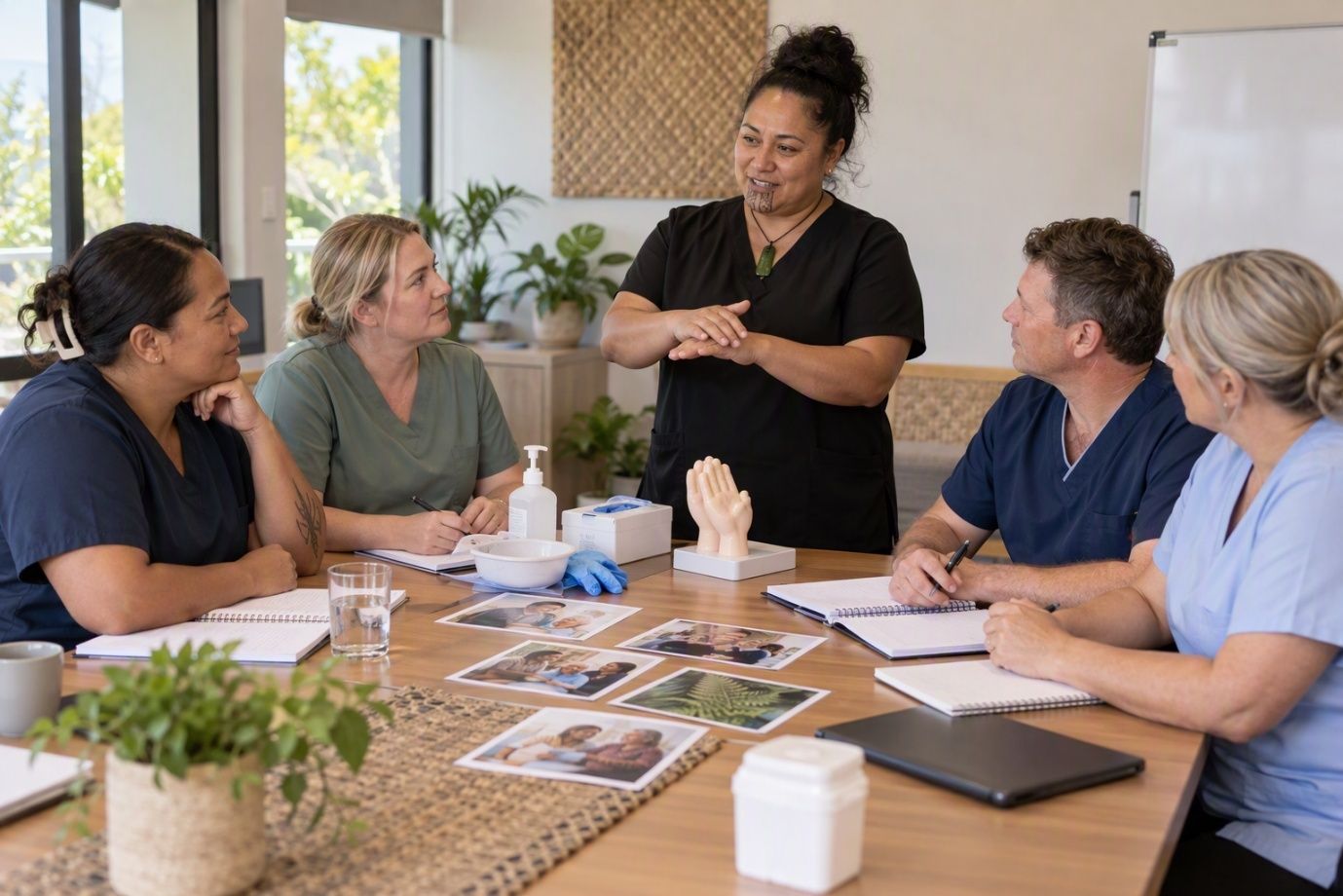
Cultural safety is not the same as cultural awareness. Awareness is what a staff member knows; safety is an experience defined by the resident. Care is culturally safe when the person receiving it, and not the provider, feels their identity, values, and beliefs are respected.
In Australia, Standard 1 ("The Individual") of the Strengthened Aged Care Quality Standards (effective from 1 November 2025) requires providers to deliver care that respects each person's identity, culture, and diversity, and to support them in making decisions about their own lives. In New Zealand, the Ngā Paerewa Health and Disability Services Standard (NZS 8134:2021) sets a similar expectation: services must recognise and respond to residents' cultural needs, including specific guidance for Māori as tangata whenua.
For residents, cultural safety can mean the difference between feeling at home in aged care and feeling cut off from everything familiar.
In Australia, Standard 1 ("The Individual") of the Strengthened Aged Care Quality Standards (effective from 1 November 2025) requires providers to deliver care that respects each person's identity, culture, and diversity, and to support them in making decisions about their own lives. In New Zealand, the Ngā Paerewa Health and Disability Services Standard (NZS 8134:2021) sets a similar expectation: services must recognise and respond to residents' cultural needs, including specific guidance for Māori as tangata whenua.
For residents, cultural safety can mean the difference between feeling at home in aged care and feeling cut off from everything familiar.
What Do Aboriginal and Torres Strait Islander Residents Need from Culturally Safe Care?
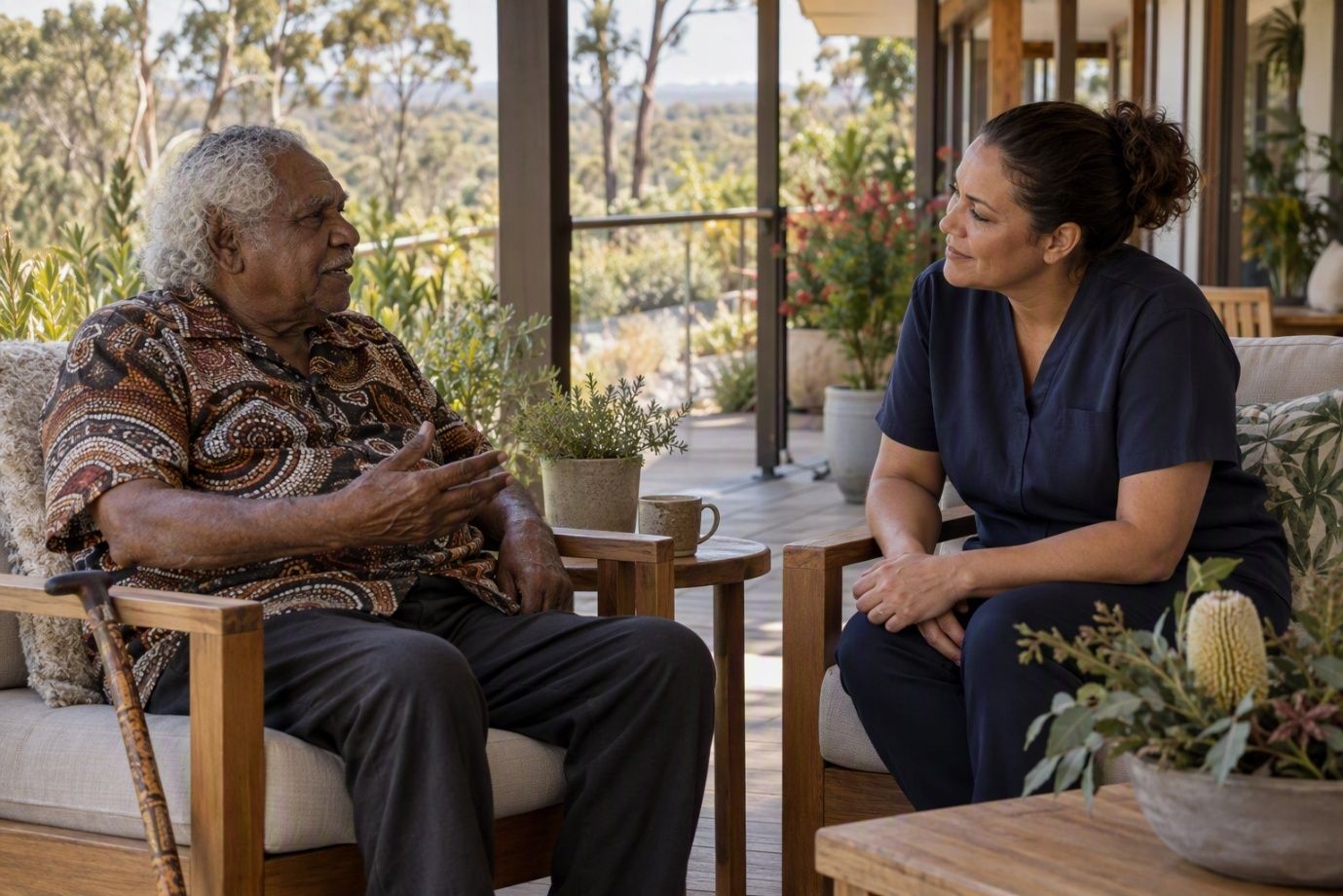
The 2025–2035 Aboriginal and Torres Strait Islander Aged Care Framework and the Cultural Respect Framework 2016–2026 both centre on self-determination. For Aboriginal and Torres Strait Islander peoples, this means directing decisions about their own care. In practice, this means:
Facilities in regional and remote areas should also be aware of flexible care models, such as the National Aboriginal and Torres Strait Islander Flexible Aged Care Program, which is designed to keep older people connected to their community rather than relocating them and risking that connection.
- Recognising connection to Country, kinship, and community as central to wellbeing, not an "extra" consideration.
- Involving family, community and Elders in care planning according to the resident's wishes and cultural preferences.
- Partnering with local Aboriginal Community Controlled Health Organisations where possible, rather than working in isolation.
- Building workforce cultural competency through ongoing, not one-off, training.
Facilities in regional and remote areas should also be aware of flexible care models, such as the National Aboriginal and Torres Strait Islander Flexible Aged Care Program, which is designed to keep older people connected to their community rather than relocating them and risking that connection.
How Can Aged Care Teams Support Kaumātua and Whānau in Aotearoa?
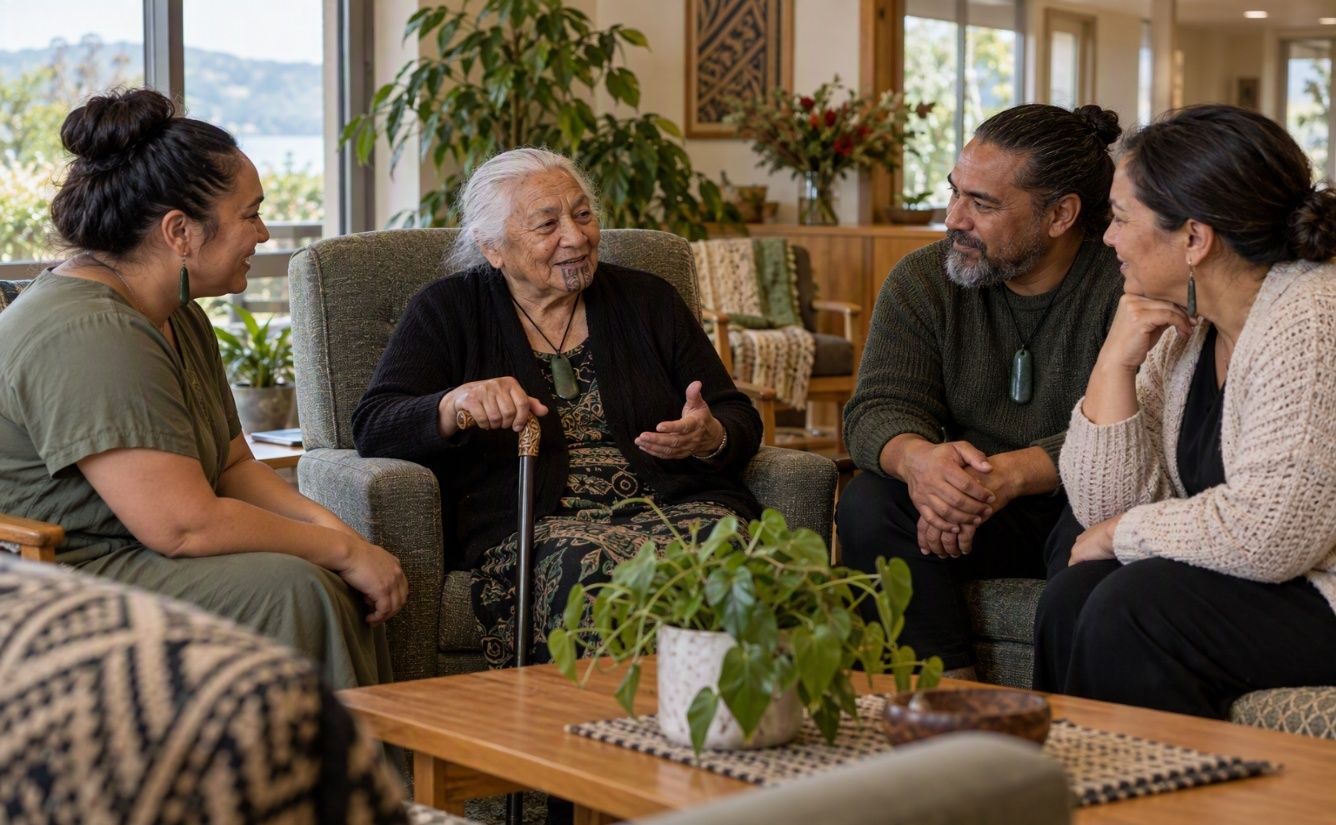
Culturally safe care for kaumātua (Māori elders) draws on values that should guide everyday practice, not just formal policy:
Care should be holistic, addressing physical, spiritual, social, and cultural wellbeing together. Resources that incorporate mātauranga Māori alongside clinical guidance can help teams put these values into practice and reflects the principles underpinning culturally responsive services in Aotearoa New Zealand and the partnership approach recognised through Te Tiriti o Waitangi.
- Whanaungatanga — building genuine relationships with kaumātua and their whānau, who are central to decision-making processes.
- Manaakitanga and mana — offering hospitality, kindness, and respect that uphold a person's dignity and authority.
- Tikanga — weaving Māori customs and protocols into daily routines, from meals to the way a room is entered.
- Tapu, noa, and whakamā — understanding sacredness, balance, and shame helps staff avoid actions that unintentionally cause distress
Care should be holistic, addressing physical, spiritual, social, and cultural wellbeing together. Resources that incorporate mātauranga Māori alongside clinical guidance can help teams put these values into practice and reflects the principles underpinning culturally responsive services in Aotearoa New Zealand and the partnership approach recognised through Te Tiriti o Waitangi.
What About Residents from Other Cultural Backgrounds?
Australia's Aged Care Diversity Framework recognises a range of communities and life experiences that may influence care needs, including people from culturally and linguistically diverse (CALD) backgrounds, Aboriginal and Torres Strait Islander peoples, LGBTIQA+ communities, veterans, and people living in rural and remote areas.
Common, practical needs include:
Programs such as the Partners in Culturally Appropriate Care (PICAC) network provide CALD-specific training that aligns well with a facility's broader diversity and inclusion goals.
Common, practical needs include:
- Access to interpreters and translated materials, not just for consent forms but for everyday conversation.
- Food, prayer, and personal care routines reflecting religious and cultural practice.
- An understanding that family and the wider community involvement in decision-making varies across cultures. Ask, rather than assume, what a resident wants or needs.
Programs such as the Partners in Culturally Appropriate Care (PICAC) network provide CALD-specific training that aligns well with a facility's broader diversity and inclusion goals.
How Can Your Facility Build Cultural Safety into Everyday Practice?
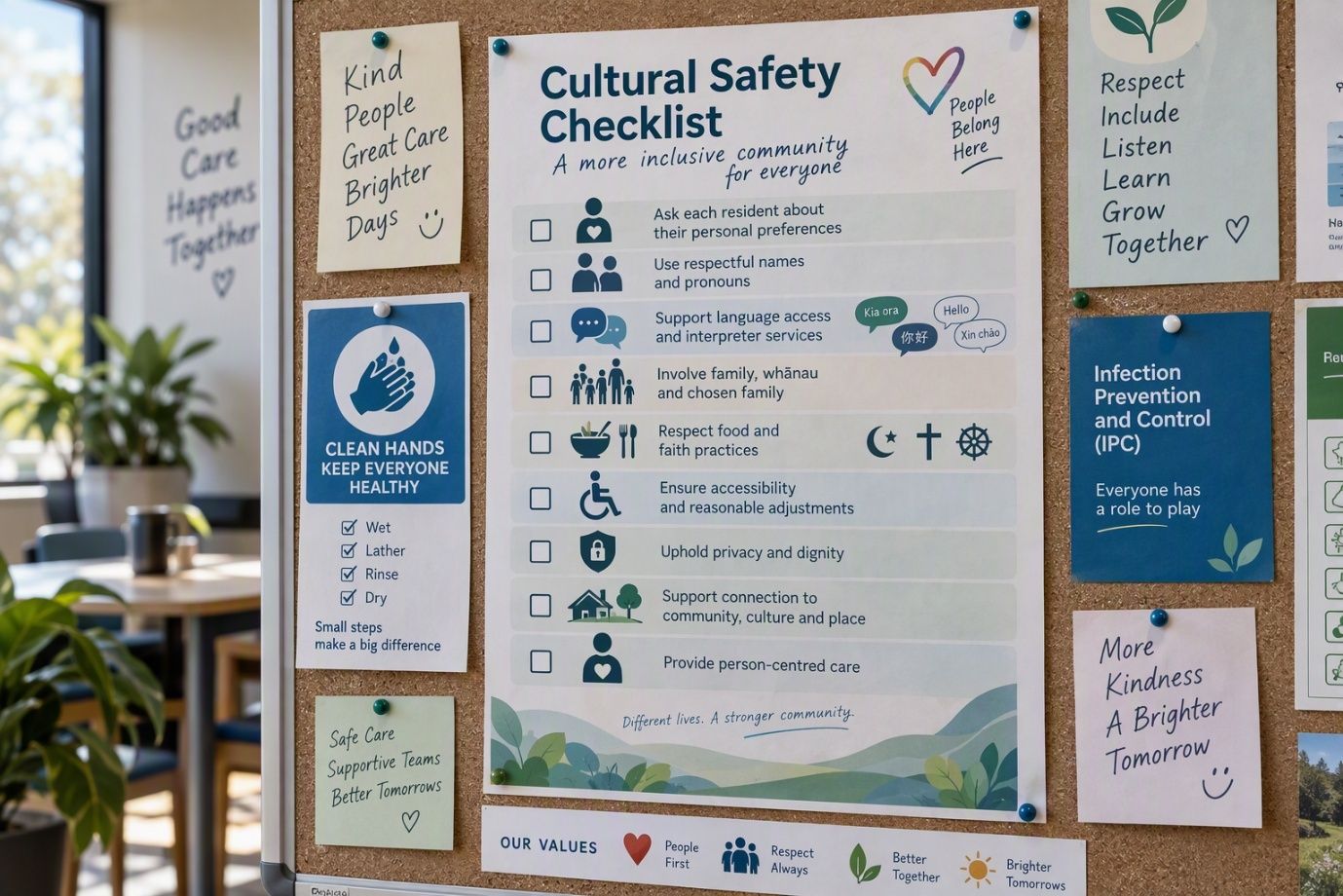
A short checklist for IPC leads and facility managers:
That last point matters as much for cultural safety as it does for infection prevention. IPS builds monthly training rhythms for IPC because one-off sessions don't change everyday practice - the same principle applies here.
- Ask about cultural preferences at admission, and document them in the care plan; don’t assume.
- Involve family, whānau, or the community in decisions whenever a resident wants that involvement.
- Build relationships with local Aboriginal, Torres Strait Islander, Māori, and CALD community organisations befores need arises.
- Understand available support services for veteran residents and their families, including resources provided by the Department of Veterans' Affairs (DVA).
- Review menus, activities, and communication materials for cultural relevance, not merely for compliance.
- Train staff regularly, not as a one-off induction module.
That last point matters as much for cultural safety as it does for infection prevention. IPS builds monthly training rhythms for IPC because one-off sessions don't change everyday practice - the same principle applies here.
Frequently Asked Questions
Is cultural safety the same as cultural awareness?
No. Cultural awareness is the knowledge a staff member holds; cultural safety is judged by the resident receiving care, based on whether they feel respected.
Do the Strengthened Aged Care Quality Standards require cultural safety?
Yes. Standard 1, "The Individual", requires providers to respect each person's identity, culture, and diversity, effective from 1 November 2025.
What does NZS 8134:2021 require regarding Māori residents?
Ngā Paerewa requires services to recognise and respond to residents' cultural needs, including specific guidance on supporting Māori as tangata whenua.
How Do Staff Reflect on Their Own Practice?
Cultural safety requires staff to reflect on how their own experiences, assumptions, and values influence interactions with residents. Cultural safety is not achieved simply by learning facts about different cultures; it develops through respectful relationships, curiosity, listening, and willingness to adapt practice.
Take-Home Message
Cultural safety is not a checklist; it is the experience of every resident feeling respected, heard, and able to maintain their identity. By involving family and whānau when appropriate, respecting cultural preferences, building community partnerships, and supporting ongoing staff learning, aged care services can provide care that is both clinically effective and culturally safe.
Start with one question at your next care plan review: What does this person need from us culturally that we haven't asked about yet?
Start with one question at your next care plan review: What does this person need from us culturally that we haven't asked about yet?
Read more of our blogs on the IPS website, the HUB.
For a regular snippet of news, we are on LinkedIn and Facebook. Like us and share the post with others
For a regular snippet of news, we are on LinkedIn and Facebook. Like us and share the post with others
For a quick question, ask EVE, our multilingual bot or to contact us, email support@infectioncontrol.care
Lyndon Forrest
Managing Director | CEO
Lyndon is the Managing Director of Infection Prevention Services (IPS), bringing over 30 years' experience supporting aged care providers across Australia and New Zealand.
With a background spanning outbreak response, compliance, and infection risk management — alongside hands-on experience leading teams, managing multi-site operations, and navigating business turnaround — he understands both the clinical and organisational pressures aged care providers face. Lyndon holds a Master of Commerce (Industrial Relations), and applies that foundation to the people, process, and growth challenges that come with running a complex healthcare services business.
He is passionate about building the systems and capability that make infection prevention sustainable — not just compliant — and about helping organisations grow their confidence alongside their practice.
Lyndon's focus is straightforward: strengthen operations, develop the right people, and drive proactive infection prevention strategies that protect residents, staff, and communities for the long term.
Lyndon is the Managing Director of Infection Prevention Services (IPS), bringing over 30 years' experience supporting aged care providers across Australia and New Zealand.
With a background spanning outbreak response, compliance, and infection risk management — alongside hands-on experience leading teams, managing multi-site operations, and navigating business turnaround — he understands both the clinical and organisational pressures aged care providers face. Lyndon holds a Master of Commerce (Industrial Relations), and applies that foundation to the people, process, and growth challenges that come with running a complex healthcare services business.
He is passionate about building the systems and capability that make infection prevention sustainable — not just compliant — and about helping organisations grow their confidence alongside their practice.
Lyndon's focus is straightforward: strengthen operations, develop the right people, and drive proactive infection prevention strategies that protect residents, staff, and communities for the long term.
Erica Callaghan
Marketing Manager
Erica Callaghan is a dedicated professional with a rich background in agriculture and nutrient management. Growing up on her family's farm in Mid Canterbury, she developed a deep passion for farming. She currently resides on her partner's arable property in South Canterbury.
In 2017, Erica joined the Farm Sustainability team, focusing on nutrient management and environmental stewardship. In February 2024, she became the Manager of Marketing and Sales at Bug Control New Zealand - Infection Prevention Services, where her passion now includes improving infection prevention outcomes.
Outside of work, Erica loves cooking and traveling, often combining her culinary interests with her explorations in Italy and Vietnam. She enjoys entertaining family and friends and remains actively involved in farm activities, especially during harvest season.
Erica Callaghan is a dedicated professional with a rich background in agriculture and nutrient management. Growing up on her family's farm in Mid Canterbury, she developed a deep passion for farming. She currently resides on her partner's arable property in South Canterbury.
In 2017, Erica joined the Farm Sustainability team, focusing on nutrient management and environmental stewardship. In February 2024, she became the Manager of Marketing and Sales at Bug Control New Zealand - Infection Prevention Services, where her passion now includes improving infection prevention outcomes.
Outside of work, Erica loves cooking and traveling, often combining her culinary interests with her explorations in Italy and Vietnam. She enjoys entertaining family and friends and remains actively involved in farm activities, especially during harvest season.
Toni Sherriff
Clinical Nurse Specialist
Toni is a Registered Nurse with extensive experience in Infection Prevention and Control. Her career began as a kitchen hand and caregiver in Aged Care facilities, followed by earning a Bachelor of Nursing.
Toni has significant experience, having worked in Brisbane’s Infectious Diseases ward before returning home to New Zealand, where she continued her career as a Clinical Nurse Specialist in Infection Prevention and Control within Te Whatu Ora (Health NZ).
Toni brings her expertise and dedication to our team, which is instrumental in providing top-tier infection prevention solutions to our clients.
Toni is a Registered Nurse with extensive experience in Infection Prevention and Control. Her career began as a kitchen hand and caregiver in Aged Care facilities, followed by earning a Bachelor of Nursing.
Toni has significant experience, having worked in Brisbane’s Infectious Diseases ward before returning home to New Zealand, where she continued her career as a Clinical Nurse Specialist in Infection Prevention and Control within Te Whatu Ora (Health NZ).
Toni brings her expertise and dedication to our team, which is instrumental in providing top-tier infection prevention solutions to our clients.
Julie Hadfield
Accounts & Payroll
Julie is experienced in Accounts & Payroll Administration & after a long career in both the Financial & Local Government Sectors, is now working with our team. Julie brings her strong time management & organisational skills to our team, which is important to keep the company running in the background to enable the rest of our team to provide top notch service to all of our clients.
Julie is experienced in Accounts & Payroll Administration & after a long career in both the Financial & Local Government Sectors, is now working with our team. Julie brings her strong time management & organisational skills to our team, which is important to keep the company running in the background to enable the rest of our team to provide top notch service to all of our clients.
Andrea Murray
Content Editor
I attended Otago University in NZ and graduated as a Dental Surgeon. After 40 years in the profession, I retired in 2022. Infection prevention knowledge was part of everyday practice, dealing with sterilisation, hand hygiene, and cleaning.
Before retiring, I began doing some editing and proofreading for Bug Control as I am interested in the subject and in the English language. During the COVID-19 lockdown, I attended the ACIPC course "Introduction to Infection Prevention and Control", which increased my interest in the subject. I now work part-time as the Content Editor for the company.
I attended Otago University in NZ and graduated as a Dental Surgeon. After 40 years in the profession, I retired in 2022. Infection prevention knowledge was part of everyday practice, dealing with sterilisation, hand hygiene, and cleaning.
Before retiring, I began doing some editing and proofreading for Bug Control as I am interested in the subject and in the English language. During the COVID-19 lockdown, I attended the ACIPC course "Introduction to Infection Prevention and Control", which increased my interest in the subject. I now work part-time as the Content Editor for the company.
Personally, I lived in the UK for 10 years. My two children were born in Scotland, and now both are living in Europe, one in Amsterdam, Netherlands, and the other in Edinburgh, Scotland. I live close to Fairlie on the South Island of NZ, a beautiful part of the country, and I love being out of the city.
Princess
Customer Support
Princess began her career as a dedicated Customer Service Representative, honing her communication and problem-solving skills. She later transitioned into a Literary Specialist role, where she developed a keen eye for detail. Her journey then led her to a Sales Specialist position, where she excelled in client relations.
Now, as a Customer Support professional in Infection Prevention Services. Princess focuses on ensuring customer satisfaction, building loyalty, and enhancing the overall customer journey.
Princess began her career as a dedicated Customer Service Representative, honing her communication and problem-solving skills. She later transitioned into a Literary Specialist role, where she developed a keen eye for detail. Her journey then led her to a Sales Specialist position, where she excelled in client relations.
Now, as a Customer Support professional in Infection Prevention Services. Princess focuses on ensuring customer satisfaction, building loyalty, and enhancing the overall customer journey.
Dianne Newey
Senior Infection Prevention and Control Consultant
Dianne is a Senior Clinical Consultant at Infection Prevention Services (IPS), bringing over 35 years of nursing experience and a depth of clinical knowledge that most people would need two careers to accumulate.
Having served as Clinical Director at Royal Ryde Rehabilitation Hospital alongside a career spanning the full breadth of clinical practice, Dianne has seen it all — and more importantly, knows exactly what to do about it. She is the person in the room that everyone quietly hopes will speak first.
For more than seven years she has been a cornerstone of the IPS team, providing clinical advice, developing and reviewing policies and procedures, delivering monthly IPC webinars to IP Leads, and conducting environmental audits in aged care facilities across Australia and New Zealand. If infection prevention has a question, Dianne almost certainly has the answer — and she'll deliver it with a laugh that you'll hear from the other end of the corridor.
A true fountain of knowledge, wrapped in the kind of warmth and humour that only three decades of nursing can produce. Customers don't just trust Dianne — they look forward to hearing from her.
Dianne is a Senior Clinical Consultant at Infection Prevention Services (IPS), bringing over 35 years of nursing experience and a depth of clinical knowledge that most people would need two careers to accumulate.
Having served as Clinical Director at Royal Ryde Rehabilitation Hospital alongside a career spanning the full breadth of clinical practice, Dianne has seen it all — and more importantly, knows exactly what to do about it. She is the person in the room that everyone quietly hopes will speak first.
For more than seven years she has been a cornerstone of the IPS team, providing clinical advice, developing and reviewing policies and procedures, delivering monthly IPC webinars to IP Leads, and conducting environmental audits in aged care facilities across Australia and New Zealand. If infection prevention has a question, Dianne almost certainly has the answer — and she'll deliver it with a laugh that you'll hear from the other end of the corridor.
A true fountain of knowledge, wrapped in the kind of warmth and humour that only three decades of nursing can produce. Customers don't just trust Dianne — they look forward to hearing from her.
Caoimhe (Keva) Stewart
Clinical & Business Operations Manager
Caoimhe is the Clinical & Business Operations Manager at Infection Prevention Services (IPS), bringing a clinical background as a Registered Nurse across the UK and Australia — and an almost unsettling ability to make technology do exactly what she wants.
With experience in Occupational Health, Palliative Care, and Community Nursing, she understands the real challenges faced by healthcare teams. What she may lack in stature she more than makes up for in impact — Caoimhe is the kind of person who walks into a problem, sizes it up, and has three solutions before anyone else has finished reading the brief.
Customers love her. Not just because she delivers — though she always does — but because she genuinely cares about the outcome on the other side. She is passionate about creating seamless learning experiences and empowering organisations with the tools, knowledge, and support needed to strengthen infection prevention practices and improve care outcomes.
Small in size. Mighty in results. Completely irreplaceable.
Caoimhe is the Clinical & Business Operations Manager at Infection Prevention Services (IPS), bringing a clinical background as a Registered Nurse across the UK and Australia — and an almost unsettling ability to make technology do exactly what she wants.
With experience in Occupational Health, Palliative Care, and Community Nursing, she understands the real challenges faced by healthcare teams. What she may lack in stature she more than makes up for in impact — Caoimhe is the kind of person who walks into a problem, sizes it up, and has three solutions before anyone else has finished reading the brief.
Customers love her. Not just because she delivers — though she always does — but because she genuinely cares about the outcome on the other side. She is passionate about creating seamless learning experiences and empowering organisations with the tools, knowledge, and support needed to strengthen infection prevention practices and improve care outcomes.
Small in size. Mighty in results. Completely irreplaceable.
Bridgette Mackie
Clinical Nurse Educator
Bridgette is an experienced New Zealand Registered Nurse, qualified Healthcare Auditor, and Healthcare Educator with a strong background in clinical quality, competency assessment, and infection prevention. She has led large-scale OSCE and CAP training programmes for internationally qualified nurses, developed sector-specific educational resources, and coordinated HealthCERT audit preparation in the surgical sector.
Known for her engaging teaching style and genuine passion for supporting learners, Bridgette excels at making complex topics accessible and relevant. She blends operational leadership with a deep commitment to professional development and safe, effective practice.
Bridgette is an experienced New Zealand Registered Nurse, qualified Healthcare Auditor, and Healthcare Educator with a strong background in clinical quality, competency assessment, and infection prevention. She has led large-scale OSCE and CAP training programmes for internationally qualified nurses, developed sector-specific educational resources, and coordinated HealthCERT audit preparation in the surgical sector.
Known for her engaging teaching style and genuine passion for supporting learners, Bridgette excels at making complex topics accessible and relevant. She blends operational leadership with a deep commitment to professional development and safe, effective practice.