
Oct 16
The History of Scabies: From Ancient Itch to Modern Aged Care Outbreak Management
How 2,500 Years of Science and Treatment Errors Have Shaped Scabies Management in Australia and New Zealand.
This article complements our posts on the signs and symptoms of scabies and how scabies is treated.
Scabies has been making people itch for at least 2,500 years. It was the first human disease traced to a microscopic cause. This blog from Infection Prevention Services (IPS) complements our earlier posts on the clinical signs and symptoms of infestation and scabies treatment. It explores the history of scabies: how far back the evidence goes, who proved the mite was the cause, and the remedies people tried along the way, including the kerosene baths given to residents of an Australian aged care facility in 2000. It is written for Infection Prevention and Control (IPC) Leads, nurses, care workers, and facility managers in Australia
and New Zealand. This old story remains one of the strongest arguments for evidence-based scabies management in residential aged care facilities (RACF).
How Far Back Does the Evidence of Scabies Go?
Written records of an itchy, contagious skin disease date back to antiquity. Historians believe the biblical term "zaraath", usually translated as leprosy, encompassed a range of scaling skin conditions, probably including scabies.
In the fourth century BC, Aristotle wrote about "lice in the flesh" - tiny creatures that could be removed from itchy skin with a needle. He also used the term "akari" for a mite, the root of today's "acaricide". Around 25 AD, the Roman writer Celsus is credited with naming the disease "scabies", from the Latin "scabere", meaning "to scratch".
People saw the mite early, but they misidentified the cause of the affliction. For close to 2,000 years, physicians blamed scabies on "corrupted" blood or an imbalance of the body's humours, treating the mite as a by-product of the disease. In the 12th century, the Arab physician Ibn Zuhr (Avenzoar) described the itch mite, and by 1657 August Hauptmann had drawn one. However, the humoral theory held.
Who Proved That a Mite Causes Scabies?
The turning point came in 1687 in the Italian port of Livorno. Physician Giovanni Cosimo Bonomo and pharmacist Diacinto Cestoni observed locals removing tiny specks from the skin of people with "the itch". Under a microscope, they saw a living mite and even watched a female lay an egg.
Their letter to the naturalist Francesco Redi, published in July 1687, argued that the mite caused scabies, that it spread through contact with the infected, and that only skin treatments were effective. It made scabies the first human disease with a known microscopic cause - almost two centuries before germ theory was proposed.
Their letter to the naturalist Francesco Redi, published in July 1687, argued that the mite caused scabies, that it spread through contact with the infected, and that only skin treatments were effective. It made scabies the first human disease with a known microscopic cause - almost two centuries before germ theory was proposed.
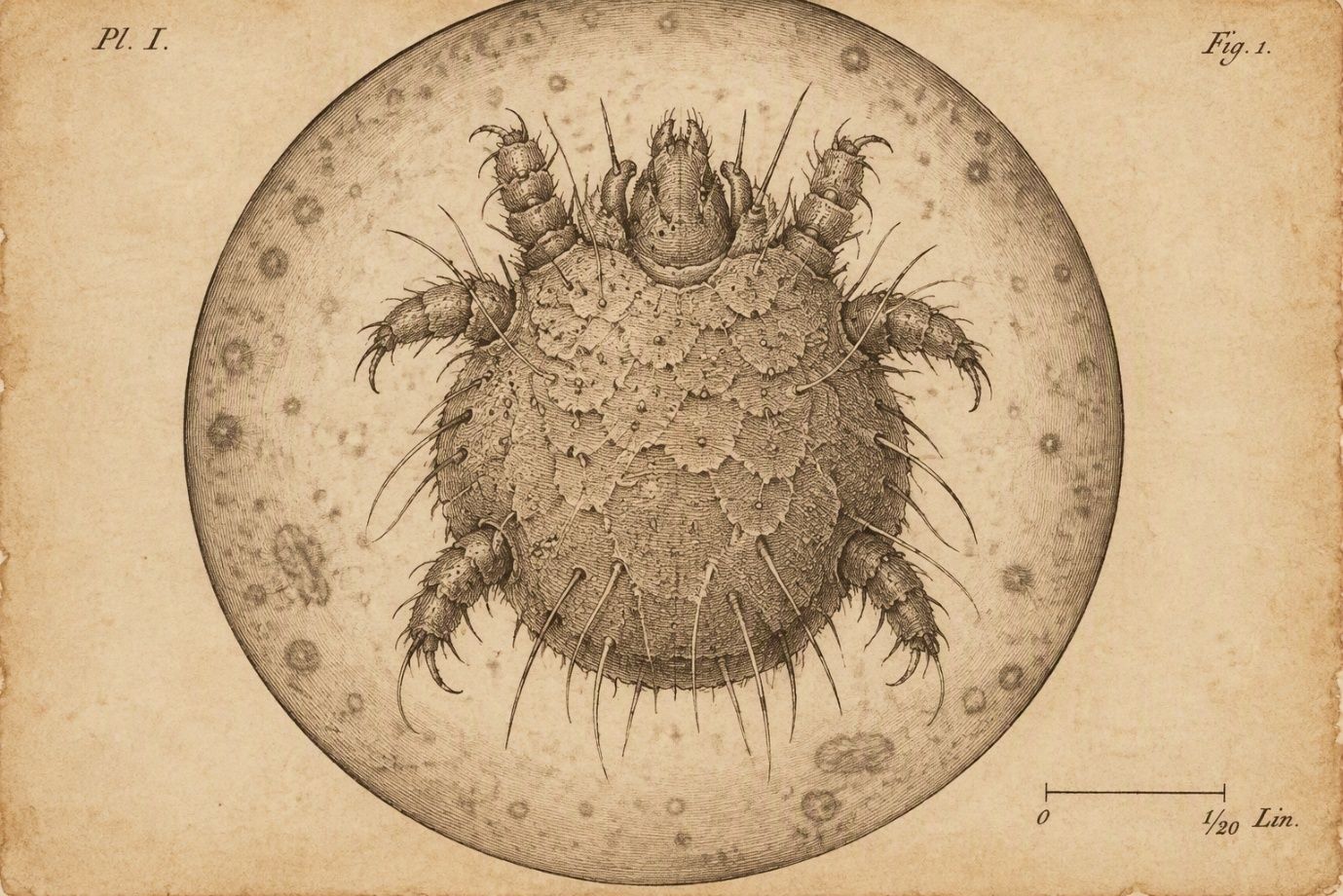
The medical establishment remained unconvinced. The Pope's physician, Giovanni Maria Lancisi, pushed back, and the finding faded from view. In 1801, English physician Joseph Adams placed a mite on his own skin, infesting himself and, by accident, his family. Acceptance came only in 1834, when Corsican medical student Simon François Renucci extracted mites in front of sceptical Parisian doctors.
In 1848, Norwegian physicians Danielssen and Boeck described crusted ("Norwegian") scabies, the highly contagious form responsible for many aged care outbreaks.
In 1848, Norwegian physicians Danielssen and Boeck described crusted ("Norwegian") scabies, the highly contagious form responsible for many aged care outbreaks.
How Was Scabies Treated Before Modern Medicines?
Sulphur is the oldest remedy still in use. Celsus recommended a sulphur preparation in the first century, and some countries still use sulphur ointments today. Bonomo's treatments were baths and ointments containing salts, sulphur, and mercury, which were harsh on mites and on human skin. For centuries, the alternative was the tedious process of removing mites one by one with a needle.
War drove the next advances because scabies thrives in crowded barracks and trenches during the First World War. Benzyl benzoate lotion was reported to be a rapid treatment in 1937. In 1941, British scientist Kenneth Mellanby set up a research unit in Sheffield, where wartime volunteers, many of them conscientious objectors, wore the underclothes and slept under the blankets of infested soldiers. His work showed that close physical contact spreads scabies, and his team confirmed that benzyl benzoate was an effective treatment.
War drove the next advances because scabies thrives in crowded barracks and trenches during the First World War. Benzyl benzoate lotion was reported to be a rapid treatment in 1937. In 1941, British scientist Kenneth Mellanby set up a research unit in Sheffield, where wartime volunteers, many of them conscientious objectors, wore the underclothes and slept under the blankets of infested soldiers. His work showed that close physical contact spreads scabies, and his team confirmed that benzyl benzoate was an effective treatment.

Lindane was used but later restricted due to safety concerns. In the early 1970s, researchers developed permethrin, a synthetic insecticide modelled on the natural insecticide from pyrethrum flowers. Ivermectin, derived from a soil microorganism found in Japan, followed in the late 1970s. These two remain the mainstays of treatment today.
The story is not finished. The World Health Organisation (WHO) listed scabies as a neglected tropical disease in 2017. There is also evidence of increasing treatment failure with permethrin, although this may reflect incorrect application, reinfestation, inadequate treatment of contacts, or reduced mite susceptibility rather than confirmed resistance
The story is not finished. The World Health Organisation (WHO) listed scabies as a neglected tropical disease in 2017. There is also evidence of increasing treatment failure with permethrin, although this may reflect incorrect application, reinfestation, inadequate treatment of contacts, or reduced mite susceptibility rather than confirmed resistance
What Went Wrong in an Australian Residential Aged Care Facility in 2000?
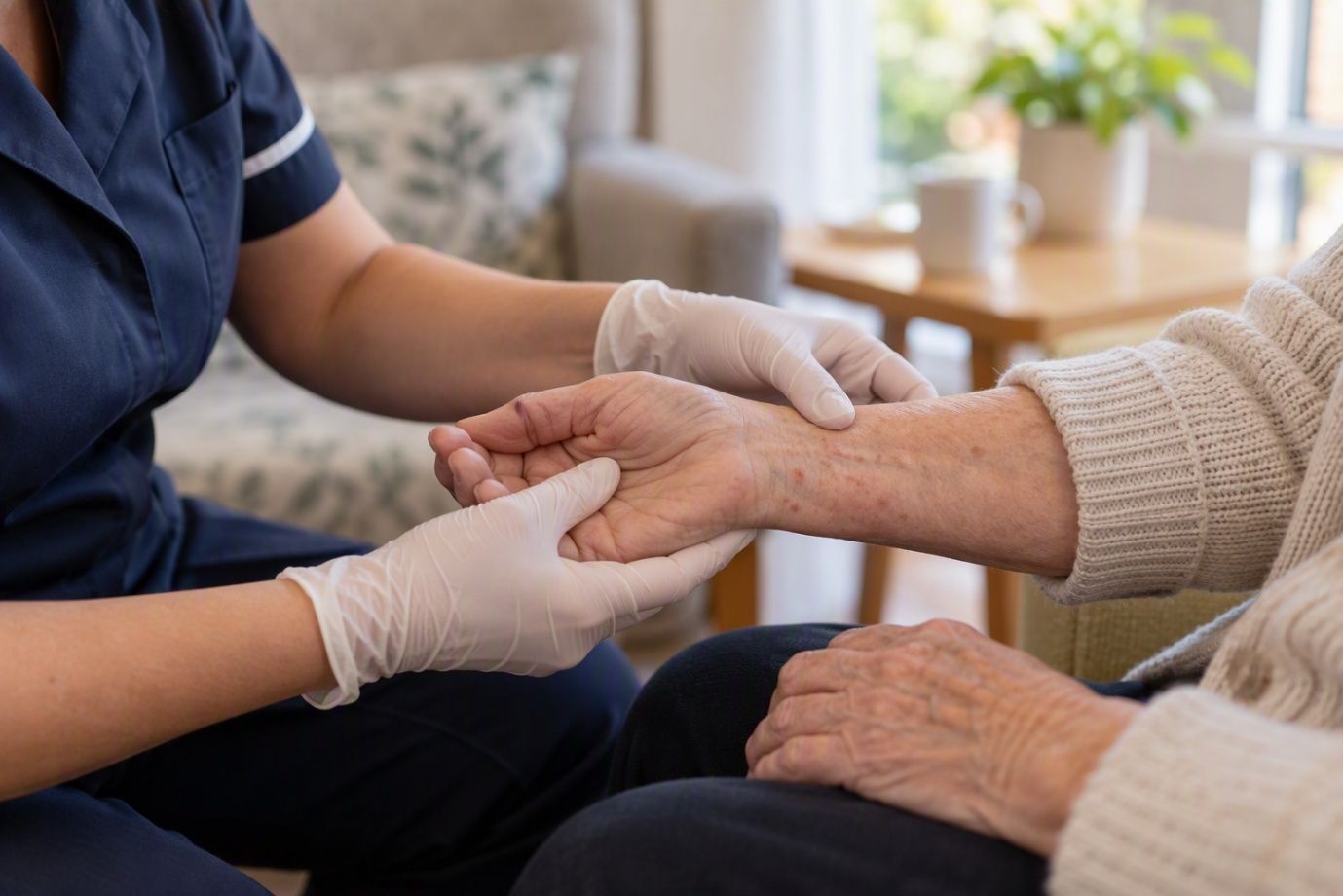
The worst scabies treatments aren’t all ancient. In January 2000, residents of the Riverside Nursing Home in Melbourne were bathed in diluted kerosene as a cheap substitute for standard scabies treatment. Kerosene has long been used as a folk remedy for lice and scabies. It is not a medicine, and fragile older skin can’t tolerate it. Residents suffered significant injuries, including one death. Others were blistered and burned, with some second-degree burns.
The "kerosene baths" sparked a national scandal. The facility was closed, residents were relocated, and the federal aged care minister faced weeks of parliamentary questioning. The fallout prompted a review of the then-new Aged Care Act (1997) and closer scrutiny of complaint and inspection processes.
More than 25 years later, it remains a case study in what can happen when a facility faces an outbreak without clear policy, clinical leadership, or expert guidance.
What Does This History Mean for Your Facility Today?
Under the Strengthened Aged Care Quality Standards (effective 1 November 2025) in Australia and NZS 8134:2021 in New Zealand, facilities are expected to manage infection risks using evidence-based practice. For scabies, this means:
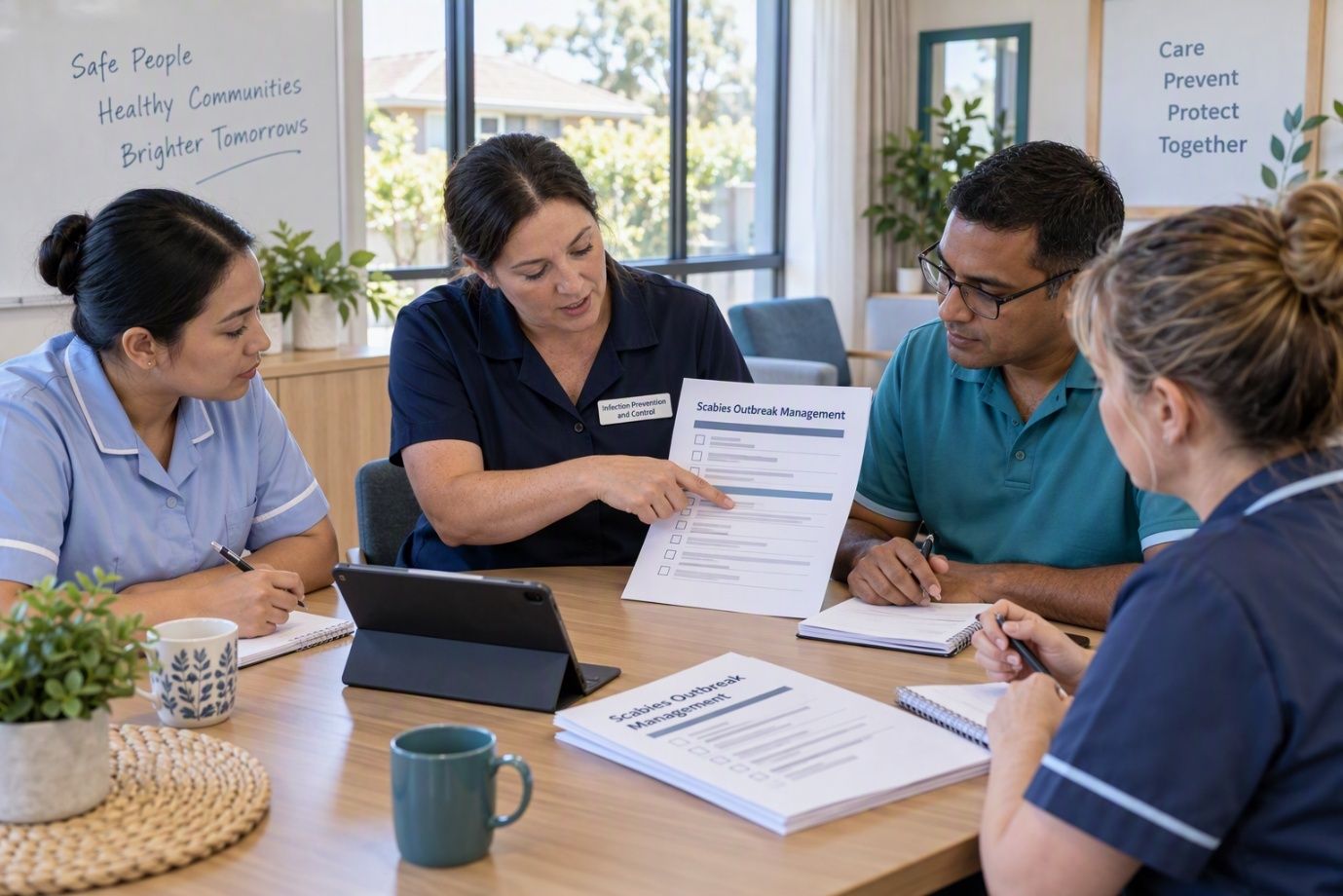
This is where IPS can help. The IPS HUB keeps your policies, procedures, and outbreak checklists in one place, and our outbreak management support gives your IPC Lead someone to call before treatment starts, not after it has all gone wrong.
- Use only approved scabicides, prescribed and applied as directed. Home remedies and household chemicals have no place in resident care.
- Suspect scabies early in any resident with an unexplained rash, and remember that crusted scabies may not itch.
- Treat cases, close contacts, and affected staff at the same time so the mite has nowhere to hide.
- Keep a current scabies outbreak policy where your team can find it at 2 am.
This is where IPS can help. The IPS HUB keeps your policies, procedures, and outbreak checklists in one place, and our outbreak management support gives your IPC Lead someone to call before treatment starts, not after it has all gone wrong.
Frequently Asked Questions
How far back does evidence of scabies date?
Written descriptions date back at least 2,500 years. Aristotle described "lice in the flesh" in the fourth century BC, and the Roman writer Celsus named the disease "scabies" around 25 AD.
Who proved that a mite causes scabies?
In 1687, Giovanni Cosimo Bonomo and Diacinto Cestoni showed that the itch mite causes scabies, making it the first human disease with a known microscopic cause. Their finding was only widely accepted after Simon François Renucci demonstrated the mite in Paris in 1834.
How was scabies treated before modern medicine?
Early treatments included sulphur preparations, mercury ointments, and mite removal with a needle. In the 1930s and 1940s, they used benzyl benzoate, followed by permethrin and ivermectin from the 1970s.
What were the kerosene baths in an Australian Residential Aged Care Facility?
In January 2000, residents of the Riverside Nursing Home in Melbourne were bathed in diluted kerosene to treat scabies, and several suffered chemical burns; one died. The home was closed, and the incident became a national aged care scandal.
How should aged care facilities treat scabies today?
Use only approved scabicides, prescribed and applied as directed. Treat cases, close contacts, and affected staff simultaneously. Never use home remedies or household chemicals on residents.
Take-Home Message
It took 150 years for medicine to accept what Bonomo and Cestoni observed under a microscope, and one outbreak in 2000 showed how quickly old habits can return. Know the mite, follow the evidence, and ensure your team has a plan before the first itch.
Read more of our blogs on the IPS website, the HUB.
For a regular snippet of news, we are on LinkedIn and Facebook. Like us and share the post with others
For a regular snippet of news, we are on LinkedIn and Facebook. Like us and share the post with others
For a quick question, ask EVE, our multilingual bot or to contact us, email support@infectioncontrol.care
Lyndon Forrest
Managing Director | CEO
Lyndon is the Managing Director of Infection Prevention Services (IPS), bringing over 30 years' experience supporting aged care providers across Australia and New Zealand.
With a background spanning outbreak response, compliance, and infection risk management — alongside hands-on experience leading teams, managing multi-site operations, and navigating business turnaround — he understands both the clinical and organisational pressures aged care providers face. Lyndon holds a Master of Commerce (Industrial Relations), and applies that foundation to the people, process, and growth challenges that come with running a complex healthcare services business.
He is passionate about building the systems and capability that make infection prevention sustainable — not just compliant — and about helping organisations grow their confidence alongside their practice.
Lyndon's focus is straightforward: strengthen operations, develop the right people, and drive proactive infection prevention strategies that protect residents, staff, and communities for the long term.
Erica Callaghan
Marketing Manager
Erica Callaghan is a dedicated professional with a rich background in agriculture and nutrient management. Growing up on her family's farm in Mid Canterbury, she developed a deep passion for farming. She currently resides on her partner's arable property in South Canterbury.
In 2017, Erica joined the Farm Sustainability team, focusing on nutrient management and environmental stewardship. In February 2024, she became the Manager of Marketing and Sales at Bug Control New Zealand - Infection Prevention Services, where her passion now includes improving infection prevention outcomes.
Outside of work, Erica loves cooking and traveling, often combining her culinary interests with her explorations in Italy and Vietnam. She enjoys entertaining family and friends and remains actively involved in farm activities, especially during harvest season.
Toni Sherriff
Clinical Nurse Specialist
Toni is a Registered Nurse with extensive experience in Infection Prevention and Control. Her career began as a kitchen hand and caregiver in Aged Care facilities, followed by earning a Bachelor of Nursing.
Toni has significant experience, having worked in Brisbane’s Infectious Diseases ward before returning home to New Zealand, where she continued her career as a Clinical Nurse Specialist in Infection Prevention and Control within Te Whatu Ora (Health NZ).
Toni brings her expertise and dedication to our team, which is instrumental in providing top-tier infection prevention solutions to our clients.
Julie Hadfield
Accounts & Payroll
Julie is experienced in Accounts & Payroll Administration & after a long career in both the Financial & Local Government Sectors, is now working with our team. Julie brings her strong time management & organisational skills to our team, which is important to keep the company running in the background to enable the rest of our team to provide top notch service to all of our clients.
Julie is experienced in Accounts & Payroll Administration & after a long career in both the Financial & Local Government Sectors, is now working with our team. Julie brings her strong time management & organisational skills to our team, which is important to keep the company running in the background to enable the rest of our team to provide top notch service to all of our clients.
Andrea Murray
Content Editor
I attended Otago University in NZ and graduated as a Dental Surgeon. After 40 years in the profession, I retired in 2022. Infection prevention knowledge was part of everyday practice, dealing with sterilisation, hand hygiene, and cleaning.
Before retiring, I began doing some editing and proofreading for Bug Control as I am interested in the subject and in the English language. During the COVID-19 lockdown, I attended the ACIPC course "Introduction to Infection Prevention and Control", which increased my interest in the subject. I now work part-time as the Content Editor for the company.
Personally, I lived in the UK for 10 years. My two children were born in Scotland, and now both are living in Europe, one in Amsterdam, Netherlands, and the other in Edinburgh, Scotland. I live close to Fairlie on the South Island of NZ, a beautiful part of the country, and I love being out of the city.
Princess
Customer Support
Princess began her career as a dedicated Customer Service Representative, honing her communication and problem-solving skills. She later transitioned into a Literary Specialist role, where she developed a keen eye for detail. Her journey then led her to a Sales Specialist position, where she excelled in client relations.
Now, as a Customer Support professional in Infection Prevention Services. Princess focuses on ensuring customer satisfaction, building loyalty, and enhancing the overall customer journey.
Dianne Newey
Senior Infection Prevention and Control Consultant
Dianne is a Senior Clinical Consultant at Infection Prevention Services (IPS), bringing over 35 years of nursing experience and a depth of clinical knowledge that most people would need two careers to accumulate.
Having served as Clinical Director at Royal Ryde Rehabilitation Hospital alongside a career spanning the full breadth of clinical practice, Dianne has seen it all — and more importantly, knows exactly what to do about it. She is the person in the room that everyone quietly hopes will speak first.
For more than seven years she has been a cornerstone of the IPS team, providing clinical advice, developing and reviewing policies and procedures, delivering monthly IPC webinars to IP Leads, and conducting environmental audits in aged care facilities across Australia and New Zealand. If infection prevention has a question, Dianne almost certainly has the answer — and she'll deliver it with a laugh that you'll hear from the other end of the corridor.
A true fountain of knowledge, wrapped in the kind of warmth and humour that only three decades of nursing can produce. Customers don't just trust Dianne — they look forward to hearing from her.
Caoimhe (Keva) Stewart
Clinical & Business Operations Manager
Caoimhe is the Clinical & Business Operations Manager at Infection Prevention Services (IPS), bringing a clinical background as a Registered Nurse across the UK and Australia — and an almost unsettling ability to make technology do exactly what she wants.
With experience in Occupational Health, Palliative Care, and Community Nursing, she understands the real challenges faced by healthcare teams. What she may lack in stature she more than makes up for in impact — Caoimhe is the kind of person who walks into a problem, sizes it up, and has three solutions before anyone else has finished reading the brief.
Customers love her. Not just because she delivers — though she always does — but because she genuinely cares about the outcome on the other side. She is passionate about creating seamless learning experiences and empowering organisations with the tools, knowledge, and support needed to strengthen infection prevention practices and improve care outcomes.
Small in size. Mighty in results. Completely irreplaceable.
Bridgette Mackie
Clinical Nurse Educator
Bridgette is an experienced New Zealand Registered Nurse, qualified Healthcare Auditor, and Healthcare Educator with a strong background in clinical quality, competency assessment, and infection prevention. She has led large-scale OSCE and CAP training programmes for internationally qualified nurses, developed sector-specific educational resources, and coordinated HealthCERT audit preparation in the surgical sector.
Known for her engaging teaching style and genuine passion for supporting learners, Bridgette excels at making complex topics accessible and relevant. She blends operational leadership with a deep commitment to professional development and safe, effective practice.